How often to water birdsfoot trefoil in California
In July in the Central Valley, established birdsfoot trefoil in loam needs a deep watering about every 8 days: about 2.2 gallons each time for a plant 2 feet across, about 1.9 gallons a week. Birdsfoot trefoil is a low, sprawling perennial in the pea family that forms a dense mat up to about a foot tall. Clusters of yellow pea flowers open from red-tinged buds from late spring into early fall and feed bees. It does well on lean ground in full sun, and it self-sows and roots along its stems, so it can turn weedy.
How often to water birdsfoot trefoil, month by month
Type your city above and the days between waterings and the gallons appear here, worked out from your city's climate table. Or read the figures by climate zone further down.
How this is worked out: established roots fill the top 1.5 feet of soil, and you water again when that soil has dried halfway. Loam soil holds about 1.5 inches of water per foot. Water the whole area the plant covers, and skip a watering after a good soaking rain.
How to tell it needs water
- Soil dry 2 to 3 inches down beneath the mat signals that birdsfoot trefoil needs a soak
- Stems wilting at midday over dry soil can indicate thirst during summer heat
- Flowering tapering off early in summer can follow a dry spell during bloom
- Yellowing, thinning patches in soil that stays soggy can indicate overwatering, even though it tolerates clay
- New plants appearing in nearby lawn come from seed and rooting stems, not from extra water
How to water it
- Water across the whole mat with a soaker line or low spray so the rooting stems get moisture
- Moisten the top 6 inches of soil, then let the surface dry before the next watering
- Plant in full sun and skip nitrogen fertilizer, since it does well on low-nitrogen soil
- Edge the planting to keep rooting stems out of lawns and beds
- Extend water only to the area you want covered, since the mat spreads as it roots
Through the seasons
Keep new plantings moist until stems root and the mat fills in. Established mats take deeper, less frequent soakings through the warm months, while the long bloom runs from late spring into early fall. WUCOLS rates birdsfoot trefoil low water on the north-central coast. It rates moderate water in the Central Valley, on the south coast and in South Inland. WUCOLS marks it as not suited to the high desert or the low desert. Winter rain usually covers it through the cool months on the coast and in the Central Valley. Cut off spent flower heads if you want fewer seedlings.
In pots
Birdsfoot trefoil spills over the rim of a wide container, where its spreading stems stay contained. Use a lean, well-drained mix in a pot with drainage holes. Check the top inch or two every few days in summer heat and water when it is dry. Water until it drains, then empty the saucer. Trim stems that reach the ground so they cannot root outside the pot. In winter, water only when the mix dries.
- A year
- 17.11 gal per sq ft
- Reference
- Sacramento climate table
- Counts
- Plant need, before sprinkler losses
Monthly water need by climate zone
Birdsfoot Trefoil: gallons per square foot per month, by WUCOLS climate zone
| Month | N. Coast | C. Valley | S. Coast | S. Inland | Hi Desert | Lo Desert |
|---|---|---|---|---|---|---|
| Jan | 0.15 | 0.4 | 0.78 | 0.78 | – | – |
| Feb | 0.21 | 0.65 | 0.81 | 0.87 | – | – |
| Mar | 0.35 | 1.09 | 1.15 | 1.3 | – | – |
| Apr | 0.47 | 1.52 | 1.4 | 1.61 | – | – |
| May | 0.58 | 2.08 | 1.61 | 1.95 | – | – |
| Jun | 0.64 | 2.48 | 1.74 | 2.29 | – | – |
| Jul | 0.64 | 2.67 | 1.98 | 2.51 | – | – |
| Aug | 0.6 | 2.39 | 1.86 | 2.33 | – | – |
| Sep | 0.5 | 1.8 | 1.49 | 1.86 | – | – |
| Oct | 0.35 | 1.18 | 1.15 | 1.33 | – | – |
| Nov | 0.19 | 0.56 | 0.84 | 0.9 | – | – |
| Dec | 0.12 | 0.34 | 0.65 | 0.68 | – | – |
| Year | 4.8 | 17.11 | 15.5 | 18.41 | – | – |
How this is worked out: the WUCOLS water rating for each zone times that zone’s climate for the month. A dash means WUCOLS does not rate the plant there. The figures are what the plant uses, before sprinkler losses.
Plants with the same water needs 16
Rated moderate water in the Central Valley, like birdsfoot trefoil. Plants that drink alike can share one valve and one schedule.
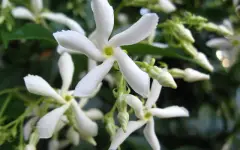 Star JasmineTrachelospermum jasminoides and cvs.moderate water, Central Valley2.67 gal/sq ft in July
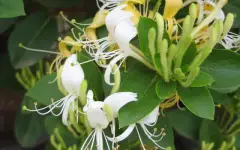 HoneysuckleLonicera japonicamoderate water, Central Valley2.67 gal/sq ft in July
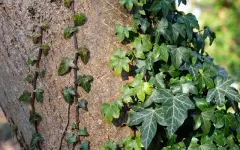 IvyHedera helixmoderate water, Central Valley2.67 gal/sq ft in July
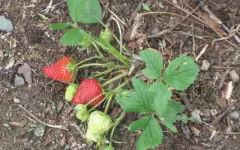 StrawberriesFragaria spp. & cvs. (CA native and non-natives species)moderate water, Central Valley2.67 gal/sq ft in July
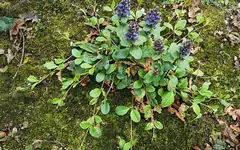 Carpet BugleAjuga reptans (shade)moderate water, Central Valley2.67 gal/sq ft in July
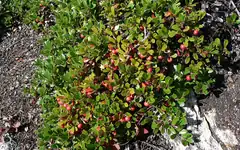 Green Supreme ManzanitaArctostaphylos uva-ursi 'Green Supreme'moderate water, Central Valley2.67 gal/sq ft in July
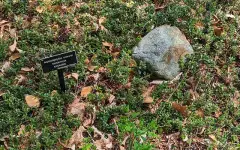 Massachusetts ManzanitaArctostaphylos uva-ursi 'Massachusetts'moderate water, Central Valley2.67 gal/sq ft in July
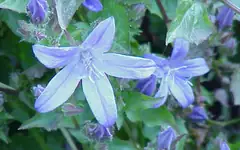 Serbian BellflowerCampanula poscharskyanamoderate water, Central Valley2.67 gal/sq ft in July
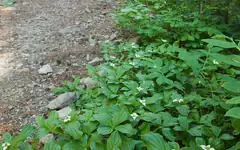 BunchberryCornus canadensismoderate water, Central Valley2.67 gal/sq ft in July
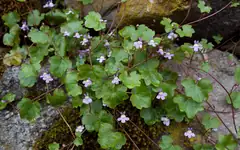 Kenilworth IvyCymbalaria muralismoderate water, Central Valley2.67 gal/sq ft in July
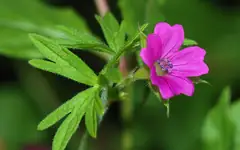 CranesbillGeranium spp.moderate water, Central Valley2.67 gal/sq ft in July
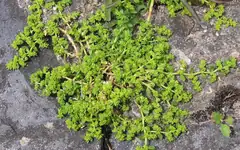 Green CarpetHerniaria glabramoderate water, Central Valley2.67 gal/sq ft in July
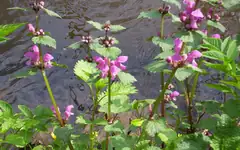 Spotted DeadnettleLamium maculatummoderate water, Central Valley2.67 gal/sq ft in July
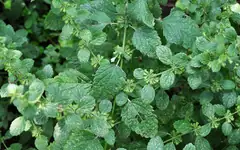 Lemon BalmMelissa officinalismoderate water, Central Valley2.67 gal/sq ft in July
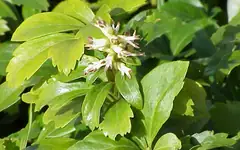 Japanese SpurgePachysandra terminalismoderate water, Central Valley2.67 gal/sq ft in July
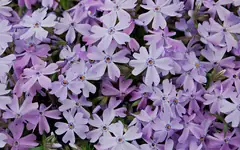 Moss PinkPhlox subulatamoderate water, Central Valley2.67 gal/sq ft in July
Similar plants that need less water 16
Rated lower than birdsfoot trefoil in the Central Valley. Worth a look for a new bed or a lawn replacement.
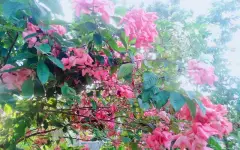 BougainvilleaBougainvillea & spp. & cvs.low water, Central Valley1.07 gal/sq ft in July
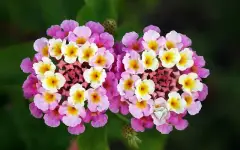 LantanaLantana camara ssp. & cvs.low water, Central Valley1.07 gal/sq ft in July
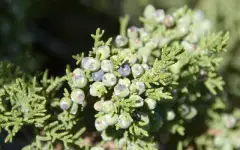 JunipersJuniperus spp. & cvs.low water, Central Valley1.07 gal/sq ft in July
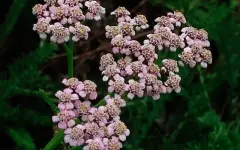 YarrowAchillea millefolium (non-native hybrids)low water, Central Valley1.07 gal/sq ft in July
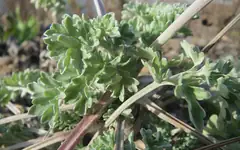 SagebrushArtemisia spp. (shrubby)low water, Central Valley1.07 gal/sq ft in July
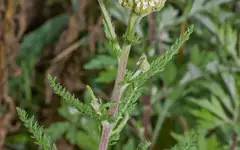 California Native YarrowAchillea millefolium (CA native cultivars)low water, Central Valley1.07 gal/sq ft in July
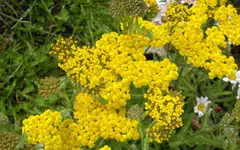 Woolly YarrowAchillea tomentosalow water, Central Valley1.07 gal/sq ft in July
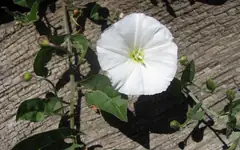 Ground Morning GloryConvolvulus mauritanicuslow water, Central Valley1.07 gal/sq ft in July
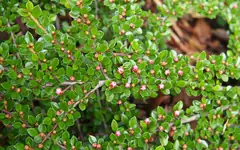 Rock CotoneasterCotoneaster horizontalislow water, Central Valley1.07 gal/sq ft in July
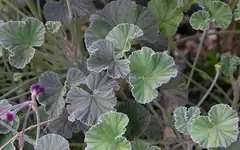 South African GeraniumPelargonium sidoideslow water, Central Valley1.07 gal/sq ft in July
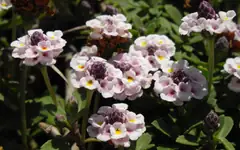 Lippia GroundcoverPhyla nodiflora (Lippia nodiflora) cvs.low water, Central Valley1.07 gal/sq ft in July
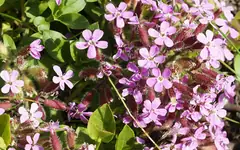 Rock SoapwortSaponaria ocymoideslow water, Central Valley1.07 gal/sq ft in July
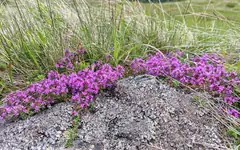 Mother of ThymeThymus praecoxlow water, Central Valley1.07 gal/sq ft in July
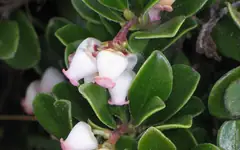 Vancouver Jade BearberryArctostaphylos uva-ursi 'Vancouver Jade'low water, Central Valley1.07 gal/sq ft in July
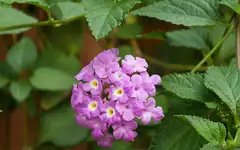 Trailing LantanaLantana montevidensis (sellowiana) ssp. & cvs.low water, Central Valley1.07 gal/sq ft in July
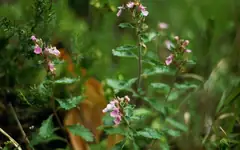 GermanderTeucrium chamaedrys ssp. & cvs.low water, Central Valley1.07 gal/sq ft in July
Turn this into minutes on your water days
Every city page has a calculator that takes birdsfoot trefoil, your sprinkler type and the month, and gives the minutes per water day for that supplier's schedule. Or put it in a zone of the personal watering plan and get all twelve months printed.
Questions people ask
How often should I water birdsfoot trefoil in summer?
In July, established birdsfoot trefoil in loam needs a deep watering about every 8 days in the Central Valley, about every 11 days on the south coast and about every 9 days in the South Inland zone. Sandy soil holds less water, so waterings come closer together. Clay stretches them. Check the soil before each watering and skip one after a soaking rain.
How much water does birdsfoot trefoil need per day?
In July in the Central Valley, established birdsfoot trefoil needs about 0.3 gallons a day for a plant 2 feet across and about 1.1 gallons a day for a plant 4 feet across. Give it in deep waterings spread days apart rather than a little every day, so the whole root zone gets wet.
Does watering for birdsfoot trefoil change across California?
Yes. WUCOLS rates birdsfoot trefoil separately for each of the six California climate zones: low water in the North-Central Coastal zone, moderate water in the Central Valley zone, moderate water in the South Coastal zone, moderate water in the South Inland zone, not suited to this region in the High and Intermediate Desert zone, not suited to this region in the Low Desert zone. The monthly table above shows how the same rating translates into different gallon amounts as reference evapotranspiration changes.
Is birdsfoot trefoil invasive?
It self-sows and spreads by rooting stems, and it can become weedy or invasive. Keep it away from natural areas. Edge the planting and remove seedlings that stray.
Why does birdsfoot trefoil show up in my lawn?
It often appears in lawns, especially on lean, low-nitrogen soil. Its stems root as they spread, so pull clumps by hand with their roots. Check the lawn edges each spring.
Is birdsfoot trefoil good for bees?
Yes. Its yellow pea flowers are a good nectar source for bees, and its leaves feed the caterpillars of some moths. New flowers keep coming for months.
Can you overwater birdsfoot trefoil?
Yes. It tolerates heavy clay, but soil that never dries can weaken the mat. Let the surface dry between soakings.
How do I tell birdsfoot trefoil from clover?
Its leaves look clover-like, but each has five leaflets: a trio at the tip and a pair lower down. The yellow flowers are pea-shaped and clustered, and long, slim pods follow.
More plant watering guides
Sources
- WUCOLS IV plant water use classification for Lotus corniculatus, the University of California survey California agencies use for landscape plan reviewRead August 23, 2026 on wucols.ucdavis.edu
- Model Water Efficient Landscape Ordinance, adopted text and appendices, effective 2025-01-02 · monthly reference evapotranspiration per city, Appendix CRead August 23, 2026 on water.ca.gov/-/media/DWR-Website/Web-Pages/Programs/Water-Use-And-Efficiency/MWELO-Rulemaking/Final-MWELO-Text-and-Appendices_20250103.pdf
- UC Statewide IPM Program, irrigation scheduling using evapotranspirationRead September 30, 2026 on ipm.ucanr.edu/PMG/GARDEN/ENVIRON/evap.html
- Shaw and Pittenger, Landscape Irrigation System Evaluation and Management, UC Cooperative Extension, 2009Read September 30, 2026 on ucanr.edu/sites/default/files/2013-02/160836.pdf
- Pittenger, Water Management in Gardens and Landscapes, UC Riverside, 2017Read September 30, 2026 on ucanr.edu/sites/default/files/2017-03/258022.pdf