How often to water fiddleleaf fig in California
In July on the south coast, established fiddleleaf fig in loam needs a deep watering about every 11 days: about 55 gallons each time under a 10 foot canopy, about 35 gallons a week. Fiddleleaf fig is a tropical evergreen tree from western and central Africa, known for huge, leathery, violin-shaped leaves up to 18 inches long. Outdoors it needs a frost-free spot, so most plants live in containers on patios or indoors. It wants bright light without hot afternoon sun, warmth above about 55 degrees F and moist soil that drains well.
How often to water fiddleleaf fig, month by month
Type your city above and the days between waterings and the gallons appear here, worked out from your city's climate table. Or read the figures by climate zone further down.
How this is worked out: established roots fill the top 1.5 feet of soil, and you water again when that soil has dried halfway. Loam soil holds about 1.5 inches of water per foot. Water the whole area under the branches, and skip a watering after a good soaking rain.
How to tell it needs water
- Leaves dropping can mean too much or too little water, so feel the soil before changing anything
- Soil dry 2 inches down in warm weather means it is time to water
- Leaves browning and falling while the soil stays soggy point to overwatering, which this fig is sensitive to
- Brown, scorched patches on leaves facing afternoon sun point to sunburn rather than thirst
- Fine webbing or tiny insects under the leaves point to spider mites, thrips or scale
How to water it
- Water slowly at the base until the root zone is moist about 8 inches down
- Let the top inch or two dry before watering again, since it is sensitive to overwatering
- Plant in part shade or bright, indirect light, protected from afternoon sun
- Use loamy, slightly acid soil that drains well
- Keep it in a frost-free, sheltered spot, and widen the watered area as the tree grows
Through the seasons
Water a new plant regularly while it settles in, letting the surface dry between waterings. It is evergreen and grows through the warm months, when it uses the most water. Shield it from afternoon sun, which scorches the leaves. Nights below about 55 degrees F slow it, and frost damages it. WUCOLS rates fiddleleaf fig moderate water on the south coast. WUCOLS marks it as not suited to the north-central coast, the Central Valley, South Inland, the high desert or the low desert.
In pots
Fiddleleaf fig is most often grown in a container. The pot can sit on a shaded patio in summer and come indoors as nights cool below about 55 degrees F. Use a well-drained potting mix and a pot with drainage holes. Water when the top inch or two is dry, then let excess drain and empty the saucer. Never let the pot sit in water, since soggy roots make it drop leaves. In winter, water less.
- A year
- no figure
- Reference
- Sacramento climate table
- Counts
- Plant need, before sprinkler losses
WUCOLS lists Fiddleleaf Fig as not suited to this region for the Central Valley zone, so no monthly figure is computed here.
Monthly water need by climate zone
Fiddleleaf Fig: gallons per square foot per month, by WUCOLS climate zone
| Month | N. Coast | C. Valley | S. Coast | S. Inland | Hi Desert | Lo Desert |
|---|---|---|---|---|---|---|
| Jan | – | – | 0.78 | – | – | – |
| Feb | – | – | 0.81 | – | – | – |
| Mar | – | – | 1.15 | – | – | – |
| Apr | – | – | 1.4 | – | – | – |
| May | – | – | 1.61 | – | – | – |
| Jun | – | – | 1.74 | – | – | – |
| Jul | – | – | 1.98 | – | – | – |
| Aug | – | – | 1.86 | – | – | – |
| Sep | – | – | 1.49 | – | – | – |
| Oct | – | – | 1.15 | – | – | – |
| Nov | – | – | 0.84 | – | – | – |
| Dec | – | – | 0.65 | – | – | – |
| Year | – | – | 15.5 | – | – | – |
How this is worked out: the WUCOLS water rating for each zone times that zone’s climate for the month. A dash means WUCOLS does not rate the plant there. The figures are what the plant uses, before sprinkler losses.
Plants with the same water needs 16
Rated not suited to this region in the Central Valley, like fiddleleaf fig. Plants that drink alike can share one valve and one schedule.
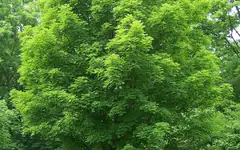 Sugar MapleAcer saccharumnot rated, Central Valleyno Central Valley rating
 Queensland KauriAgathis robustanot rated, Central Valleyno Central Valley rating
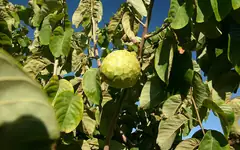 CherimoyaAnnona cherimolanot rated, Central Valleyno Central Valley rating
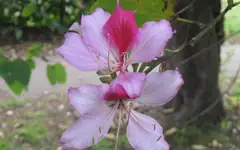 Purple Orchid TreeBauhinia variegata (purpurea)not rated, Central Valleyno Central Valley rating
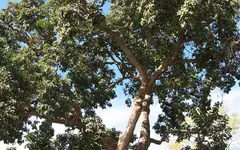 ToogBischofia javanicanot rated, Central Valleyno Central Valley rating
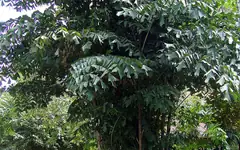 Clustered Fishtail PalmCaryota mitisnot rated, Central Valleyno Central Valley rating
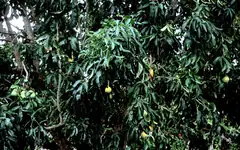 White SapoteCasimiroa edulisnot rated, Central Valleyno Central Valley rating
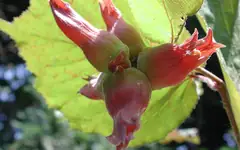 FilbertCorylus maximanot rated, Central Valleyno Central Valley rating
 Spotted GumCorymbia maculata (Eucalyptus maculata)not rated, Central Valleyno Central Valley rating
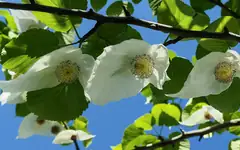 Dove TreeDavidia involucratanot rated, Central Valleyno Central Valley rating
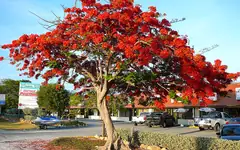 Royal PoincianaDelonix regianot rated, Central Valleyno Central Valley rating
 Triangle PalmDypsis decaryinot rated, Central Valleyno Central Valley rating
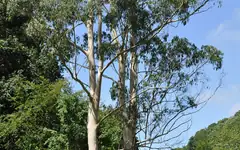 Mountain White GumEucalyptus dalrympleananot rated, Central Valleyno Central Valley rating
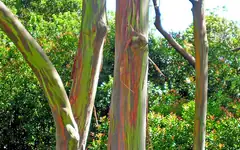 Rainbow EucalyptusEucalyptus degluptanot rated, Central Valleyno Central Valley rating
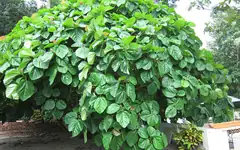 Roxburgh FigFicus auriculatanot rated, Central Valleyno Central Valley rating
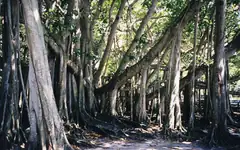 Indian BanyanFicus benghalensisnot rated, Central Valleyno Central Valley rating
Turn this into minutes on your water days
Every city page has a calculator that takes fiddleleaf fig, your sprinkler type and the month, and gives the minutes per water day for that supplier's schedule. Or put it in a zone of the personal watering plan and get all twelve months printed.
Questions people ask
How much water does fiddleleaf fig need per day?
In July on the south coast, established fiddleleaf fig needs about 5.0 gallons a day under a 10 foot canopy and about 20 gallons a day under a 20 foot canopy. Give it in deep waterings spread days apart rather than a little every day, so the whole root zone gets wet.
Does watering for fiddleleaf fig change across California?
Yes. WUCOLS rates fiddleleaf fig separately for each of the six California climate zones: not suited to this region in the North-Central Coastal zone, not suited to this region in the Central Valley zone, moderate water in the South Coastal zone, not suited to this region in the South Inland zone, not suited to this region in the High and Intermediate Desert zone, not suited to this region in the Low Desert zone. The monthly table above shows how the same rating translates into different gallon amounts as reference evapotranspiration changes.
Why is my fiddleleaf fig dropping leaves?
Leaf drop often comes from too much or too little water. Check the soil a couple of inches down before you water. Sudden temperature swings, such as heating or cooling vents nearby, also cause problems.
Can fiddleleaf fig grow outdoors in California?
WUCOLS rates it only for the south coast, and it needs a frost-free site. Elsewhere, grow it in a container that can come indoors when nights cool.
Is fiddleleaf fig toxic to pets?
Yes. It is toxic to people, cats and dogs if eaten, causing mouth irritation, drooling and vomiting. The milky sap also irritates skin, so wear gloves when pruning.
Why does my fiddleleaf fig have brown spots?
Too much direct sun scorches the leaves, and temperature swings can cause brown spots. Move it into bright, indirect light away from vents.
How big does fiddleleaf fig get?
In a pot it usually stays 2 to 10 feet tall. In its tropical home it can become a 60 to 100 foot tree.
More plant watering guides
Sources
- WUCOLS IV plant water use classification for Ficus lyrata, the University of California survey California agencies use for landscape plan reviewRead August 23, 2026 on wucols.ucdavis.edu
- Model Water Efficient Landscape Ordinance, adopted text and appendices, effective 2025-01-02 · monthly reference evapotranspiration per city, Appendix CRead August 23, 2026 on water.ca.gov/-/media/DWR-Website/Web-Pages/Programs/Water-Use-And-Efficiency/MWELO-Rulemaking/Final-MWELO-Text-and-Appendices_20250103.pdf
- UC Statewide IPM Program, irrigation scheduling using evapotranspirationRead September 30, 2026 on ipm.ucanr.edu/PMG/GARDEN/ENVIRON/evap.html
- Shaw and Pittenger, Landscape Irrigation System Evaluation and Management, UC Cooperative Extension, 2009Read September 30, 2026 on ucanr.edu/sites/default/files/2013-02/160836.pdf
- Pittenger, Water Management in Gardens and Landscapes, UC Riverside, 2017Read September 30, 2026 on ucanr.edu/sites/default/files/2017-03/258022.pdf