How often to water huckleberry oak in California
In July on the north-central coast, established huckleberry oak in loam needs a deep soak only about once a month or less: about 8.8 gallons each time for a plant 4 feet across. Huckleberry oak is a low, spreading evergreen oak of California's mountains. It grows wild on dry ridges and rocky slopes from about 3,000 to 10,000 feet. It grows slowly, lives long and keeps its small, leathery leaves all year. In a garden it wants sandy or loamy soil that drains fast, and little water once established.
How often to water huckleberry oak, month by month
Type your city above and the days between waterings and the gallons appear here, worked out from your city's climate table. Or read the figures by climate zone further down.
How this is worked out: established roots fill the top 1.5 feet of soil, and you water again when that soil has dried halfway. Loam soil holds about 1.5 inches of water per foot. Water the whole area the plant covers, and skip a watering after a good soaking rain.
How to tell it needs water
- Soil dry 3 to 4 inches down beside a young plant in its first summer means the root ball needs a slow soak
- New spring shoots wilting during a dry first summer point to a root ball that has dried out
- Slow growth on an established plant is its normal pace, not a sign that it needs more water
- Yellowing leaves or dieback over soil that stays wet for days point to poor drainage, far from the fast-draining rock it grows in wild
- Chewed shoot tips are more likely deer browsing than a watering problem
How to water it
- Water a young plant slowly at the root ball and just beyond it, using drip or a hose at a trickle
- Soak until water reaches about 12 inches down, then let the soil dry well below the surface before the next soak
- Plant in sandy or loamy soil, or on a slope or mound, and avoid heavy clay
- Use gravel or a thin layer of leaf mulch around it, kept clear of the stems
- Site it in partial or light shade, away from lawn sprinklers that keep the soil damp
Through the seasons
Give a new huckleberry oak slow, deep soakings through its first summers while roots move into the native soil. After that it needs little summer water. It stays evergreen all year. In its mountain home, growth starts in April or after snowmelt and stops around November as freezing weather arrives. In a garden, irrigation matters most through the long dry season. WUCOLS rates it low water on the north-central coast, where winter rain covers the cool months. WUCOLS has not evaluated it for the Central Valley, the south coast, South Inland, the high desert or the low desert.
In pots
Huckleberry oak grows slowly, so a young plant can stay in a nursery container for some time before it goes in the ground. Use a gritty, fast-draining mix rather than a heavy one. Check the mix 2 inches down every few days in summer, and daily in a heat wave. Water until it runs from the drainage holes, then empty the saucer. A dark pot on hot paving heats the roots, so shade the container itself. In winter, let rain do most of the work and check that the pot is not sitting wet.
- A year
- no figure
- Reference
- Sacramento climate table
- Counts
- Plant need, before sprinkler losses
WUCOLS lists Huckleberry Oak as not evaluated for the Central Valley zone, so no monthly figure is computed here.
Monthly water need by climate zone
Huckleberry Oak: gallons per square foot per month, by WUCOLS climate zone
| Month | N. Coast | C. Valley | S. Coast | S. Inland | Hi Desert | Lo Desert |
|---|---|---|---|---|---|---|
| Jan | 0.15 | – | – | – | – | – |
| Feb | 0.21 | – | – | – | – | – |
| Mar | 0.35 | – | – | – | – | – |
| Apr | 0.47 | – | – | – | – | – |
| May | 0.58 | – | – | – | – | – |
| Jun | 0.64 | – | – | – | – | – |
| Jul | 0.64 | – | – | – | – | – |
| Aug | 0.6 | – | – | – | – | – |
| Sep | 0.5 | – | – | – | – | – |
| Oct | 0.35 | – | – | – | – | – |
| Nov | 0.19 | – | – | – | – | – |
| Dec | 0.12 | – | – | – | – | – |
| Year | 4.8 | – | – | – | – | – |
How this is worked out: the WUCOLS water rating for each zone times that zone’s climate for the month. A dash means WUCOLS does not rate the plant there. The figures are what the plant uses, before sprinkler losses.
Plants with the same water needs 16
Rated not evaluated in the Central Valley, like huckleberry oak. Plants that drink alike can share one valve and one schedule.
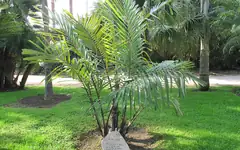 Formosa Sugar PalmArenga englerinot rated, Central Valleyno Central Valley rating
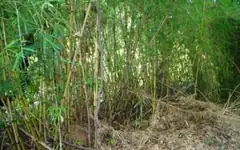 Chilean Feather BambooChusquea culeou (C. breviglumis)not rated, Central Valleyno Central Valley rating
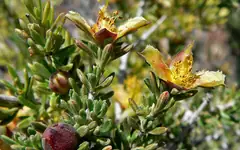 BlackbrushColeogyne ramosissimanot rated, Central Valleyno Central Valley rating
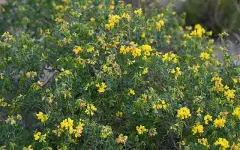 Glaucous Scorpion VetchCoronilla valentina glaucanot rated, Central Valleyno Central Valley rating
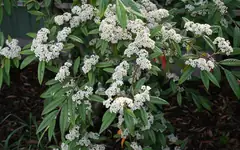 Willowleaf CotoneasterCotoneaster salicifoliusnot rated, Central Valleyno Central Valley rating
 Madagascar SagoCycas thouarsii (SHADE)not rated, Central Valleyno Central Valley rating
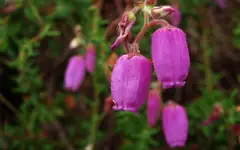 Irish HeathDaboecia cantabricanot rated, Central Valleyno Central Valley rating
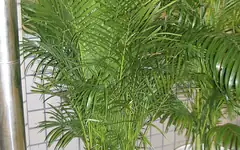 Butterfly PalmDypsis lutescens (Areca)not rated, Central Valleyno Central Valley rating
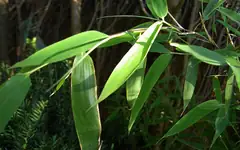 Umbrella BambooFargesia murielaenot rated, Central Valleyno Central Valley rating
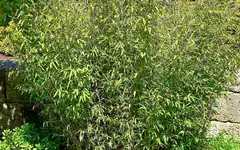 Blue Fountain BambooFargesia nitida (Sinarundinaria nitida) (BAMBOO)not rated, Central Valleyno Central Valley rating
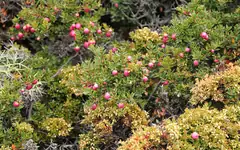 Prickly HeathGaultheria mucronata (Pernettya mucronata)not rated, Central Valleyno Central Valley rating
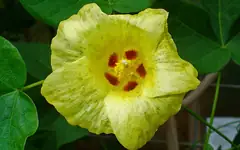 OtterbossieGossypium harknessiinot rated, Central Valleyno Central Valley rating
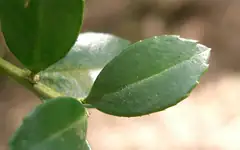 Box-leaved HollyIlex crenatanot rated, Central Valleyno Central Valley rating
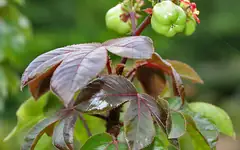 Bellyache BushJatropha gossypiifolianot rated, Central Valleyno Central Valley rating
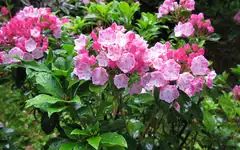 Mountain LaurelKalmia latifolianot rated, Central Valleyno Central Valley rating
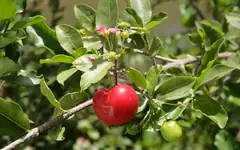 Barbados CherryMalpighia glabranot rated, Central Valleyno Central Valley rating
Turn this into minutes on your water days
Every city page has a calculator that takes huckleberry oak, your sprinkler type and the month, and gives the minutes per water day for that supplier's schedule. Or put it in a zone of the personal watering plan and get all twelve months printed.
Questions people ask
How much water does huckleberry oak need per day?
In July on the north-central coast, established huckleberry oak needs about 0.3 gallons a day for a plant 4 feet across and about 1.0 gallons a day for a plant 8 feet across. Give it in deep waterings spread days apart rather than a little every day, so the whole root zone gets wet.
Does watering for huckleberry oak change across California?
Yes. WUCOLS rates huckleberry oak separately for each of the six California climate zones: low water in the North-Central Coastal zone, not evaluated in the Central Valley zone, not evaluated in the South Coastal zone, not evaluated in the South Inland zone, not evaluated in the High and Intermediate Desert zone, not evaluated in the Low Desert zone. The monthly table above shows how the same rating translates into different gallon amounts as reference evapotranspiration changes.
Does huckleberry oak grow acorns?
Yes. It bears small acorns that mature in a single year. Black bears, deer, rodents, mountain quail and other birds eat them.
Is huckleberry oak fire resistant?
No. Its leaves are resinous and flammable, and dense, low stands can carry a surface fire. Fire kills the top, but the plant resprouts from its root crown. Thin dense plantings near buildings.
Can huckleberry oak grow in clay?
It does not grow well in clay. Choose sandy or loamy ground, or build a mound of fast-draining soil. In clay, each soak stays wet much longer, so check the soil before watering again.
Is huckleberry oak good for slopes?
Yes. It grows wild on steep slopes and ridges and gives excellent erosion control there. Nursery seedlings have been planted in the Lake Tahoe Basin to hold soil. Water a slope planting slowly so it soaks in rather than running off.
Will deer eat huckleberry oak?
Mule deer browse it, and they also eat the acorns. Protect a young plant until it has some size, since it grows slowly.
Does huckleberry oak need shade?
It is listed for partial shade and also grows in sun or light shade. In the wild it forms shrub fields on mountain slopes and also grows beneath conifers. Shade slows soil drying, so check before each soak.
More plant watering guides
Sources
- WUCOLS IV plant water use classification for Quercus vacciniifolia, the University of California survey California agencies use for landscape plan reviewRead August 23, 2026 on wucols.ucdavis.edu
- Model Water Efficient Landscape Ordinance, adopted text and appendices, effective 2025-01-02 · monthly reference evapotranspiration per city, Appendix CRead August 23, 2026 on water.ca.gov/-/media/DWR-Website/Web-Pages/Programs/Water-Use-And-Efficiency/MWELO-Rulemaking/Final-MWELO-Text-and-Appendices_20250103.pdf
- UC Statewide IPM Program, irrigation scheduling using evapotranspirationRead September 30, 2026 on ipm.ucanr.edu/PMG/GARDEN/ENVIRON/evap.html
- Shaw and Pittenger, Landscape Irrigation System Evaluation and Management, UC Cooperative Extension, 2009Read September 30, 2026 on ucanr.edu/sites/default/files/2013-02/160836.pdf
- Pittenger, Water Management in Gardens and Landscapes, UC Riverside, 2017Read September 30, 2026 on ucanr.edu/sites/default/files/2017-03/258022.pdf