How often to water Narihira bamboo in California
In July on the north-central coast, established Narihira bamboo in loam needs a deep watering about every 13 days: about 55 gallons each time under a 10 foot canopy, about 29 gallons a week. Narihira bamboo is a tall, upright evergreen bamboo from Japan. Its glossy dark green canes flush purple-red in a sunny spot. It forms dense clumps but spreads by rhizomes, and it can wander in warm, moist ground. It likes soil that stays moist and still drains freely, and the water you give also sets how fast it grows.
How often to water Narihira bamboo, month by month
Type your city above and the days between waterings and the gallons appear here, worked out from your city's climate table. Or read the figures by climate zone further down.
How this is worked out: established roots fill the top 1.5 feet of soil, and you water again when that soil has dried halfway. Loam soil holds about 1.5 inches of water per foot. Water the whole area under the branches, and skip a watering after a good soaking rain.
How to tell it needs water
- Soil dry 3 to 4 inches down at the edge of the clump means it is time for a deep soak
- Thin, short new canes in spring can mean the clump ran short of water while its shoots were forming
- Dull, drooping leaves on a young clump during hot, dry wind point to a dry root zone
- Yellowing leaves over soil that stays soggy for days point to poor drainage rather than thirst
How to water it
- Water the whole clump and a band of soil around it at ground level, using drip line or a slow soaker hose
- Soak until water reaches about a foot down, then let the top few inches dry before the next soak
- Spread wood chip mulch over the root zone to slow drying in summer heat
- Plant in humus-rich loam that drains well, and avoid low spots where water stands after rain
- Set a rhizome barrier around the planting area and keep the drip line inside it, widening the wet area only as far as you want the clump to grow
Through the seasons
Water a new planting deeply through its first summer, while rhizomes spread into the surrounding soil. Spring is when new canes shoot up, and steady moisture then feeds strong growth. Once established it tolerates short dry spells, but it is not drought proof. The canes stay green all year, so the clump keeps drawing some water in winter. Winter rain covers the cool months on the north-central coast and the south coast. WUCOLS rates it moderate water on the north-central coast, on the south coast, in South Inland and in the low desert. In the low desert, check the soil through dry winter spells. WUCOLS has not evaluated it for the Central Valley or the high desert.
In pots
Narihira bamboo grows tall and dense, so only a large, heavy container suits it. A wide pot also keeps the tall canes from tipping in wind. Check the mix 2 inches down every few days in summer, and daily during South Inland or low desert heat. Water until it runs from the drainage holes, then empty the saucer. Rhizomes fill a pot within a few years. If the mix dries out within a day, divide the clump in spring. The evergreen canes keep using some water in winter, so check the mix during dry spells.
- A year
- no figure
- Reference
- Sacramento climate table
- Counts
- Plant need, before sprinkler losses
WUCOLS lists Narihira Bamboo as not evaluated for the Central Valley zone, so no monthly figure is computed here.
Monthly water need by climate zone
Narihira Bamboo: gallons per square foot per month, by WUCOLS climate zone
| Month | N. Coast | C. Valley | S. Coast | S. Inland | Hi Desert | Lo Desert |
|---|---|---|---|---|---|---|
| Jan | 0.37 | – | 0.78 | 0.78 | – | 0.78 |
| Feb | 0.53 | – | 0.81 | 0.87 | – | 0.93 |
| Mar | 0.87 | – | 1.15 | 1.3 | – | 1.52 |
| Apr | 1.18 | – | 1.4 | 1.61 | – | 1.95 |
| May | 1.46 | – | 1.61 | 1.95 | – | 2.45 |
| Jun | 1.61 | – | 1.74 | 2.29 | – | 2.79 |
| Jul | 1.61 | – | 1.98 | 2.51 | – | 2.85 |
| Aug | 1.49 | – | 1.86 | 2.33 | – | 2.6 |
| Sep | 1.24 | – | 1.49 | 1.86 | – | 2.08 |
| Oct | 0.87 | – | 1.15 | 1.33 | – | 1.49 |
| Nov | 0.47 | – | 0.84 | 0.9 | – | 0.96 |
| Dec | 0.31 | – | 0.65 | 0.68 | – | 0.68 |
| Year | 12 | – | 15.5 | 18.41 | – | 21.08 |
How this is worked out: the WUCOLS water rating for each zone times that zone’s climate for the month. A dash means WUCOLS does not rate the plant there. The figures are what the plant uses, before sprinkler losses.
Plants with the same water needs 16
Rated not evaluated in the Central Valley, like Narihira bamboo. Plants that drink alike can share one valve and one schedule.
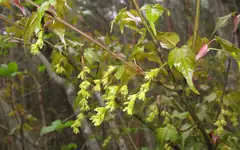 Hawthorn MapleAcer crataegifoliumnot rated, Central Valleyno Central Valley rating
 Mountain MapleAcer glabrumnot rated, Central Valleyno Central Valley rating
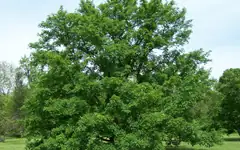 Miyabe MapleAcer miyabeinot rated, Central Valleyno Central Valley rating
 Everglades PalmAcoelorraphe wrightiinot rated, Central Valleyno Central Valley rating
 Pink CedarAcrocarpus fraxinifoliusnot rated, Central Valleyno Central Valley rating
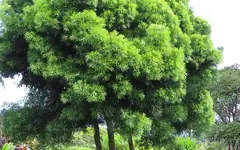 YellowwoodAfrocarpus falcatus (Podocarpus falcatus)not rated, Central Valleyno Central Valley rating
 New Caledonian PineAraucaria columnaris (A. cookii)not rated, Central Valleyno Central Valley rating
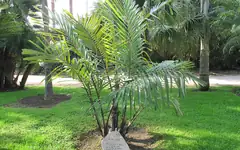 Formosa Sugar PalmArenga englerinot rated, Central Valleyno Central Valley rating
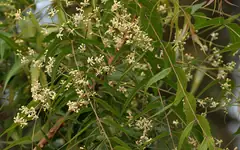 NeemAzadirachta indicanot rated, Central Valleyno Central Valley rating
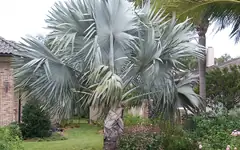 Bismarck PalmBismarckia nobilisnot rated, Central Valleyno Central Valley rating
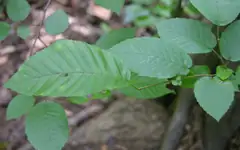 American HornbeamCarpinus caroliniananot rated, Central Valleyno Central Valley rating
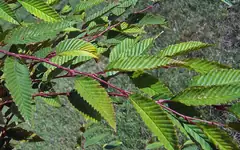 Japanese HornbeamCarpinus japonicanot rated, Central Valleyno Central Valley rating
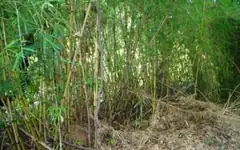 Chilean Feather BambooChusquea culeou (C. breviglumis)not rated, Central Valleyno Central Valley rating
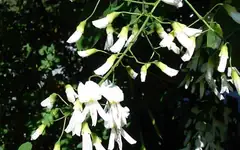 American YellowwoodCladrastis kentukeanot rated, Central Valleyno Central Valley rating
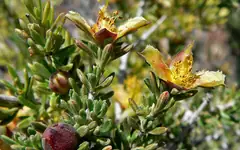 BlackbrushColeogyne ramosissimanot rated, Central Valleyno Central Valley rating
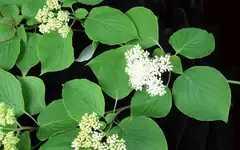 Pagoda DogwoodCornus alternifolianot rated, Central Valleyno Central Valley rating
Turn this into minutes on your water days
Every city page has a calculator that takes Narihira bamboo, your sprinkler type and the month, and gives the minutes per water day for that supplier's schedule. Or put it in a zone of the personal watering plan and get all twelve months printed.
Questions people ask
How often should I water Narihira bamboo in summer?
In July, established Narihira bamboo in loam needs a deep watering about every 11 days on the south coast and about every 9 days in the South Inland zone. Sandy soil holds less water, so waterings come closer together. Clay stretches them. Check the soil before each watering and skip one after a soaking rain.
How much water does Narihira bamboo need per day?
In July on the north-central coast, established Narihira bamboo needs about 4.1 gallons a day under a 10 foot canopy and about 16 gallons a day under a 20 foot canopy. Give it in deep waterings spread days apart rather than a little every day, so the whole root zone gets wet.
Does watering for Narihira bamboo change across California?
Yes. WUCOLS rates Narihira bamboo separately for each of the six California climate zones: moderate water in the North-Central Coastal zone, not evaluated in the Central Valley zone, moderate water in the South Coastal zone, moderate water in the South Inland zone, not evaluated in the High and Intermediate Desert zone, moderate water in the Low Desert zone. The monthly table above shows how the same rating translates into different gallon amounts as reference evapotranspiration changes.
Is Narihira bamboo a running bamboo?
It spreads by underground rhizomes. It tends to stay in a clump in colder areas or on poor, dry soil, but it can spread in warm, moist ground. Plan for a rhizome barrier where it grows near beds, paths or a fence line.
Does more water make bamboo spread faster?
Yes. Bamboo growth can be held back by limiting water and fertilizer, and pushed along by heavy watering and feeding in spring. Give Narihira bamboo enough water to stay healthy, not extra.
How tall does Narihira bamboo get?
It reaches about 13 to 26 feet tall, in a clump about 5 to 8 feet wide. It takes 5 to 10 years to reach full size. Plant it where that height will not block views or overhead lines.
Should I cut out old bamboo canes?
Yes. Remove weak or damaged canes in spring. Canes live for several years, and removing the oldest ones in time keeps the clump healthy. Cut out any flowering shoots promptly.
Why are my bamboo canes turning purple?
Narihira bamboo canes flush red-purple when they grow in a sunny spot. This is normal coloring, not a sign of thirst or disease. Leave the canes in place.
More plant watering guides
Sources
- WUCOLS IV plant water use classification for Semiarundinaria fastuosa, the University of California survey California agencies use for landscape plan reviewRead August 23, 2026 on wucols.ucdavis.edu
- Model Water Efficient Landscape Ordinance, adopted text and appendices, effective 2025-01-02 · monthly reference evapotranspiration per city, Appendix CRead August 23, 2026 on water.ca.gov/-/media/DWR-Website/Web-Pages/Programs/Water-Use-And-Efficiency/MWELO-Rulemaking/Final-MWELO-Text-and-Appendices_20250103.pdf
- UC Statewide IPM Program, irrigation scheduling using evapotranspirationRead September 30, 2026 on ipm.ucanr.edu/PMG/GARDEN/ENVIRON/evap.html
- Shaw and Pittenger, Landscape Irrigation System Evaluation and Management, UC Cooperative Extension, 2009Read September 30, 2026 on ucanr.edu/sites/default/files/2013-02/160836.pdf
- Pittenger, Water Management in Gardens and Landscapes, UC Riverside, 2017Read September 30, 2026 on ucanr.edu/sites/default/files/2017-03/258022.pdf