How often to water rusty foxglove in California
In July on the north-central coast, established rusty foxglove in loam needs a deep watering about every 22 days: about 1.5 gallons each time for a plant 2 feet across, about 0.5 gallons a week. Rusty foxglove is a biennial or short-lived perennial that forms a rosette of dark green, lance-shaped leaves. In summer it sends up spires 3 to 5 feet tall packed with small, bell-shaped, yellow-brown flowers that bees visit. It grows in almost any soil that is neither very wet nor very dry, and all parts are toxic if eaten.
How often to water rusty foxglove, month by month
Type your city above and the days between waterings and the gallons appear here, worked out from your city's climate table. Or read the figures by climate zone further down.
How this is worked out: established roots fill the top 1 foot of soil, and you water again when that soil has dried halfway. Loam soil holds about 1.5 inches of water per foot. Water the whole area the plant covers, and skip a watering after a good soaking rain.
How to tell it needs water
- Soil dry 2 inches down around the rosette while the spire is growing signals rusty foxglove needs a soak
- Rosette leaves going limp in the afternoon can indicate thirst
- Flower spikes fading early and lower blooms dropping can follow a dry spell in bloom
- A rosette rotting at the center in waterlogged soil points to overwatering
How to water it
- Water the soil around the rosette, keeping water off the crown
- Wet the ground 6 to 8 inches deep, then let the top couple of inches dry
- Plant in humus-rich soil in partial shade, though sun or shade also work
- Cut the main flower spike after bloom to encourage side spikes
- Leave a few spikes to ripen if you want self-sown seedlings
Through the seasons
Water a new plant regularly while the rosette grows. It usually flowers in its second summer and is often treated as a biennial. Established plants grow best when the soil avoids both extremes, never soggy and never parched. After bloom, cut the main spike and let side spikes follow. On the north-central coast, WUCOLS rates rusty foxglove low water. The south coast and South Inland carry a moderate water rating. WUCOLS marks it as not suited to the high desert or the low desert, and has not evaluated it for the Central Valley.
In pots
Rusty foxglove can grow in a deep pot, which steadies its tall spires. Use a humus-rich, well-drained mix. Water when the top inch or two feels dry, and let the surplus run out freely. In summer, check every couple of days, and keep the pot in part shade. Empty the saucer. Wear gloves when handling it. In winter, water only when the mix dries. Stake the spire if wind rocks the pot.
- A year
- no figure
- Reference
- Sacramento climate table
- Counts
- Plant need, before sprinkler losses
WUCOLS lists Rusty Foxglove as not evaluated for the Central Valley zone, so no monthly figure is computed here.
Monthly water need by climate zone
Rusty Foxglove: gallons per square foot per month, by WUCOLS climate zone
| Month | N. Coast | C. Valley | S. Coast | S. Inland | Hi Desert | Lo Desert |
|---|---|---|---|---|---|---|
| Jan | 0.15 | – | 0.78 | 0.78 | – | – |
| Feb | 0.21 | – | 0.81 | 0.87 | – | – |
| Mar | 0.35 | – | 1.15 | 1.3 | – | – |
| Apr | 0.47 | – | 1.4 | 1.61 | – | – |
| May | 0.58 | – | 1.61 | 1.95 | – | – |
| Jun | 0.64 | – | 1.74 | 2.29 | – | – |
| Jul | 0.64 | – | 1.98 | 2.51 | – | – |
| Aug | 0.6 | – | 1.86 | 2.33 | – | – |
| Sep | 0.5 | – | 1.49 | 1.86 | – | – |
| Oct | 0.35 | – | 1.15 | 1.33 | – | – |
| Nov | 0.19 | – | 0.84 | 0.9 | – | – |
| Dec | 0.12 | – | 0.65 | 0.68 | – | – |
| Year | 4.8 | – | 15.5 | 18.41 | – | – |
How this is worked out: the WUCOLS water rating for each zone times that zone’s climate for the month. A dash means WUCOLS does not rate the plant there. The figures are what the plant uses, before sprinkler losses.
Plants with the same water needs 16
Rated not evaluated in the Central Valley, like rusty foxglove. Plants that drink alike can share one valve and one schedule.
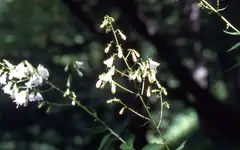 Lilyleaf LadybellsAdenophora liliifolianot rated, Central Valleyno Central Valley rating
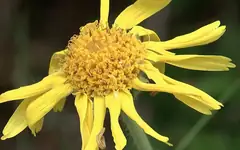 ArnicaArnica montananot rated, Central Valleyno Central Valley rating
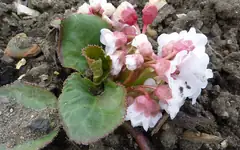 Frilly BergeniaBergenia ciliatanot rated, Central Valleyno Central Valley rating
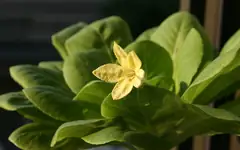 Cabbage on a StickBrighamia insignisnot rated, Central Valleyno Central Valley rating
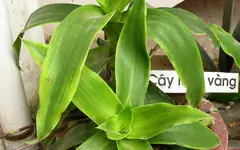 Basket PlantCallisia fragransnot rated, Central Valleyno Central Valley rating
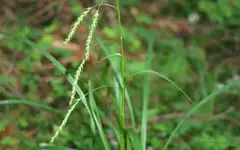 Forest SedgeCarex sylvaticanot rated, Central Valleyno Central Valley rating
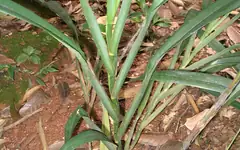 Umbrella DracaenaDianella ensifolianot rated, Central Valleyno Central Valley rating
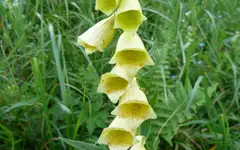 Big-Flowered FoxgloveDigitalis grandifloranot rated, Central Valleyno Central Valley rating
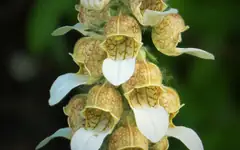 Woolly FoxgloveDigitalis lanatanot rated, Central Valleyno Central Valley rating
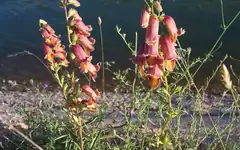 Sunset FoxgloveDigitalis obscuranot rated, Central Valleyno Central Valley rating
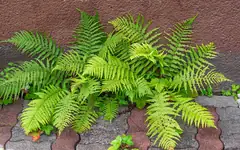 Male FernDryopteris filix-masnot rated, Central Valleyno Central Valley rating
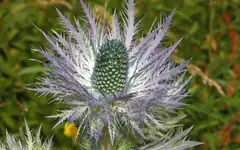 Alpine Sea HollyEryngium alpinumnot rated, Central Valleyno Central Valley rating
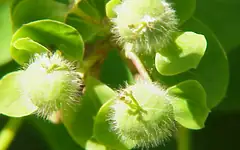 Purple SpurgeEuphorbia dulcisnot rated, Central Valleyno Central Valley rating
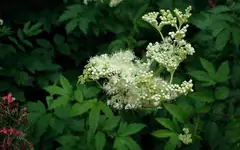 Queen of the MeadowFilipendula ulmarianot rated, Central Valleyno Central Valley rating
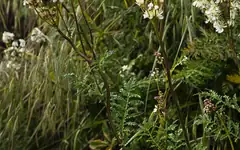 DropwortFilipendula vulgaris (Filipendula hexapetala)not rated, Central Valleyno Central Valley rating
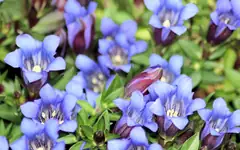 GentianGentiana scabra procumbensnot rated, Central Valleyno Central Valley rating
Turn this into minutes on your water days
Every city page has a calculator that takes rusty foxglove, your sprinkler type and the month, and gives the minutes per water day for that supplier's schedule. Or put it in a zone of the personal watering plan and get all twelve months printed.
Questions people ask
How often should I water rusty foxglove in summer?
In July, established rusty foxglove in loam needs a deep watering about every 7 days on the south coast and about every 6 days in the South Inland zone. Sandy soil holds less water, so waterings come closer together. Clay stretches them. Check the soil before each watering and skip one after a soaking rain.
How much water does rusty foxglove need per day?
In July on the north-central coast, established rusty foxglove needs about 0.1 gallons a day for a plant 2 feet across and about 0.3 gallons a day for a plant 4 feet across. Give it in deep waterings spread days apart rather than a little every day, so the whole root zone gets wet.
Does watering for rusty foxglove change across California?
Yes. WUCOLS rates rusty foxglove separately for each of the six California climate zones: low water in the North-Central Coastal zone, not evaluated in the Central Valley zone, moderate water in the South Coastal zone, moderate water in the South Inland zone, not suited to this region in the High and Intermediate Desert zone, not suited to this region in the Low Desert zone. The monthly table above shows how the same rating translates into different gallon amounts as reference evapotranspiration changes.
Is rusty foxglove poisonous?
Yes, all parts are toxic if eaten and can cause severe discomfort and vomiting. Contact with leaves may also cause an allergic reaction. Wear gloves and keep pets away.
Does rusty foxglove come back every year?
It is a biennial or short-lived perennial. Plants often flower in their second year and then decline. Let some seed fall to keep a planting going.
Is rusty foxglove good for bees?
Yes, its flowers provide nectar and pollen for bees and other pollinators. Bloom comes in summer. Water in the morning so flowers stay dry.
How tall does rusty foxglove get?
Flower spires usually reach 3 to 5 feet. The rosette below stays low. Stake spires in windy spots.
Should I cut off the flower spike?
Cutting the main spike after bloom encourages side spikes. Leave a spike to ripen if you want seedlings. Water lightly after cutting back.
More plant watering guides
Sources
- WUCOLS IV plant water use classification for Digitalis ferruginea, the University of California survey California agencies use for landscape plan reviewRead August 23, 2026 on wucols.ucdavis.edu
- Model Water Efficient Landscape Ordinance, adopted text and appendices, effective 2025-01-02 · monthly reference evapotranspiration per city, Appendix CRead August 23, 2026 on water.ca.gov/-/media/DWR-Website/Web-Pages/Programs/Water-Use-And-Efficiency/MWELO-Rulemaking/Final-MWELO-Text-and-Appendices_20250103.pdf
- UC Statewide IPM Program, irrigation scheduling using evapotranspirationRead September 30, 2026 on ipm.ucanr.edu/PMG/GARDEN/ENVIRON/evap.html
- Shaw and Pittenger, Landscape Irrigation System Evaluation and Management, UC Cooperative Extension, 2009Read September 30, 2026 on ucanr.edu/sites/default/files/2013-02/160836.pdf
- Pittenger, Water Management in Gardens and Landscapes, UC Riverside, 2017Read September 30, 2026 on ucanr.edu/sites/default/files/2017-03/258022.pdf