How often to water sea squill in California
In July in the Central Valley, established sea squill needs about 0.8 gallons a week for a plant 2 feet across. Sea squill is a giant Mediterranean bulb that grows its blue-green strap leaves through the cool, wet months and goes dormant in summer. In late summer and fall, bare stalks 3 to 4 feet tall rise from the bulb with spikes of starry white flowers. It needs sharp drainage and very little water, and little or none while it rests in summer.
How often to water sea squill, month by month
Type your city above and the days between waterings and the gallons appear here, worked out from your city's climate table. Or read the figures by climate zone further down.
How this is worked out: the plant’s WUCOLS rating times your city’s climate for the month, over the area the plant covers. Skip a watering after a good soaking rain.
How to tell it needs water
- Leaves yellowing and dying back in early summer is normal dormancy, not thirst
- Soil dry 3 to 4 inches down while the leaves are up and rain has stopped means the bulb can take a soak
- A soft, mushy bulb or rotting base points to too much water, most often in summer or in heavy soil
- Leaves scorched after a frost in the high 20s show cold damage rather than a need for water
- Flower stalks rising from a bare bulb in late summer are normal, since the flowers come before the new leaves
How to water it
- Water only while the leaves are up, from late fall into spring, and only when rain falls short
- Stop watering once the leaves die back in summer, and let the bulb rest dry
- Plant in full sun to light shade in sandy, fast-draining soil, or on a slope or mound in heavier ground
- Set each bulb with its top inch or two above the soil, spacing bulbs 18 to 24 inches apart
- Soak deeply enough to wet the soil around and below the bulb, then let it dry before watering again
Through the seasons
Sea squill turns the usual garden year around. Leaves emerge in late fall and grow through winter and spring, when rain does most of the watering. In summer the leaves die back and the bulb rests, needing little or no water. Flower stalks rise in late summer and fall, and new leaves follow as the flowers fade. WUCOLS rates sea squill low water on the north-central coast and in the Central Valley. On the south coast and in South Inland it rates very low water. WUCOLS marks it as not suited to the high desert or the low desert.
In pots
Sea squill does well in a large, deep container of gritty, sandy mix, with the top of the bulb above the surface. While the leaves are growing, water whenever the top 2 inches of mix dry, letting the excess drain away and emptying the saucer. When the leaves wither in summer, stop watering and leave the pot in a sunny, dry spot until flower stalks or new leaves appear. Protect potted bulbs from frost below about 28 degrees F.
- A year
- 6.84 gal per sq ft
- Reference
- Sacramento climate table
- Counts
- Plant need, before sprinkler losses
Monthly water need by climate zone
Sea Squill: gallons per square foot per month, by WUCOLS climate zone
| Month | N. Coast | C. Valley | S. Coast | S. Inland | Hi Desert | Lo Desert |
|---|---|---|---|---|---|---|
| Jan | 0.15 | 0.16 | 0.08 | 0.08 | – | – |
| Feb | 0.21 | 0.26 | 0.08 | 0.09 | – | – |
| Mar | 0.35 | 0.43 | 0.11 | 0.13 | – | – |
| Apr | 0.47 | 0.61 | 0.14 | 0.16 | – | – |
| May | 0.58 | 0.83 | 0.16 | 0.2 | – | – |
| Jun | 0.64 | 0.99 | 0.17 | 0.23 | – | – |
| Jul | 0.64 | 1.07 | 0.2 | 0.25 | – | – |
| Aug | 0.6 | 0.95 | 0.19 | 0.23 | – | – |
| Sep | 0.5 | 0.72 | 0.15 | 0.19 | – | – |
| Oct | 0.35 | 0.47 | 0.11 | 0.13 | – | – |
| Nov | 0.19 | 0.22 | 0.08 | 0.09 | – | – |
| Dec | 0.12 | 0.14 | 0.07 | 0.07 | – | – |
| Year | 4.8 | 6.84 | 1.55 | 1.84 | – | – |
How this is worked out: the WUCOLS water rating for each zone times that zone’s climate for the month. A dash means WUCOLS does not rate the plant there. The figures are what the plant uses, before sprinkler losses.
Plants with the same water needs 5
Rated low water in the Central Valley, like sea squill. Plants that drink alike can share one valve and one schedule.
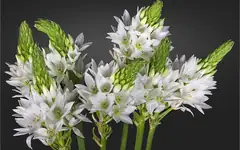 Star of BethlehemOrnithogalum arabicumlow water, Central Valley1.07 gal/sq ft in July
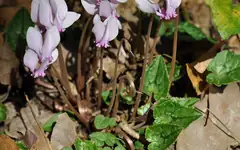 Ivy Leaf CyclamenCyclamen hederifoliumlow water, Central Valley1.07 gal/sq ft in July
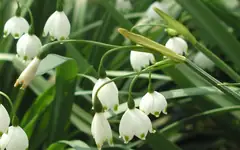 Summer SnowflakeLeucojum aestivumlow water, Central Valley1.07 gal/sq ft in July
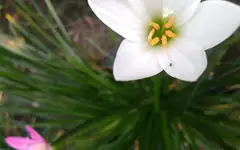 White Rain LilyZephyranthes candidalow water, Central Valley1.07 gal/sq ft in July
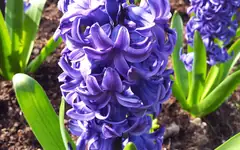 HyacinthHyacinthus spp.low water, Central Valley1.07 gal/sq ft in July
Turn this into minutes on your water days
Every city page has a calculator that takes sea squill, your sprinkler type and the month, and gives the minutes per water day for that supplier's schedule. Or put it in a zone of the personal watering plan and get all twelve months printed.
Questions people ask
How much should I water sea squill in summer?
In July, established sea squill needs about 0.8 gallons in the Central Valley, 0.1 gallons on the south coast and 0.2 gallons in the South Inland zone each week, for a plant 2 feet across. Water deeply and let the top of the soil dry before the next watering. Skip a watering after a soaking rain.
How much water does sea squill need per day?
In July in the Central Valley, established sea squill needs about 0.1 gallons a day for a plant 2 feet across and about 0.4 gallons a day for a plant 4 feet across. Give it in deep waterings spread days apart rather than a little every day, so the whole root zone gets wet.
Does watering for sea squill change across California?
Yes. WUCOLS rates sea squill separately for each of the six California climate zones: low water in the North-Central Coastal zone, low water in the Central Valley zone, very low water in the South Coastal zone, very low water in the South Inland zone, not suited to this region in the High and Intermediate Desert zone, not suited to this region in the Low Desert zone. The monthly table above shows how the same rating translates into different gallon amounts as reference evapotranspiration changes.
Should I water sea squill in summer?
Little or not at all. Its leaves die back in summer and the bulb rests, so summer water mainly invites rot. Resume watering when new leaves appear in fall and rain is short.
Why is my sea squill blooming without leaves?
That is normal. Flower stalks rise from the bare bulb in late summer and fall, and the leaves emerge as the top flowers fade.
Is sea squill poisonous?
Yes. It contains compounds that cause nausea, vomiting and stomach pain if eaten. It was once used as a rodent poison, and gophers reportedly leave it alone.
How deep do I plant sea squill?
Leave the top inch or two of the bulb above ground. Space bulbs 18 to 24 inches apart so the clumps can spread as the bulbs split.
How cold can sea squill take?
It tolerates about 20 to 25 degrees F, but cold below about 28 degrees can damage the leaves and reduce flowering. Cover plants or move pots on frosty nights.
More plant watering guides
Sources
- WUCOLS IV plant water use classification for Drimia maritima, the University of California survey California agencies use for landscape plan reviewRead August 23, 2026 on wucols.ucdavis.edu
- Model Water Efficient Landscape Ordinance, adopted text and appendices, effective 2025-01-02 · monthly reference evapotranspiration per city, Appendix CRead August 23, 2026 on water.ca.gov/-/media/DWR-Website/Web-Pages/Programs/Water-Use-And-Efficiency/MWELO-Rulemaking/Final-MWELO-Text-and-Appendices_20250103.pdf
- UC Statewide IPM Program, irrigation scheduling using evapotranspirationRead September 30, 2026 on ipm.ucanr.edu/PMG/GARDEN/ENVIRON/evap.html
- Shaw and Pittenger, Landscape Irrigation System Evaluation and Management, UC Cooperative Extension, 2009Read September 30, 2026 on ucanr.edu/sites/default/files/2013-02/160836.pdf
- Pittenger, Water Management in Gardens and Landscapes, UC Riverside, 2017Read September 30, 2026 on ucanr.edu/sites/default/files/2017-03/258022.pdf