How often to water white clover in California
In July on the north-central coast, established white clover in loam needs a deep watering about every 13 days: about 2.2 gallons each time for a plant 2 feet across, about 1.1 gallons a week. White clover is a low spreading legume that roots along its creeping stems, knitting itself into a dense mat of three part leaves and round white flower heads. Its roots host bacteria that pull nitrogen from the air, which keeps the foliage green in low-nitrogen soil. It favors cool, evenly moist ground and thins fast once the surface stays dry for long.
How often to water white clover, month by month
Type your city above and the days between waterings and the gallons appear here, worked out from your city's climate table. Or read the figures by climate zone further down.
How this is worked out: established roots fill the top 1.5 feet of soil, and you water again when that soil has dried halfway. Loam soil holds about 1.5 inches of water per foot. Water the whole area the plant covers, and skip a watering after a good soaking rain.
How to tell it needs water
- Folded clover leaflets call for checking the soil before deciding the mat is too dry
- A pale or thinning edge warrants comparing moisture beneath healthy and affected clover
- Soil dry an inch down beneath the leaf mat warrants a check before watering again
- Water remaining pooled in low parts of the clover patch suggests overwatering or a drainage problem
- Thinning crowns need inspection for disease as well as a check of soil moisture
How to water it
- Apply water evenly across the clover mat and check that it reaches the rooted soil beneath it
- Probe below the soil surface instead of keeping only the uppermost layer damp
- Water the clover early enough to inspect coverage and correct pooling before leaving the patch
- Improve drainage in low spots where water pools after a lawn mix is seeded
- Extend watering outward as spreading stems root at new nodes and widen the patch
Through the seasons
In its first year, keep a newly seeded white clover patch moist while seedlings establish and creeping stems spread. Established mats still need irrigation through California dry summers; drought can reduce persistence. This herbaceous perennial flowers in spring and summer, and cold winters can damage its foliage. Coastal winter rainfall can reduce irrigation when soil is moist. WUCOLS rates white clover moderate water on the north-central coast. It rates high water on the south coast and in South Inland. WUCOLS marks it as not suited to the Central Valley, and has not evaluated it for the high desert or the low desert.
In pots
For white clover edging a container, allow space for creeping stems and check an inch into the mix during California heat. A dry surface alone does not show how much moisture remains beneath the mat. Water thoroughly through the drainage holes, then empty the saucer. Keep the rooted mix moist without leaving water pooled beneath the pot. During cool winter weather, base the next watering on the moisture check and the condition of the foliage.
- A year
- no figure
- Reference
- Sacramento climate table
- Counts
- Plant need, before sprinkler losses
WUCOLS lists White Clover as not suited to this region for the Central Valley zone, so no monthly figure is computed here.
Monthly water need by climate zone
White Clover: gallons per square foot per month, by WUCOLS climate zone
| Month | N. Coast | C. Valley | S. Coast | S. Inland | Hi Desert | Lo Desert |
|---|---|---|---|---|---|---|
| Jan | 0.37 | – | 1.24 | 1.24 | – | – |
| Feb | 0.53 | – | 1.29 | 1.39 | – | – |
| Mar | 0.87 | – | 1.84 | 2.08 | – | – |
| Apr | 1.18 | – | 2.23 | 2.58 | – | – |
| May | 1.46 | – | 2.58 | 3.12 | – | – |
| Jun | 1.61 | – | 2.78 | 3.67 | – | – |
| Jul | 1.61 | – | 3.17 | 4.02 | – | – |
| Aug | 1.49 | – | 2.98 | 3.72 | – | – |
| Sep | 1.24 | – | 2.38 | 2.98 | – | – |
| Oct | 0.87 | – | 1.84 | 2.13 | – | – |
| Nov | 0.47 | – | 1.34 | 1.44 | – | – |
| Dec | 0.31 | – | 1.04 | 1.09 | – | – |
| Year | 12 | – | 24.8 | 29.46 | – | – |
How this is worked out: the WUCOLS water rating for each zone times that zone’s climate for the month. A dash means WUCOLS does not rate the plant there. The figures are what the plant uses, before sprinkler losses.
Plants with the same water needs 4
Rated not suited to this region in the Central Valley, like white clover. Plants that drink alike can share one valve and one schedule.
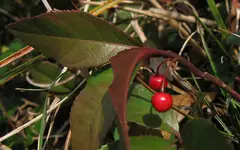 Japanese ArdisiaArdisia japonicanot rated, Central Valleyno Central Valley rating
 Swedish IvyPlectranthus verticillatusnot rated, Central Valleyno Central Valley rating
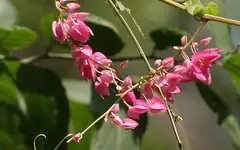 Coral VineAntigonon leptopusnot rated, Central Valleyno Central Valley rating
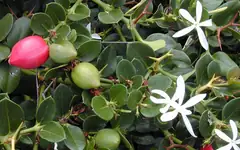 Prostrate Natal PlumCarissa macrocarpa 'Prostrata'not rated, Central Valleyno Central Valley rating
Turn this into minutes on your water days
Every city page has a calculator that takes white clover, your sprinkler type and the month, and gives the minutes per water day for that supplier's schedule. Or put it in a zone of the personal watering plan and get all twelve months printed.
Questions people ask
How often should I water white clover in summer?
In July, established white clover in loam needs a deep watering about every 7 days on the south coast and about every 5 days in the South Inland zone. Sandy soil holds less water, so waterings come closer together. Clay stretches them. Check the soil before each watering and skip one after a soaking rain.
How much water does white clover need per day?
In July on the north-central coast, established white clover needs about 0.2 gallons a day for a plant 2 feet across and about 0.7 gallons a day for a plant 4 feet across. Give it in deep waterings spread days apart rather than a little every day, so the whole root zone gets wet.
Does watering for white clover change across California?
Yes. WUCOLS rates white clover separately for each of the six California climate zones: moderate water in the North-Central Coastal zone, not suited to this region in the Central Valley zone, high water in the South Coastal zone, high water in the South Inland zone, not evaluated in the High and Intermediate Desert zone, not evaluated in the Low Desert zone. The monthly table above shows how the same rating translates into different gallon amounts as reference evapotranspiration changes.
Why is my white clover patch turning brown?
Check moisture beneath the mat before deciding why it has browned. Dry soil can reduce clover persistence, but root, stem and leaf diseases are also possible. Compare conditions in healthy and affected parts of the patch.
Can white clover survive without any irrigation?
Do not count on an established white clover mat surviving a California summer without irrigation. Perennial clovers need water through the dry months, and dry soil can reduce their persistence. A brown patch is not a promise of regrowth when rain returns.
Does mowing height change how I should water clover?
Mowing does not establish how much moisture remains beneath a clover mat, so check the soil after cutting. White clover can respond to mowing with vigorous growth. Do not use a short canopy alone as the signal to irrigate.
Why does my clover lawn attract so many bees?
The round white flower heads are a steady nectar source through the growing season. Mowing before bloom reduces flowers if that matters for foot traffic. Flowering has no bearing on how deep its roots sit or how it should be checked for water.
Is white clover useful for a dry slope?
White clover is better suited to a moist slope than a dry one. Its creeping cover can help with erosion, but stands may be sparse where soil stays dry. Assess summer moisture before relying on it to cover a bank.
Will white clover crowd out my lawn grass?
White clover spreads through rooting stems and can occupy thin turf. A dense grass stand helps resist new invasion, but mowing alone will not remove established clover. Check the desired mix of grass and clover before changing lawn care.
More plant watering guides
Sources
- WUCOLS IV plant water use classification for Trifolium repens, the University of California survey California agencies use for landscape plan reviewRead August 23, 2026 on wucols.ucdavis.edu
- Model Water Efficient Landscape Ordinance, adopted text and appendices, effective 2025-01-02 · monthly reference evapotranspiration per city, Appendix CRead August 23, 2026 on water.ca.gov/-/media/DWR-Website/Web-Pages/Programs/Water-Use-And-Efficiency/MWELO-Rulemaking/Final-MWELO-Text-and-Appendices_20250103.pdf
- UC Statewide IPM Program, irrigation scheduling using evapotranspirationRead September 30, 2026 on ipm.ucanr.edu/PMG/GARDEN/ENVIRON/evap.html
- Shaw and Pittenger, Landscape Irrigation System Evaluation and Management, UC Cooperative Extension, 2009Read September 30, 2026 on ucanr.edu/sites/default/files/2013-02/160836.pdf
- Pittenger, Water Management in Gardens and Landscapes, UC Riverside, 2017Read September 30, 2026 on ucanr.edu/sites/default/files/2017-03/258022.pdf