How often to water wisteria in California
In July in the Central Valley, established wisteria in loam needs a deep watering about every 20 days: about 2.2 gallons each time for a plant 2 feet across, about 0.8 gallons a week. Wisteria is a large, long-lived vine with roots that spread deeply and widely as it establishes. Young vines need steady moisture while building that system. Mature growth still needs soil checks, especially as flower buds develop, without keeping the woody crown saturated.
How often to water wisteria, month by month
Type your city above and the days between waterings and the gallons appear here, worked out from your city's climate table. Or read the figures by climate zone further down.
How this is worked out: established roots fill the top 1.5 feet of soil, and you water again when that soil has dried halfway. Loam soil holds about 1.5 inches of water per foot. Water the whole area the plant covers, and skip a watering after a good soaking rain.
How to tell it needs water
- Soil dry 6 to 8 inches down around an established wisteria signals that it needs a deep soak
- Leaflets still limp the morning after heat can indicate thirst when the ground is dry
- Crisp leaflet edges on a young vine after heat warrant a root-ball moisture check
- Yellow leaves falling over wet ground can indicate poor drainage, while green veins on yellow leaves can reflect iron chlorosis
- Long leafy shoots with few flowers can accompany excess feeding or irrigation but do not identify the cause alone
How to water it
- Water established wisteria in a broad ring 2 to 3 feet from the trunk while soaking new vines over and around their root balls
- Apply water slowly to wet soil 12 to 18 inches down, then wait until it dries 6 to 8 inches down
- Use drip or a slow hose beneath the vine to keep the woody crown dry
- Mulch the spreading root area with coarse wood chips, extending beyond the canopy while leaving the trunk clear
- Use a mound or slope in heavy clay and move emitters outward as the root area expands
Through the seasons
Keep a new wisteria root ball and nearby soil moist through its first summer, expanding coverage as roots spread. Established vines can take deeper, less frequent soakings. Spring bloom can precede leaves on Chinese wisteria, followed by vigorous summer growth. Chinese and Japanese wisterias form next year's flower buds in summer, so keep checking moisture through that period. Reduce irrigation after leaf fall. Coastal and Central Valley rain can supply dormant roots; check both deserts during dry winter gaps. WUCOLS rates wisteria low water in the Central Valley and moderate water in the other five climate zones.
In pots
Wisteria trained as a standard or bonsai has a spreading root system confined to a pot. Check the top couple of inches of mix often in California summer heat and water when dry. Soak until excess leaves the drainage holes, then empty the saucer to keep fine roots out of standing water. A crowded container needs attention to root space as well as moisture. In winter, reduce watering for the leafless vine but keep the mix from drying completely.
- A year
- 6.84 gal per sq ft
- Reference
- Sacramento climate table
- Counts
- Plant need, before sprinkler losses
Monthly water need by climate zone
Wisteria: gallons per square foot per month, by WUCOLS climate zone
| Month | N. Coast | C. Valley | S. Coast | S. Inland | Hi Desert | Lo Desert |
|---|---|---|---|---|---|---|
| Jan | 0.37 | 0.16 | 0.78 | 0.78 | 0.74 | 0.78 |
| Feb | 0.53 | 0.26 | 0.81 | 0.87 | 0.93 | 0.93 |
| Mar | 0.87 | 0.43 | 1.15 | 1.3 | 1.46 | 1.52 |
| Apr | 1.18 | 0.61 | 1.4 | 1.61 | 1.89 | 1.95 |
| May | 1.46 | 0.83 | 1.61 | 1.95 | 2.39 | 2.45 |
| Jun | 1.61 | 0.99 | 1.74 | 2.29 | 2.85 | 2.79 |
| Jul | 1.61 | 1.07 | 1.98 | 2.51 | 3.04 | 2.85 |
| Aug | 1.49 | 0.95 | 1.86 | 2.33 | 2.79 | 2.6 |
| Sep | 1.24 | 0.72 | 1.49 | 1.86 | 2.14 | 2.08 |
| Oct | 0.87 | 0.47 | 1.15 | 1.33 | 1.46 | 1.49 |
| Nov | 0.47 | 0.22 | 0.84 | 0.9 | 0.93 | 0.96 |
| Dec | 0.31 | 0.14 | 0.65 | 0.68 | 0.65 | 0.68 |
| Year | 12 | 6.84 | 15.5 | 18.41 | 21.27 | 21.08 |
How this is worked out: the WUCOLS water rating for each zone times that zone’s climate for the month. A dash means WUCOLS does not rate the plant there. The figures are what the plant uses, before sprinkler losses.
Plants with the same water needs 8
Rated low water in the Central Valley, like wisteria. Plants that drink alike can share one valve and one schedule.
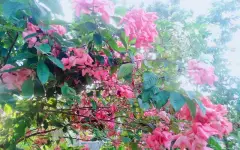 BougainvilleaBougainvillea & spp. & cvs.low water, Central Valley1.07 gal/sq ft in July
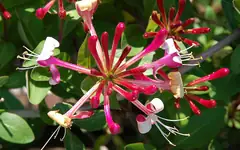 Flowering WoodbineLonicera periclymenumlow water, Central Valley1.07 gal/sq ft in July
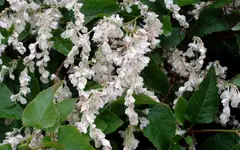 FleeceflowerFallopia baldschuanica (Polygonum aubertii)low water, Central Valley1.07 gal/sq ft in July
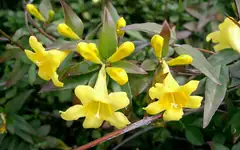 Carolina JessamineGelsemium sempervirenslow water, Central Valley1.07 gal/sq ft in July
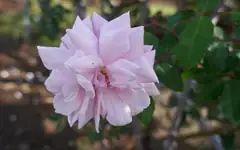 Cecile Brunner RoseRosa 'Cecile Brunner'low water, Central Valley1.07 gal/sq ft in July
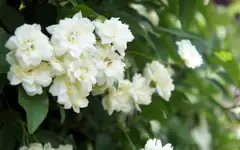 Lady Banks RoseRosa banksiaelow water, Central Valley1.07 gal/sq ft in July
 Roger's Red GrapeVitis 'Roger's Red'low water, Central Valley1.07 gal/sq ft in July
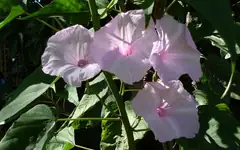 Blue Dawn Morning GloryIpomoea acuminatalow water, Central Valley1.07 gal/sq ft in July
Turn this into minutes on your water days
Every city page has a calculator that takes wisteria, your sprinkler type and the month, and gives the minutes per water day for that supplier's schedule. Or put it in a zone of the personal watering plan and get all twelve months printed.
Questions people ask
How often should I water wisteria in summer?
In July, established wisteria in loam needs a deep watering about every 20 days in the Central Valley, about every 11 days on the south coast and about every 9 days in the South Inland zone. Sandy soil holds less water, so waterings come closer together. Clay stretches them. Check the soil before each watering and skip one after a soaking rain.
How much water does wisteria need per day?
In July in the Central Valley, established wisteria needs about 0.1 gallons a day for a plant 2 feet across and about 0.4 gallons a day for a plant 4 feet across. Give it in deep waterings spread days apart rather than a little every day, so the whole root zone gets wet.
Does watering for wisteria change across California?
Yes. WUCOLS rates wisteria separately for each of the six California climate zones: moderate water in the North-Central Coastal zone, low water in the Central Valley zone, moderate water in the South Coastal zone, moderate water in the South Inland zone, moderate water in the High and Intermediate Desert zone, moderate water in the Low Desert zone. The monthly table above shows how the same rating translates into different gallon amounts as reference evapotranspiration changes.
How do I water a new wisteria?
Check the nursery ball itself as well as the ground just beyond it. The ball can dry sooner than nearby soil, but emerging roots also need moisture outside it. Widen coverage during the first season as the vine establishes.
Why does my potted wisteria dry quickly?
Inspect the available root space when the pot repeatedly dries fast. A crowded vine may need root pruning or a larger container. Extra surface sips do not replace a thorough soaking of its root ball.
Does a wisteria tree need different watering?
A trained standard is the same vine carried on a single trunk. Its exposed position can leave roots with less shade than a vine beside a wall. Mulch the root area and judge moisture at that site.
Can you overwater wisteria?
Yes. Water collecting in heavy soil can leave roots without air and lead to branch dieback. Wait for deeper soil to dry and address drainage before repeating irrigation.
Why is my wisteria not blooming?
Age, excess nitrogen, pruning and late frost can all limit flowers. Chinese and Japanese wisterias flower on older wood, while American wisteria flowers on new growth. Check your species before pruning away shoots that could carry flowers.
More plant watering guides
Sources
- WUCOLS IV plant water use classification for Wisteria spp. & cvs., the University of California survey California agencies use for landscape plan reviewRead August 23, 2026 on wucols.ucdavis.edu
- Model Water Efficient Landscape Ordinance, adopted text and appendices, effective 2025-01-02 · monthly reference evapotranspiration per city, Appendix CRead August 23, 2026 on water.ca.gov/-/media/DWR-Website/Web-Pages/Programs/Water-Use-And-Efficiency/MWELO-Rulemaking/Final-MWELO-Text-and-Appendices_20250103.pdf
- UC Statewide IPM Program, irrigation scheduling using evapotranspirationRead September 30, 2026 on ipm.ucanr.edu/PMG/GARDEN/ENVIRON/evap.html
- Shaw and Pittenger, Landscape Irrigation System Evaluation and Management, UC Cooperative Extension, 2009Read September 30, 2026 on ucanr.edu/sites/default/files/2013-02/160836.pdf
- Pittenger, Water Management in Gardens and Landscapes, UC Riverside, 2017Read September 30, 2026 on ucanr.edu/sites/default/files/2017-03/258022.pdf