How often to water agapanthus in California
In July in the Central Valley, established agapanthus in loam needs a deep watering about every 14 days: about 1.5 gallons each time for a plant 2 feet across, about 0.8 gallons a week. Agapanthus, the lily of the Nile, stores water in thick fleshy roots and is tougher than its lush strappy leaves suggest. It takes moderate water across most of California yet settles for much less in the Central Valley once established. Deep soakings with drying time in between suit it far better than frequent light sprinkles.
How often to water agapanthus, month by month
Type your city above and the days between waterings and the gallons appear here, worked out from your city's climate table. Or read the figures by climate zone further down.
How this is worked out: established roots fill the top 1 foot of soil, and you water again when that soil has dried halfway. Loam soil holds about 1.5 inches of water per foot. Water the whole area the plant covers, and skip a watering after a good soaking rain.
How to tell it needs water
- Soil dry 2 to 3 inches down at the edge of the clump means an established plant is ready for water
- Leaves that lose their gloss, fold along the midrib or droop signal thirst and recover after a deep soak
- Brown, papery leaf tips creeping inward show the plant ran too dry during hot weather
- Yellowing across the whole clump, a mushy base or a sour soil smell points to overwatering and root rot, not thirst
- Fewer or shorter flower stalks in summer often follow a spring that ran too dry
How to water it
- Water at the base with drip emitters or a slow hose trickle, wetting the full root zone under the clump
- Soak deeply, then let the top of the soil dry before the next round; the fleshy roots carry the plant between soakings
- Agapanthus shrugs off sprinkler spray better than most perennials, so overspray from a lawn is fine, but drip loses less to evaporation
- Mulch around the clump to hold soil moisture, keeping the mulch clear of the crown
- In heavy clay, stretch the time between waterings, since those thick roots rot fast in soil that never dries
Through the seasons
New plantings need steady moisture through the first summer while the fleshy roots take hold, so do not lean on the plant's toughness in year one. Mature clumps follow California's rhythm: irrigation matters from the spring growth flush through summer bloom and into early fall, then winter rain usually carries the evergreen foliage through the cool months without help. In the Central Valley an established clump rates as a low water user, so once it is settled there, occasional deep soakings through the heat are enough.
In pots
Agapanthus is a natural in containers and actually blooms harder when its roots sit snug in the pot. That crowding cuts both ways: a root-packed pot dries out quickly in summer heat, so check it often and water when the top inch or two of mix is dry, until water runs from the drainage holes. Never let the pot stand in a saucer of water, because the fleshy roots rot fast in a soggy container.
- A year
- 6.84 gal per sq ft
- Reference
- Sacramento climate table
- Counts
- Plant need, before sprinkler losses
Monthly water need by climate zone
Agapanthus: gallons per square foot per month, by WUCOLS climate zone
| Month | N. Coast | C. Valley | S. Coast | S. Inland | Hi Desert | Lo Desert |
|---|---|---|---|---|---|---|
| Jan | 0.37 | 0.16 | 0.78 | 0.78 | 0.74 | 0.78 |
| Feb | 0.53 | 0.26 | 0.81 | 0.87 | 0.93 | 0.93 |
| Mar | 0.87 | 0.43 | 1.15 | 1.3 | 1.46 | 1.52 |
| Apr | 1.18 | 0.61 | 1.4 | 1.61 | 1.89 | 1.95 |
| May | 1.46 | 0.83 | 1.61 | 1.95 | 2.39 | 2.45 |
| Jun | 1.61 | 0.99 | 1.74 | 2.29 | 2.85 | 2.79 |
| Jul | 1.61 | 1.07 | 1.98 | 2.51 | 3.04 | 2.85 |
| Aug | 1.49 | 0.95 | 1.86 | 2.33 | 2.79 | 2.6 |
| Sep | 1.24 | 0.72 | 1.49 | 1.86 | 2.14 | 2.08 |
| Oct | 0.87 | 0.47 | 1.15 | 1.33 | 1.46 | 1.49 |
| Nov | 0.47 | 0.22 | 0.84 | 0.9 | 0.93 | 0.96 |
| Dec | 0.31 | 0.14 | 0.65 | 0.68 | 0.65 | 0.68 |
| Year | 12 | 6.84 | 15.5 | 18.41 | 21.27 | 21.08 |
How this is worked out: the WUCOLS water rating for each zone times that zone’s climate for the month. A dash means WUCOLS does not rate the plant there. The figures are what the plant uses, before sprinkler losses.
Plants with the same water needs 16
Rated low water in the Central Valley, like agapanthus. Plants that drink alike can share one valve and one schedule.
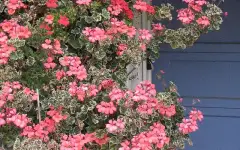 GeraniumsPelargonium x hortorum and cvs.low water, Central Valley1.07 gal/sq ft in July
 SalviaSalvia greggii ssp., cvs. & hybridslow water, Central Valley1.07 gal/sq ft in July
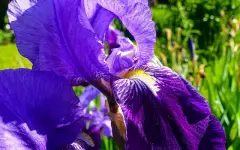 IrisesIris germanicalow water, Central Valley1.07 gal/sq ft in July
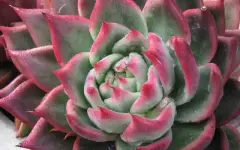 SucculentsEcheveria spp. & cvs.low water, Central Valley1.07 gal/sq ft in July
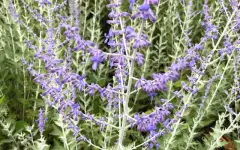 Russian SagePerovskia spp. & cvs.low water, Central Valley1.07 gal/sq ft in July
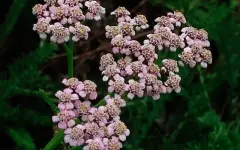 YarrowAchillea millefolium (non-native hybrids)low water, Central Valley1.07 gal/sq ft in July
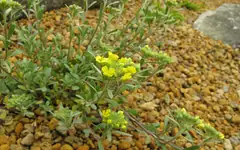 Mountain AlyssumAlyssum montanumlow water, Central Valley1.07 gal/sq ft in July
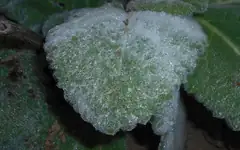 Silver SageSalvia argentealow water, Central Valley1.07 gal/sq ft in July
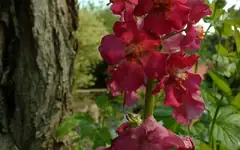 Purple MulleinVerbascum phoeniceumlow water, Central Valley1.07 gal/sq ft in July
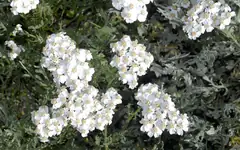 Silvery YarrowAchillea clavennaelow water, Central Valley1.07 gal/sq ft in July
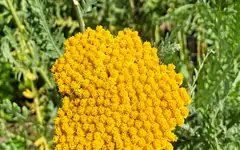 Fern Leaf YarrowAchillea filipendulinalow water, Central Valley1.07 gal/sq ft in July
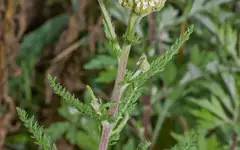 California Native YarrowAchillea millefolium (CA native cultivars)low water, Central Valley1.07 gal/sq ft in July
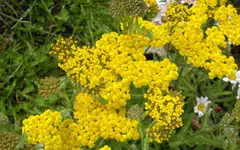 Woolly YarrowAchillea tomentosalow water, Central Valley1.07 gal/sq ft in July
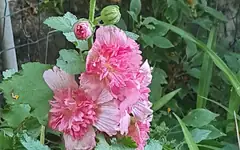 Perennial HollyhockAlcea rosea cvs.low water, Central Valley1.07 gal/sq ft in July
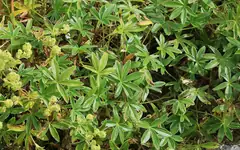 Mountain Lady's MantleAlchemilla alpinalow water, Central Valley1.07 gal/sq ft in July
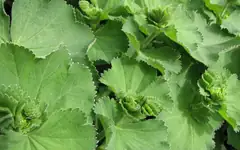 Lady's MantleAlchemilla mollislow water, Central Valley1.07 gal/sq ft in July
Turn this into minutes on your water days
Every city page has a calculator that takes agapanthus, your sprinkler type and the month, and gives the minutes per water day for that supplier's schedule. Or put it in a zone of the personal watering plan and get all twelve months printed.
Questions people ask
How often should I water agapanthus in summer?
In July, established agapanthus in loam needs a deep watering about every 14 days in the Central Valley, about every 7 days on the south coast and about every 6 days in the South Inland zone. Sandy soil holds less water, so waterings come closer together. Clay stretches them. Check the soil before each watering and skip one after a soaking rain.
How much water does agapanthus need per day?
In July in the Central Valley, established agapanthus needs about 0.1 gallons a day for a plant 2 feet across and about 0.4 gallons a day for a plant 4 feet across. Give it in deep waterings spread days apart rather than a little every day, so the whole root zone gets wet.
Does watering for agapanthus change across California?
Yes. WUCOLS rates agapanthus separately for each of the six California climate zones: moderate water in the North-Central Coastal zone, low water in the Central Valley zone, moderate water in the South Coastal zone, moderate water in the South Inland zone, moderate water in the High and Intermediate Desert zone, moderate water in the Low Desert zone. The monthly table above shows how the same rating translates into different gallon amounts as reference evapotranspiration changes.
Can you overwater agapanthus?
Yes. The thick fleshy roots store water, and in soil that never dries they suffocate and rot. Watch for yellowing leaves across the clump, a soft or smelly base, and leaves that pull away with a gentle tug. When in doubt, let the soil dry a little longer before watering again.
How often should I water newly planted agapanthus?
Keep the root ball evenly moist through the first summer while roots grow into the surrounding soil. Check the top of the root zone and water whenever it feels dry a couple of inches down. From the second year on, shift to deeper, less frequent soakings and let the fleshy roots do their job.
Is drip irrigation good for agapanthus?
Drip works very well. Place emitters around the clump rather than at one point so the wide root mass gets even coverage, and move them outward as the clump spreads over the years. Agapanthus also tolerates sprinkler spray, so it fits fine in beds beside a sprayed lawn.
Should I water agapanthus in winter in California?
In the ground, usually not. Growth slows in the cool months and winter rain covers the small need in most of the state. Water only during a long dry, warm spell, and keep an eye on containers, which dry faster than garden soil. Deciduous types that die back for winter need even less.
Why are my agapanthus leaves turning yellow?
A few yellow outer leaves are normal, since the plant sheds old foliage as new leaves push from the center. Yellowing across the whole clump is different and usually means too much water or poor drainage rather than thirst. Let the soil dry between waterings and make sure the spot drains freely. A thirsty plant looks dull and droopy, not yellow.
Why is my agapanthus not blooming?
Water is only part of the picture. Deep shade, recent division and heavy nitrogen feeding all cut bloom, and a clump that ran bone dry in spring often sends up fewer stalks. Agapanthus actually flowers best when slightly crowded, so resist dividing a healthy clump. Give it sun, steady spring moisture and time, and the stalks return.
More plant watering guides
Sources
- WUCOLS IV plant water use classification for Agapanthus orientalis, the University of California survey California agencies use for landscape plan reviewRead August 23, 2026 on wucols.ucdavis.edu
- Model Water Efficient Landscape Ordinance, adopted text and appendices, effective 2025-01-02 · monthly reference evapotranspiration per city, Appendix CRead August 23, 2026 on water.ca.gov/-/media/DWR-Website/Web-Pages/Programs/Water-Use-And-Efficiency/MWELO-Rulemaking/Final-MWELO-Text-and-Appendices_20250103.pdf
- UC Statewide IPM Program, irrigation scheduling using evapotranspirationRead September 30, 2026 on ipm.ucanr.edu/PMG/GARDEN/ENVIRON/evap.html
- Shaw and Pittenger, Landscape Irrigation System Evaluation and Management, UC Cooperative Extension, 2009Read September 30, 2026 on ucanr.edu/sites/default/files/2013-02/160836.pdf
- Pittenger, Water Management in Gardens and Landscapes, UC Riverside, 2017Read September 30, 2026 on ucanr.edu/sites/default/files/2017-03/258022.pdf