How often to water Baltic rush in California
In July in the Central Valley, established Baltic rush needs about 0.8 gallons a week for a plant 2 feet across. Baltic rush is a native, rhizomatous rush with round, grasslike green stems and small brownish flower clusters that appear partway up the stem. It grows from standing water to seasonally dry ground across California. It tolerates flooding, alkaline and mildly salty soil, and seasonal drought, and its rhizomes spread into a dense stand.
How often to water Baltic rush, month by month
Type your city above and the days between waterings and the gallons appear here, worked out from your city's climate table. Or read the figures by climate zone further down.
How this is worked out: the plant’s WUCOLS rating times your city’s climate for the month, over the area the plant covers. Skip a watering after a good soaking rain.
How to tell it needs water
- Soil dry 3 inches down within the patch during summer signals that Baltic rush needs water to stay green
- Stems browning from the tips and the stand turning straw colored can indicate a long dry spell
- Bare gaps opening in a stand after a hot summer can follow a dried-out root zone
- Algae and stagnant water sitting on the patch for weeks in summer point to more water than the stand needs
How to water it
- Water the whole stand with a soaker or basin flooding, since it spreads by rhizomes
- Soak deeply, then let the upper soil dry somewhat before the next watering
- Plant plugs about a foot apart in sun, and they fill in within a growing season
- Use it in swales, pond edges and low spots, including alkaline or mildly salty ground
- Expect the stand to widen, and widen watering with it
Through the seasons
Keep new plugs from saturated to lightly flooded while they establish. Established stands handle both flooding and seasonal drought, so water mainly to keep the color through a long dry summer. Fluctuating water during establishment can speed its spread. Winter rain usually takes care of the cool months. WUCOLS rates Baltic rush moderate water on the north-central coast, on the south coast, in South Inland and in the low desert. In the Central Valley, it carries a low water rating. WUCOLS has not evaluated it for the high desert.
In pots
Baltic rush grows well in a wide pot or half barrel, where its spread stays contained. Keep the mix moist while it settles, checking every few days in hot weather. Once rooted, let the top inch dry between waterings, and drain the saucer so water does not stagnate. Divide when stems crowd the rim. In winter, water only if the mix dries out between rains.
- A year
- 6.84 gal per sq ft
- Reference
- Sacramento climate table
- Counts
- Plant need, before sprinkler losses
Monthly water need by climate zone
Baltic Rush: gallons per square foot per month, by WUCOLS climate zone
| Month | N. Coast | C. Valley | S. Coast | S. Inland | Hi Desert | Lo Desert |
|---|---|---|---|---|---|---|
| Jan | 0.37 | 0.16 | 0.78 | 0.78 | – | 0.78 |
| Feb | 0.53 | 0.26 | 0.81 | 0.87 | – | 0.93 |
| Mar | 0.87 | 0.43 | 1.15 | 1.3 | – | 1.52 |
| Apr | 1.18 | 0.61 | 1.4 | 1.61 | – | 1.95 |
| May | 1.46 | 0.83 | 1.61 | 1.95 | – | 2.45 |
| Jun | 1.61 | 0.99 | 1.74 | 2.29 | – | 2.79 |
| Jul | 1.61 | 1.07 | 1.98 | 2.51 | – | 2.85 |
| Aug | 1.49 | 0.95 | 1.86 | 2.33 | – | 2.6 |
| Sep | 1.24 | 0.72 | 1.49 | 1.86 | – | 2.08 |
| Oct | 0.87 | 0.47 | 1.15 | 1.33 | – | 1.49 |
| Nov | 0.47 | 0.22 | 0.84 | 0.9 | – | 0.96 |
| Dec | 0.31 | 0.14 | 0.65 | 0.68 | – | 0.68 |
| Year | 12 | 6.84 | 15.5 | 18.41 | – | 21.08 |
How this is worked out: the WUCOLS water rating for each zone times that zone’s climate for the month. A dash means WUCOLS does not rate the plant there. The figures are what the plant uses, before sprinkler losses.
Plants with the same water needs 16
Rated low water in the Central Valley, like Baltic rush. Plants that drink alike can share one valve and one schedule.
 Quaking GrassBriza medialow water, Central Valley1.07 gal/sq ft in July
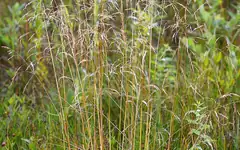 Tufted HairgrassDeschampsia cespitosa and cvs.low water, Central Valley1.07 gal/sq ft in July
 June GrassKoeleria macrantha (cristata)low water, Central Valley1.07 gal/sq ft in July
 False Esparto GrassLygeum spartumlow water, Central Valley1.07 gal/sq ft in July
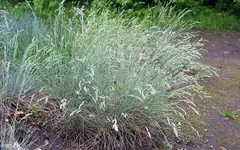 Blue FescueFestuca glauca ssp. & cvs.low water, Central Valley1.07 gal/sq ft in July
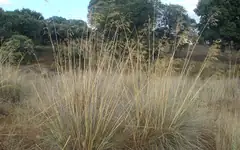 Giant Needle GrassStipa gigantealow water, Central Valley1.07 gal/sq ft in July
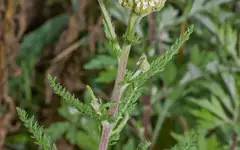 California Native YarrowAchillea millefolium (CA native cultivars)low water, Central Valley1.07 gal/sq ft in July
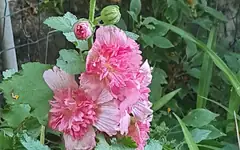 Perennial HollyhockAlcea rosea cvs.low water, Central Valley1.07 gal/sq ft in July
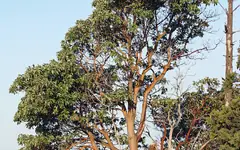 MadroneArbutus menziesiilow water, Central Valley1.07 gal/sq ft in July
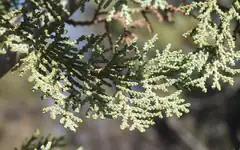 MacNab CypressHesperocyparis macnabiana (Cupressus macnabiana)low water, Central Valley1.07 gal/sq ft in July
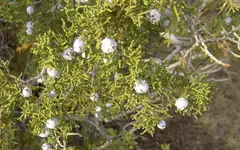 California JuniperJuniperus californicalow water, Central Valley1.07 gal/sq ft in July
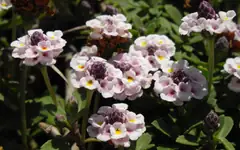 Lippia GroundcoverPhyla nodiflora (Lippia nodiflora) cvs.low water, Central Valley1.07 gal/sq ft in July
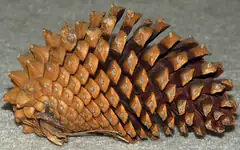 Knobcone PinePinus attenuatalow water, Central Valley1.07 gal/sq ft in July
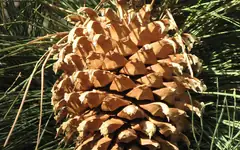 Coulter PinePinus coulterilow water, Central Valley1.07 gal/sq ft in July
 Pinyon PinePinus edulislow water, Central Valley1.07 gal/sq ft in July
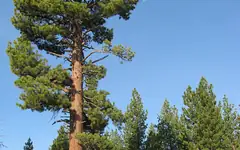 Jeffrey PinePinus jeffreyilow water, Central Valley1.07 gal/sq ft in July
Turn this into minutes on your water days
Every city page has a calculator that takes Baltic rush, your sprinkler type and the month, and gives the minutes per water day for that supplier's schedule. Or put it in a zone of the personal watering plan and get all twelve months printed.
Questions people ask
How much should I water Baltic rush in summer?
In July, established Baltic rush needs about 0.8 gallons in the Central Valley, 1.4 gallons on the south coast and 1.8 gallons in the South Inland zone each week, for a plant 2 feet across. Water deeply and let the top of the soil dry before the next watering. Skip a watering after a soaking rain.
How much water does Baltic rush need per day?
In July in the Central Valley, established Baltic rush needs about 0.1 gallons a day for a plant 2 feet across and about 0.4 gallons a day for a plant 4 feet across. Give it in deep waterings spread days apart rather than a little every day, so the whole root zone gets wet.
Does watering for Baltic rush change across California?
Yes. WUCOLS rates Baltic rush separately for each of the six California climate zones: moderate water in the North-Central Coastal zone, low water in the Central Valley zone, moderate water in the South Coastal zone, moderate water in the South Inland zone, not evaluated in the High and Intermediate Desert zone, moderate water in the Low Desert zone. The monthly table above shows how the same rating translates into different gallon amounts as reference evapotranspiration changes.
Is Baltic rush native to California?
Yes, it occurs throughout California and north to Alaska. It is the most common rush in the Great Basin and dry interior regions. In the wild it ranges from pond shallows to places that dry out each summer.
Does Baltic rush spread?
Yes, it spreads by rhizomes and can be invasive in a small bed. Plugs set about a foot apart fill in within one season. Contain it with a barrier or a pot if needed.
Can Baltic rush grow in salty or alkaline soil?
Yes, rushes like it tolerate mild to moderate salinity and alkaline soil. That makes it useful on desert playa edges and poor ground. Leach salty soil with an occasional deep soak.
Was Baltic rush used for baskets?
Yes, Southern California basket makers used Baltic rush stems as the foundation of coiled baskets. Its mottled tan color shows in the weave. Harvest only from plants you grow.
Do animals eat Baltic rush?
Cattle rarely graze it, and birds and small animals eat the seeds. Waterfowl and muskrats use rush stands for food and cover. Its low palatability lets stands persist where grazing is heavy.
More plant watering guides
Sources
- WUCOLS IV plant water use classification for Juncus balticus, the University of California survey California agencies use for landscape plan reviewRead August 23, 2026 on wucols.ucdavis.edu
- Model Water Efficient Landscape Ordinance, adopted text and appendices, effective 2025-01-02 · monthly reference evapotranspiration per city, Appendix CRead August 23, 2026 on water.ca.gov/-/media/DWR-Website/Web-Pages/Programs/Water-Use-And-Efficiency/MWELO-Rulemaking/Final-MWELO-Text-and-Appendices_20250103.pdf
- UC Statewide IPM Program, irrigation scheduling using evapotranspirationRead September 30, 2026 on ipm.ucanr.edu/PMG/GARDEN/ENVIRON/evap.html
- Shaw and Pittenger, Landscape Irrigation System Evaluation and Management, UC Cooperative Extension, 2009Read September 30, 2026 on ucanr.edu/sites/default/files/2013-02/160836.pdf
- Pittenger, Water Management in Gardens and Landscapes, UC Riverside, 2017Read September 30, 2026 on ucanr.edu/sites/default/files/2017-03/258022.pdf