How often to water bearberry in California
In July in the Central Valley, established bearberry in loam needs a deep watering about every 20 days: about 8.8 gallons each time for a plant 4 feet across, about 3.0 gallons a week. Bearberry, also called kinnikinnick, is a low, mat-forming native shrub in the manzanita genus, spreading into an evergreen carpet. It grows slowly and tolerates dry, sandy soil and coastal salt spray. Check new plantings while they establish, and avoid persistently wet ground, which can encourage root disease.
How often to water bearberry, month by month
Type your city above and the days between waterings and the gallons appear here, worked out from your city's climate table. Or read the figures by climate zone further down.
How this is worked out: established roots fill the top 1.5 feet of soil, and you water again when that soil has dried halfway. Loam soil holds about 1.5 inches of water per foot. Water the whole area the plant covers, and skip a watering after a good soaking rain.
How to tell it needs water
- Dry soil beneath the bearberry mat calls for checking several spots before deciding to irrigate
- Bronze or reddish foliage in winter can be a normal seasonal change rather than a reason to water
- Slow filling alone does not show thirst, since bearberry naturally spreads gradually
- Soil that stays wet under the evergreen mat suggests overwatering and a risk of root disease
- Patchy growth calls for comparing drainage and moisture beneath separate parts of the mat
How to water it
- Water a young bearberry planting at the base of each plant until the mat knits together
- Soak the root zone a few inches deep, then let the surface dry before watering again
- Use drip emitters or a hand soak rather than overhead sprinklers that wet the leaves
- Plant in fast-draining, sandy soil, raising the bed where clay holds water
- Widen the watered area as trailing stems root into new ground and the mat spreads
Through the seasons
In its first year, check moisture around each bearberry plant as the spreading shoots establish. This evergreen shrub holds its leaves year round and settles into infrequent watering once the mat has filled in. During winter, coastal and valley rain can reduce irrigation when it moistens the root zone. WUCOLS rates bearberry low water on the north-central coast, in the Central Valley and South Inland, and moderate water on the south coast. WUCOLS has not evaluated it for the high desert. It marks the plant as not suited to the low desert.
In pots
A wide container gives bearberry room for its spreading stems and evergreen mat. Use a fast-draining, sandy mix and check the top couple of inches often during California summer heat. Water when it feels dry, letting excess drain through the holes, then empty the saucer so stems do not sit wet. A container dries faster than garden soil, so check it more often than an in-ground planting. In winter, water only enough to keep the mix from drying out completely.
- A year
- 6.84 gal per sq ft
- Reference
- Sacramento climate table
- Counts
- Plant need, before sprinkler losses
Monthly water need by climate zone
Bearberry: gallons per square foot per month, by WUCOLS climate zone
| Month | N. Coast | C. Valley | S. Coast | S. Inland | Hi Desert | Lo Desert |
|---|---|---|---|---|---|---|
| Jan | 0.15 | 0.16 | 0.78 | 0.31 | – | – |
| Feb | 0.21 | 0.26 | 0.81 | 0.35 | – | – |
| Mar | 0.35 | 0.43 | 1.15 | 0.52 | – | – |
| Apr | 0.47 | 0.61 | 1.4 | 0.64 | – | – |
| May | 0.58 | 0.83 | 1.61 | 0.78 | – | – |
| Jun | 0.64 | 0.99 | 1.74 | 0.92 | – | – |
| Jul | 0.64 | 1.07 | 1.98 | 1 | – | – |
| Aug | 0.6 | 0.95 | 1.86 | 0.93 | – | – |
| Sep | 0.5 | 0.72 | 1.49 | 0.74 | – | – |
| Oct | 0.35 | 0.47 | 1.15 | 0.53 | – | – |
| Nov | 0.19 | 0.22 | 0.84 | 0.36 | – | – |
| Dec | 0.12 | 0.14 | 0.65 | 0.27 | – | – |
| Year | 4.8 | 6.84 | 15.5 | 7.37 | – | – |
How this is worked out: the WUCOLS water rating for each zone times that zone’s climate for the month. A dash means WUCOLS does not rate the plant there. The figures are what the plant uses, before sprinkler losses.
Plants with the same water needs 16
Rated low water in the Central Valley, like bearberry. Plants that drink alike can share one valve and one schedule.
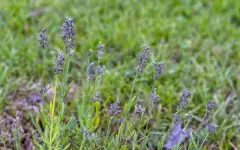 LavenderLavandula spp. & cvs.low water, Central Valley1.07 gal/sq ft in July
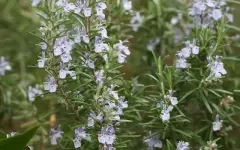 RosemaryRosmarinus officinalislow water, Central Valley1.07 gal/sq ft in July
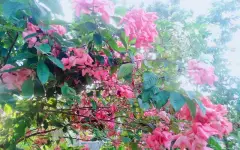 BougainvilleaBougainvillea & spp. & cvs.low water, Central Valley1.07 gal/sq ft in July
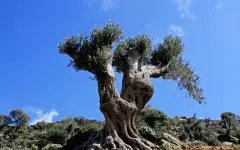 Olive TreesOlea europaea ssp. & cvs.low water, Central Valley1.07 gal/sq ft in July
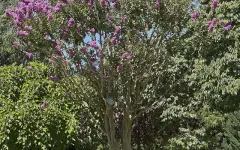 Crape MyrtleLagerstroemia spp., hybrids & cvs.low water, Central Valley1.07 gal/sq ft in July
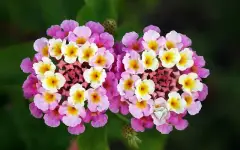 LantanaLantana camara ssp. & cvs.low water, Central Valley1.07 gal/sq ft in July
 SalviaSalvia greggii ssp., cvs. & hybridslow water, Central Valley1.07 gal/sq ft in July
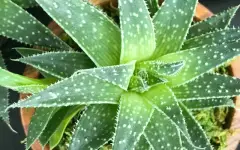 AloeAloe spp. & cvs.low water, Central Valley1.07 gal/sq ft in July
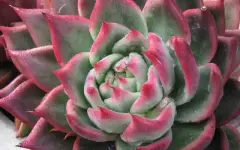 SucculentsEcheveria spp. & cvs.low water, Central Valley1.07 gal/sq ft in July
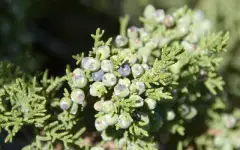 JunipersJuniperus spp. & cvs.low water, Central Valley1.07 gal/sq ft in July
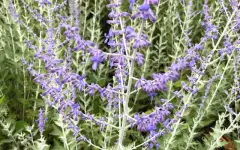 Russian SagePerovskia spp. & cvs.low water, Central Valley1.07 gal/sq ft in July
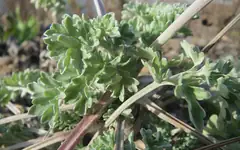 SagebrushArtemisia spp. (shrubby)low water, Central Valley1.07 gal/sq ft in July
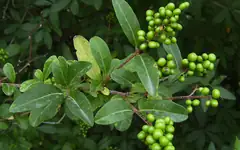 Wild PrivetLigustrum vulgarelow water, Central Valley1.07 gal/sq ft in July
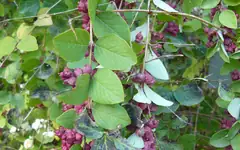 CoralberrySymphoricarpos orbiculatus (SHADE)low water, Central Valley1.07 gal/sq ft in July
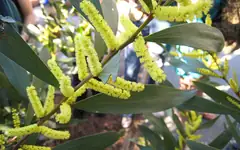 Sydney Golden WattleAcacia longifolialow water, Central Valley1.07 gal/sq ft in July
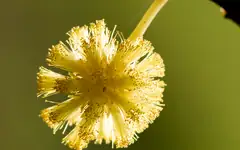 Blue Leaf WattleAcacia salignalow water, Central Valley1.07 gal/sq ft in July
Turn this into minutes on your water days
Every city page has a calculator that takes bearberry, your sprinkler type and the month, and gives the minutes per water day for that supplier's schedule. Or put it in a zone of the personal watering plan and get all twelve months printed.
Questions people ask
How often should I water bearberry in summer?
In July, established bearberry in loam needs a deep watering about every 20 days in the Central Valley, about every 11 days on the south coast and about every 22 days in the South Inland zone. Sandy soil holds less water, so waterings come closer together. Clay stretches them. Check the soil before each watering and skip one after a soaking rain.
How much water does bearberry need per day?
In July in the Central Valley, established bearberry needs about 0.4 gallons a day for a plant 4 feet across and about 1.7 gallons a day for a plant 8 feet across. Give it in deep waterings spread days apart rather than a little every day, so the whole root zone gets wet.
Does watering for bearberry change across California?
Yes. WUCOLS rates bearberry separately for each of the six California climate zones: low water in the North-Central Coastal zone, low water in the Central Valley zone, moderate water in the South Coastal zone, low water in the South Inland zone, not evaluated in the High and Intermediate Desert zone, not suited to this region in the Low Desert zone. The monthly table above shows how the same rating translates into different gallon amounts as reference evapotranspiration changes.
Is bearberry the same plant as manzanita?
Bearberry belongs to Arctostaphylos, the manzanita genus. Its low carpet of stems distinguishes it from upright members of the genus, although other manzanitas also spread close to the ground. It has peeling reddish bark and berry-like fruit.
Can bearberry handle salty coastal air?
Bearberry tolerates salt spray, making it an option to consider for coastal groundcover. Choose a site with loose, well-drained soil. Check moisture around individual plants while the planting becomes established.
Why is my bearberry patchy and slow to fill in?
Bearberry grows slowly, so a young bed may remain open for some time. Check moisture and drainage in several places before increasing irrigation. Slow spread by itself does not mean the plants need more water.
Does bearberry grow well away from the coast?
Its WUCOLS ratings include inland regions, although it is not suited to the low desert. Full sun or partial shade can suit bearberry; choose a location with good drainage. Do not try to compensate for waterlogged soil by changing irrigation alone.
Can bearberry handle clay soil?
Drainage matters more than the soil texture alone: bearberry should not remain waterlogged. A raised planting area can help where heavy ground drains poorly. Check the whole bed before planting, since this shrub dislikes transplanting.
More plant watering guides
Sources
- WUCOLS IV plant water use classification for Arctostaphylos uva-ursi, the University of California survey California agencies use for landscape plan reviewRead August 23, 2026 on wucols.ucdavis.edu
- Model Water Efficient Landscape Ordinance, adopted text and appendices, effective 2025-01-02 · monthly reference evapotranspiration per city, Appendix CRead August 23, 2026 on water.ca.gov/-/media/DWR-Website/Web-Pages/Programs/Water-Use-And-Efficiency/MWELO-Rulemaking/Final-MWELO-Text-and-Appendices_20250103.pdf
- UC Statewide IPM Program, irrigation scheduling using evapotranspirationRead September 30, 2026 on ipm.ucanr.edu/PMG/GARDEN/ENVIRON/evap.html
- Shaw and Pittenger, Landscape Irrigation System Evaluation and Management, UC Cooperative Extension, 2009Read September 30, 2026 on ucanr.edu/sites/default/files/2013-02/160836.pdf
- Pittenger, Water Management in Gardens and Landscapes, UC Riverside, 2017Read September 30, 2026 on ucanr.edu/sites/default/files/2017-03/258022.pdf