How often to water blood lily in California
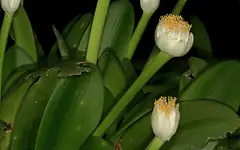
In July on the north-central coast, established blood lily needs about 1.1 gallons a week for a plant 2 feet across. Blood lily is a tender, bulb-forming perennial from South Africa with broad, wavy-edged, bright green leaves. The name comes from the maroon spots on its whitish bulb. In late spring, sturdy stalks 1 to 2 feet tall carry big, round heads of up to 200 small salmon red to orange flowers. It is poisonous and needs light shade.
How often to water blood lily, month by month
Type your city above and the days between waterings and the gallons appear here, worked out from your city's climate table. Or read the figures by climate zone further down.
How this is worked out: the plant’s WUCOLS rating times your city’s climate for the month, over the area the plant covers. Skip a watering after a good soaking rain.
How to tell it needs water
- Soil dry an inch or two down while leaves are growing means blood lily needs water
- Leaves drooping in late spring before bloom can point to a dry root zone
- Leaves yellowing in autumn is the normal start of its winter rest
- Soft, rotting bulbs during dormancy point to too much water
How to water it
- Water regularly once new leaves appear in spring
- Keep watering until flowering is finished
- Let it dry out after bloom as it heads into dormancy
- Plant in light shade in rich, well-drained soil
- Leave bulbs undisturbed, since they dislike root disturbance
Through the seasons
Start watering when new leaves emerge in spring, and keep the soil evenly moist through bloom. After flowering, reduce water and let it dry out, since it rests from autumn through winter. Bulbs are tender and damaged by cold, so keep them dry and sheltered over winter. Resume water only when growth returns. WUCOLS rates blood lily moderate water on the north-central coast and on the south coast. WUCOLS has not evaluated it for the Central Valley, South Inland, the high desert or the low desert.
In pots
Blood lily is often grown in a pot, which makes its dry winter rest easy and suits its liking for a crowded root ball. Use a rich, well-drained mix. Water regularly from the time new leaves push in spring until flowering ends, letting the top inch dry between drinks. Then let the pot dry out. Keep it frost free and dry through winter, and move it to light shade in spring.
- A year
- no figure
- Reference
- Sacramento climate table
- Counts
- Plant need, before sprinkler losses
WUCOLS lists Blood Lily as not evaluated for the Central Valley zone, so no monthly figure is computed here.
Monthly water need by climate zone
Blood Lily: gallons per square foot per month, by WUCOLS climate zone
| Month | N. Coast | C. Valley | S. Coast | S. Inland | Hi Desert | Lo Desert |
|---|---|---|---|---|---|---|
| Jan | 0.37 | – | 0.78 | – | – | – |
| Feb | 0.53 | – | 0.81 | – | – | – |
| Mar | 0.87 | – | 1.15 | – | – | – |
| Apr | 1.18 | – | 1.4 | – | – | – |
| May | 1.46 | – | 1.61 | – | – | – |
| Jun | 1.61 | – | 1.74 | – | – | – |
| Jul | 1.61 | – | 1.98 | – | – | – |
| Aug | 1.49 | – | 1.86 | – | – | – |
| Sep | 1.24 | – | 1.49 | – | – | – |
| Oct | 0.87 | – | 1.15 | – | – | – |
| Nov | 0.47 | – | 0.84 | – | – | – |
| Dec | 0.31 | – | 0.65 | – | – | – |
| Year | 12 | – | 15.5 | – | – | – |
How this is worked out: the WUCOLS water rating for each zone times that zone’s climate for the month. A dash means WUCOLS does not rate the plant there. The figures are what the plant uses, before sprinkler losses.
Plants with the same water needs 3
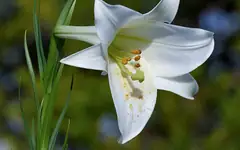
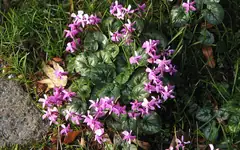
Rated not evaluated in the Central Valley, like blood lily. Plants that drink alike can share one valve and one schedule.
Turn this into minutes on your water days
Every city page has a calculator that takes blood lily, your sprinkler type and the month, and gives the minutes per water day for that supplier's schedule. Or put it in a zone of the personal watering plan and get all twelve months printed.
Questions people ask
How much water does blood lily need per day?
In July on the north-central coast, established blood lily needs about 0.2 gallons a day for a plant 2 feet across and about 0.7 gallons a day for a plant 4 feet across. Give it in deep waterings spread days apart rather than a little every day, so the whole root zone gets wet.
Does watering for blood lily change across California?
Yes. WUCOLS rates blood lily separately for each of the six California climate zones: moderate water in the North-Central Coastal zone, not evaluated in the Central Valley zone, moderate water in the South Coastal zone, not evaluated in the South Inland zone, not evaluated in the High and Intermediate Desert zone, not evaluated in the Low Desert zone. The monthly table above shows how the same rating translates into different gallon amounts as reference evapotranspiration changes.
Why is it called blood lily?
The name comes from red or maroon stains on its whitish bulb. The flowers are salmon red to orange. Some say the flower heads look like powder puffs.
Should I water blood lily in winter?
No, it is dormant from autumn through winter. Keep it dry and frost free. Resume watering when new leaves appear.
Is blood lily poisonous?
Yes, the bulbs contain toxic alkaloids. Keep children and pets away. Wear gloves when handling bulbs.
Does blood lily need shade?
Yes, it grows best in light shade. Hot sun can scorch the broad leaves. A shaded patio suits it.
Why won't my blood lily bloom?
It blooms best when slightly crowded and undisturbed. Keep it in the same pot for years. Water steadily in spring.
More plant watering guides
Sources
- WUCOLS IV plant water use classification for Scadoxus multiflorus subsp. katherinae (Haemanthus katherinae), the University of California survey California agencies use for landscape plan reviewRead August 23, 2026 on wucols.ucdavis.edu
- Model Water Efficient Landscape Ordinance, adopted text and appendices, effective 2025-01-02 · monthly reference evapotranspiration per city, Appendix CRead August 23, 2026 on water.ca.gov/-/media/DWR-Website/Web-Pages/Programs/Water-Use-And-Efficiency/MWELO-Rulemaking/Final-MWELO-Text-and-Appendices_20250103.pdf
- UC Statewide IPM Program, irrigation scheduling using evapotranspirationRead September 30, 2026 on ipm.ucanr.edu/PMG/GARDEN/ENVIRON/evap.html
- Shaw and Pittenger, Landscape Irrigation System Evaluation and Management, UC Cooperative Extension, 2009Read September 30, 2026 on ucanr.edu/sites/default/files/2013-02/160836.pdf
- Pittenger, Water Management in Gardens and Landscapes, UC Riverside, 2017Read September 30, 2026 on ucanr.edu/sites/default/files/2017-03/258022.pdf