How often to water California pepper tree in California
In July in the Central Valley, established California pepper tree in loam needs a deep watering about every 20 days: about 55 gallons each time under a 10 foot canopy, about 19 gallons a week. California pepper tree is a fast-growing evergreen from the southern Andes, with weeping branches, rough twisted bark and fine, bright green leaflets. Female trees carry drooping clusters of rosy red berries from fall into winter. It is a dry-climate tree, and heavy summer watering, especially in a lawn, invites the root rot that kills many of these trees.
How often to water California pepper tree, month by month
Type your city above and the days between waterings and the gallons appear here, worked out from your city's climate table. Or read the figures by climate zone further down.
How this is worked out: established roots fill the top 1.5 feet of soil, and you water again when that soil has dried halfway. Loam soil holds about 1.5 inches of water per foot. Water the whole area under the branches, and skip a watering after a good soaking rain.
How to tell it needs water
- Soil dry 6 inches down at the edge of a young tree's root ball in its first summers signals that it needs a deep soak
- Wilting new growth on a young tree during a heat spell can mean its root ball has dried out
- Sudden wilting and browning of the whole crown on a tree in a watered lawn warrants a check for root rot
- Honey-colored mushroom clusters at the trunk base or white fungal sheets under the bark point to Armillaria root rot, not thirst
- Steady leaf litter is normal for this evergreen and does not by itself mean the tree is dry
How to water it
- Water a young tree over its root ball and just beyond with a slow hose or drip until roots reach native soil
- Soak deeply, let the soil dry well between waterings, and taper off as the tree establishes
- Keep sprinklers and drip off the trunk so the root collar stays dry through summer
- Replace lawn and thirsty beds under the canopy with a mulched area out to the drip line
- Water a wide ring under the outer canopy rather than near the trunk, since its vigorous roots spread at the surface
Through the seasons
A young California pepper tree needs deep soakings through its first one or two summers while roots spread. After that it needs far less, and on the coast an established tree often lives on winter rain alone. In the deserts it still wants deep summer soakings. It stays evergreen, blooms in summer, and female trees hold red berries into winter. Frost much below 20 degrees browns the foliage, though new growth follows in spring. WUCOLS rates it very low water on the north-central coast and the south coast. It rates low water in the Central Valley and South Inland, and moderate water in the high desert and the low desert.
In pots
California pepper tree grows fast and soon outgrows a container, so a pot suits it only for its first few years. Use a fast-draining mix and check it 3 inches down every few days in summer, and more often in desert heat. Water until it drains from the holes, then let the mix dry well before the next soak. Empty the saucer every time, because wet roots invite rot. In winter, water only after the mix has dried deep down.
- A year
- 6.84 gal per sq ft
- Reference
- Sacramento climate table
- Counts
- Plant need, before sprinkler losses
Monthly water need by climate zone
California Pepper Tree: gallons per square foot per month, by WUCOLS climate zone
| Month | N. Coast | C. Valley | S. Coast | S. Inland | Hi Desert | Lo Desert |
|---|---|---|---|---|---|---|
| Jan | 0.04 | 0.16 | 0.08 | 0.31 | 0.74 | 0.78 |
| Feb | 0.05 | 0.26 | 0.08 | 0.35 | 0.93 | 0.93 |
| Mar | 0.09 | 0.43 | 0.11 | 0.52 | 1.46 | 1.52 |
| Apr | 0.12 | 0.61 | 0.14 | 0.64 | 1.89 | 1.95 |
| May | 0.15 | 0.83 | 0.16 | 0.78 | 2.39 | 2.45 |
| Jun | 0.16 | 0.99 | 0.17 | 0.92 | 2.85 | 2.79 |
| Jul | 0.16 | 1.07 | 0.2 | 1 | 3.04 | 2.85 |
| Aug | 0.15 | 0.95 | 0.19 | 0.93 | 2.79 | 2.6 |
| Sep | 0.12 | 0.72 | 0.15 | 0.74 | 2.14 | 2.08 |
| Oct | 0.09 | 0.47 | 0.11 | 0.53 | 1.46 | 1.49 |
| Nov | 0.05 | 0.22 | 0.08 | 0.36 | 0.93 | 0.96 |
| Dec | 0.03 | 0.14 | 0.07 | 0.27 | 0.65 | 0.68 |
| Year | 1.2 | 6.84 | 1.55 | 7.37 | 21.27 | 21.08 |
How this is worked out: the WUCOLS water rating for each zone times that zone’s climate for the month. A dash means WUCOLS does not rate the plant there. The figures are what the plant uses, before sprinkler losses.
Plants with the same water needs 16
Rated low water in the Central Valley, like California pepper tree. Plants that drink alike can share one valve and one schedule.
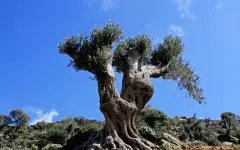 Olive TreesOlea europaea ssp. & cvs.low water, Central Valley1.07 gal/sq ft in July
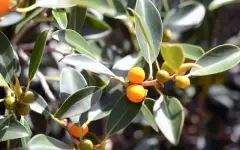 Fig TreesFicus carica ssp. & cvs.low water, Central Valley1.07 gal/sq ft in July
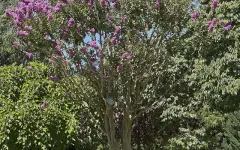 Crape MyrtleLagerstroemia spp., hybrids & cvs.low water, Central Valley1.07 gal/sq ft in July
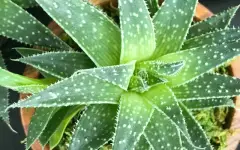 AloeAloe spp. & cvs.low water, Central Valley1.07 gal/sq ft in July
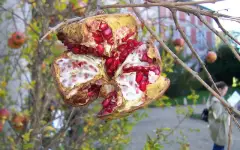 Pomegranate TreesPunica granatumlow water, Central Valley1.07 gal/sq ft in July
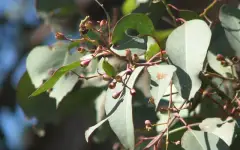 EucalyptusEucalyptus polyanthemoslow water, Central Valley1.07 gal/sq ft in July
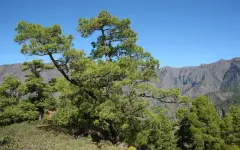 Pine TreesPinus canariensislow water, Central Valley1.07 gal/sq ft in July
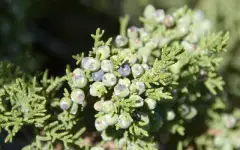 JunipersJuniperus spp. & cvs.low water, Central Valley1.07 gal/sq ft in July
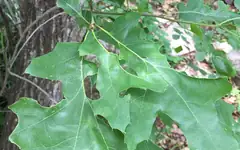 Texas Red OakQuercus buckleyilow water, Central Valley1.07 gal/sq ft in July
 Portuguese OakQuercus faginealow water, Central Valley1.07 gal/sq ft in July
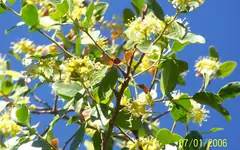 Soapbark TreeQuillaja saponarialow water, Central Valley1.07 gal/sq ft in July
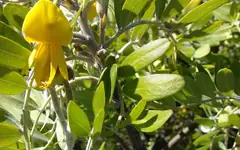 Necklace TreeSophora affinislow water, Central Valley1.07 gal/sq ft in July
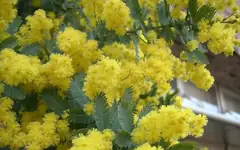 Bailey AcaciaAcacia baileyanalow water, Central Valley1.07 gal/sq ft in July
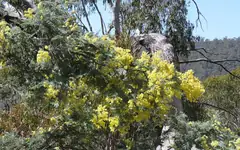 Silver WattleAcacia dealbatalow water, Central Valley1.07 gal/sq ft in July
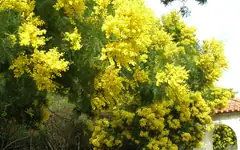 Green WattleAcacia decurrenslow water, Central Valley1.07 gal/sq ft in July
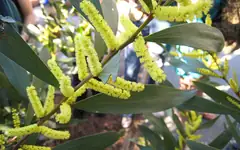 Sydney Golden WattleAcacia longifolialow water, Central Valley1.07 gal/sq ft in July
Turn this into minutes on your water days
Every city page has a calculator that takes California pepper tree, your sprinkler type and the month, and gives the minutes per water day for that supplier's schedule. Or put it in a zone of the personal watering plan and get all twelve months printed.
Questions people ask
How often should I water California pepper tree in summer?
In July, established California pepper tree in loam needs a deep watering about every 20 days in the Central Valley, about once a month or less on the south coast and about every 22 days in the South Inland zone. Sandy soil holds less water, so waterings come closer together. Clay stretches them. Check the soil before each watering and skip one after a soaking rain.
How much water does California pepper tree need per day?
In July in the Central Valley, established California pepper tree needs about 2.7 gallons a day under a 10 foot canopy and about 11 gallons a day under a 20 foot canopy. Give it in deep waterings spread days apart rather than a little every day, so the whole root zone gets wet.
Does watering for California pepper tree change across California?
Yes. WUCOLS rates California pepper tree separately for each of the six California climate zones: very low water in the North-Central Coastal zone, low water in the Central Valley zone, very low water in the South Coastal zone, low water in the South Inland zone, moderate water in the High and Intermediate Desert zone, moderate water in the Low Desert zone. The monthly table above shows how the same rating translates into different gallon amounts as reference evapotranspiration changes.
Should I water a mature pepper tree that has never been irrigated?
No. A mature, established tree that has never had summer water is adapted to dry soil. Starting regular irrigation, especially in summer, raises the risk of root rot.
Can I grow a lawn under a California pepper tree?
It is hard, because the leaf litter suppresses plants beneath it and the surface roots compete for water. Lawn watering also keeps the soil too wet for the tree. A mulched area out to the drip line suits both better.
Why is my pepper tree dying suddenly?
This species is highly susceptible to Armillaria root rot, which often kills the whole tree quickly. Most such deaths in California landscapes follow excessive irrigation or other stress. Look for white fungal sheets under the bark at the root collar, and stop watering near the trunk.
Is California pepper tree native?
No. Despite the name, it comes from the southern Andes, from Peru to Chile and Argentina. Spanish missionaries brought it to California, and reseeding has spread it widely since.
Do all pepper trees have berries?
No. Each tree is male or female, and only females bear the rosy red berries from fall into winter. Male trees shed abundant pollen when they flower, which can bother allergy sufferers.
More plant watering guides
Sources
- WUCOLS IV plant water use classification for Schinus molle, the University of California survey California agencies use for landscape plan reviewRead August 23, 2026 on wucols.ucdavis.edu
- Model Water Efficient Landscape Ordinance, adopted text and appendices, effective 2025-01-02 · monthly reference evapotranspiration per city, Appendix CRead August 23, 2026 on water.ca.gov/-/media/DWR-Website/Web-Pages/Programs/Water-Use-And-Efficiency/MWELO-Rulemaking/Final-MWELO-Text-and-Appendices_20250103.pdf
- UC Statewide IPM Program, irrigation scheduling using evapotranspirationRead September 30, 2026 on ipm.ucanr.edu/PMG/GARDEN/ENVIRON/evap.html
- Shaw and Pittenger, Landscape Irrigation System Evaluation and Management, UC Cooperative Extension, 2009Read September 30, 2026 on ucanr.edu/sites/default/files/2013-02/160836.pdf
- Pittenger, Water Management in Gardens and Landscapes, UC Riverside, 2017Read September 30, 2026 on ucanr.edu/sites/default/files/2017-03/258022.pdf