How often to water candelilla in California
In July on the south coast, established candelilla in loam needs a deep watering about every 18 days: about 1.5 gallons each time for a plant 2 feet across, about 0.6 gallons a week. Candelilla is a Chihuahuan Desert succulent that forms clumps of slim, upright, nearly leafless stems coated in gray wax. The wax slows water loss, and the plant tolerates hot, dry sites, even reflected heat off walls. Once rooted in, it needs little water. Soggy, poorly drained soil is a bigger danger to it than a dry spell.
How often to water candelilla, month by month
Type your city above and the days between waterings and the gallons appear here, worked out from your city's climate table. Or read the figures by climate zone further down.
How this is worked out: established roots fill the top 1 foot of soil, and you water again when that soil has dried halfway. Loam soil holds about 1.5 inches of water per foot. Water the whole area the plant covers, and skip a watering after a good soaking rain.
How to tell it needs water
- Soil dry 3 inches down beside a newly planted clump in its first summer means it is ready for a soak
- Flowers well past spring are a sign of steady moisture, so a clump blooming in summer is not short of water
- Stems that turn soft or discolored over soil that stays damp point to rot from overwatering
- Tiny leaves appear only on new stem growth and drop early, so a leafless clump is normal and not thirsty
- Stems growing tall, floppy and less gray point to too much shade rather than a watering problem
How to water it
- Pour water onto the soil around the base of the clump, not over the waxy stems
- Soak a new plant, then let the soil dry well down before you water again
- Plant in gritty, sandy or rocky soil that drains fast; alkaline and limestone soils suit it
- Top-dress the soil with gravel or crushed rock rather than a moisture-holding wood mulch
- Move the drip point outward as the clump spreads by suckers from its base
Through the seasons
A new candelilla needs occasional deep soakings through its first warm season, while its roots spread. After that it gets by on little water, and overwatering is the main hazard. It is evergreen and flowers mainly from late winter into spring, though watered plants can bloom into fall. It is hardy to about 10 degrees F. WUCOLS rates candelilla low water on the south coast, in South Inland, in the high desert and in the low desert. Winter rain is unreliable in both deserts, so check the soil in long dry spells there. WUCOLS has not evaluated it for the north-central coast or the Central Valley.
In pots
Candelilla makes a fine patio pot plant, and the upright gray stems read well in a simple container. Use a cactus and succulent mix with sand, pumice or perlite, in a terra cotta pot with a drainage hole. Terra cotta dries faster than plastic. Check the mix with a finger every few days in summer heat, and water only when it is dry well below the surface. Water until it drains, then empty the saucer at once. Cut back sharply in winter, when its water use drops.
- A year
- no figure
- Reference
- Sacramento climate table
- Counts
- Plant need, before sprinkler losses
WUCOLS lists Candelilla as not evaluated for the Central Valley zone, so no monthly figure is computed here.
Monthly water need by climate zone
Candelilla: gallons per square foot per month, by WUCOLS climate zone
| Month | N. Coast | C. Valley | S. Coast | S. Inland | Hi Desert | Lo Desert |
|---|---|---|---|---|---|---|
| Jan | – | – | 0.31 | 0.31 | 0.3 | 0.31 |
| Feb | – | – | 0.32 | 0.35 | 0.37 | 0.37 |
| Mar | – | – | 0.46 | 0.52 | 0.58 | 0.61 |
| Apr | – | – | 0.56 | 0.64 | 0.76 | 0.78 |
| May | – | – | 0.64 | 0.78 | 0.95 | 0.98 |
| Jun | – | – | 0.69 | 0.92 | 1.14 | 1.12 |
| Jul | – | – | 0.79 | 1 | 1.22 | 1.14 |
| Aug | – | – | 0.74 | 0.93 | 1.12 | 1.04 |
| Sep | – | – | 0.6 | 0.74 | 0.86 | 0.83 |
| Oct | – | – | 0.46 | 0.53 | 0.58 | 0.6 |
| Nov | – | – | 0.33 | 0.36 | 0.37 | 0.38 |
| Dec | – | – | 0.26 | 0.27 | 0.26 | 0.27 |
| Year | – | – | 6.2 | 7.37 | 8.51 | 8.43 |
How this is worked out: the WUCOLS water rating for each zone times that zone’s climate for the month. A dash means WUCOLS does not rate the plant there. The figures are what the plant uses, before sprinkler losses.
Plants with the same water needs 16
Rated not evaluated in the Central Valley, like candelilla. Plants that drink alike can share one valve and one schedule.
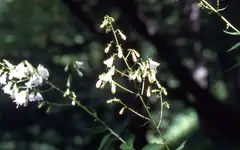 Lilyleaf LadybellsAdenophora liliifolianot rated, Central Valleyno Central Valley rating
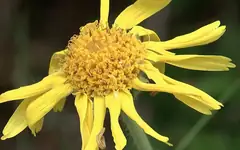 ArnicaArnica montananot rated, Central Valleyno Central Valley rating
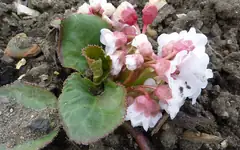 Frilly BergeniaBergenia ciliatanot rated, Central Valleyno Central Valley rating
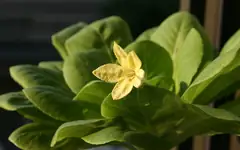 Cabbage on a StickBrighamia insignisnot rated, Central Valleyno Central Valley rating
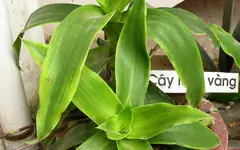 Basket PlantCallisia fragransnot rated, Central Valleyno Central Valley rating
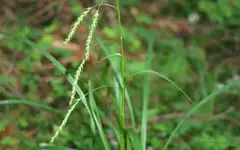 Forest SedgeCarex sylvaticanot rated, Central Valleyno Central Valley rating
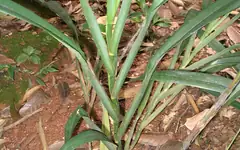 Umbrella DracaenaDianella ensifolianot rated, Central Valleyno Central Valley rating
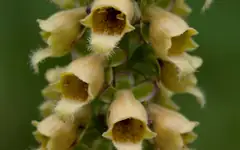 Rusty FoxgloveDigitalis ferrugineanot rated, Central Valleyno Central Valley rating
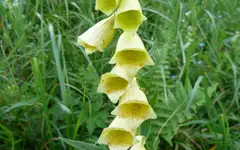 Big-Flowered FoxgloveDigitalis grandifloranot rated, Central Valleyno Central Valley rating
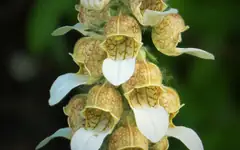 Woolly FoxgloveDigitalis lanatanot rated, Central Valleyno Central Valley rating
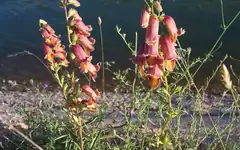 Sunset FoxgloveDigitalis obscuranot rated, Central Valleyno Central Valley rating
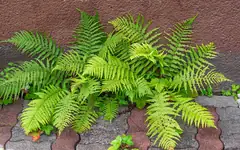 Male FernDryopteris filix-masnot rated, Central Valleyno Central Valley rating
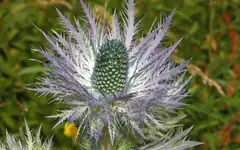 Alpine Sea HollyEryngium alpinumnot rated, Central Valleyno Central Valley rating
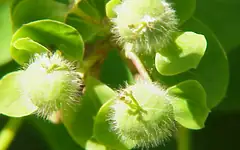 Purple SpurgeEuphorbia dulcisnot rated, Central Valleyno Central Valley rating
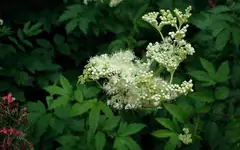 Queen of the MeadowFilipendula ulmarianot rated, Central Valleyno Central Valley rating
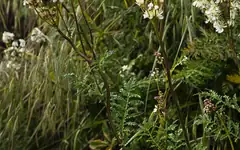 DropwortFilipendula vulgaris (Filipendula hexapetala)not rated, Central Valleyno Central Valley rating
Turn this into minutes on your water days
Every city page has a calculator that takes candelilla, your sprinkler type and the month, and gives the minutes per water day for that supplier's schedule. Or put it in a zone of the personal watering plan and get all twelve months printed.
Questions people ask
How often should I water candelilla in summer?
In July, established candelilla in loam needs a deep watering about every 18 days on the south coast and about every 14 days in the South Inland zone. Sandy soil holds less water, so waterings come closer together. Clay stretches them. Check the soil before each watering and skip one after a soaking rain.
How much water does candelilla need per day?
In July on the south coast, established candelilla needs about 0.1 gallons a day for a plant 2 feet across and about 0.3 gallons a day for a plant 4 feet across. Give it in deep waterings spread days apart rather than a little every day, so the whole root zone gets wet.
Does watering for candelilla change across California?
Yes. WUCOLS rates candelilla separately for each of the six California climate zones: not evaluated in the North-Central Coastal zone, not evaluated in the Central Valley zone, low water in the South Coastal zone, low water in the South Inland zone, low water in the High and Intermediate Desert zone, low water in the Low Desert zone. The monthly table above shows how the same rating translates into different gallon amounts as reference evapotranspiration changes.
Is candelilla poisonous?
Treat it as toxic. Plants in this genus can be poisonous if eaten, and candelilla sap irritates skin, eyes and mucous membranes. Wear gloves when you divide or handle it, and keep it away from children and pets.
Why is it called candelilla?
The name means little candle. A high-grade wax is made by boiling the stems, and it has been used for candles, polish and waterproofing. Overharvesting for wax has made the plant scarce in parts of Mexico.
Can candelilla grow in shade?
It grows best in full sun. Plants grown in shade turn taller, greener and more lax, losing the tidy gray look. Watering more will not fix that, so move it to a sunnier spot.
How do I propagate candelilla?
Divide an established clump at the roots. The plant spreads slowly by suckering from the base, so older clumps have plenty of stems to split off. Wear gloves, since the sap is irritating.
How cold can candelilla handle?
It is hardy to around 10 degrees F, and it is rated as both cold and heat tolerant. Its water use drops in winter. Cut watering back sharply then, since overwatering is what usually kills succulents.
Does candelilla handle heat off a wall?
Yes. It tolerates hot, dry conditions, including heat reflected from walls and paving. That suits it to desert landscapes, rock gardens and sunny accent spots.
More plant watering guides
Sources
- WUCOLS IV plant water use classification for Euphorbia antisyphilitica, the University of California survey California agencies use for landscape plan reviewRead August 23, 2026 on wucols.ucdavis.edu
- Model Water Efficient Landscape Ordinance, adopted text and appendices, effective 2025-01-02 · monthly reference evapotranspiration per city, Appendix CRead August 23, 2026 on water.ca.gov/-/media/DWR-Website/Web-Pages/Programs/Water-Use-And-Efficiency/MWELO-Rulemaking/Final-MWELO-Text-and-Appendices_20250103.pdf
- UC Statewide IPM Program, irrigation scheduling using evapotranspirationRead September 30, 2026 on ipm.ucanr.edu/PMG/GARDEN/ENVIRON/evap.html
- Shaw and Pittenger, Landscape Irrigation System Evaluation and Management, UC Cooperative Extension, 2009Read September 30, 2026 on ucanr.edu/sites/default/files/2013-02/160836.pdf
- Pittenger, Water Management in Gardens and Landscapes, UC Riverside, 2017Read September 30, 2026 on ucanr.edu/sites/default/files/2017-03/258022.pdf