How often to water cup-of-gold vine in California
In July on the north-central coast, established cup-of-gold vine in loam needs a deep watering about every 13 days: about 2.2 gallons each time for a plant 2 feet across, about 1.1 gallons a week. Cup-of-gold vine is a huge evergreen climber native from Mexico through Central America to Venezuela, really a clambering shrub that needs support. Its golden trumpet flowers reach about 8 inches long, striped brown inside and fragrant in the evening. It wants regular water, full sun on the coast and some protection inland.
How often to water cup-of-gold vine, month by month
Type your city above and the days between waterings and the gallons appear here, worked out from your city's climate table. Or read the figures by climate zone further down.
How this is worked out: established roots fill the top 1.5 feet of soil, and you water again when that soil has dried halfway. Loam soil holds about 1.5 inches of water per foot. Water the whole area the plant covers, and skip a watering after a good soaking rain.
How to tell it needs water
- Thick leaves that hang limp into the next morning, with dry soil below, point to a thirsty vine
- A vine whose soil is dry a couple of inches down during spring bloom needs a deep soak
- Damaged tip growth after a long freeze is frost injury, not thirst, so leave the watering as it was
- Yellowing leaves and wilting that persists over soggy ground can mean root rot rather than a need for water
How to water it
- Water cup-of-gold vine at its base with drip or a slow hose, soaking the root zone rather than the foliage
- Water regularly through bloom and the warm months, letting the top few inches of soil dry between soakings
- Mulch the root area with wood chips, keeping them clear of the thick main stems
- Plant in well-drained soil in full sun on the coast, and choose a spot with some protection inland
- Extend drip coverage outward over the years as the vine's base and root zone grow
Through the seasons
Through its first summer, keep a new cup-of-gold vine's root zone evenly damp as roots reach out. An established vine still wants regular water in the warm months. It stays evergreen, and bloom peaks in spring, though flowers can appear from January into summer. Frost damages tip growth when temperatures stay below freezing. Coastal winter rain usually covers the cool months, but check the soil before bloom if winter turns dry. WUCOLS rates cup-of-gold vine moderate water in South Inland, on the south coast and on the north-central coast. WUCOLS marks it as not suited to the low desert, the high desert or the Central Valley.
In pots
Cup-of-gold vine can spread to 40 feet, so a pot suits only a young plant. Use the largest container you can, with drainage holes and a sturdy support in place. In summer, check every few days and water when the mix is dry 2 inches down. Let water run through, then empty the saucer. Keep up watering through late winter and spring, when it blooms. Move a small pot under cover before a hard frost.
- A year
- no figure
- Reference
- Sacramento climate table
- Counts
- Plant need, before sprinkler losses
WUCOLS lists Cup-of-Gold Vine as not suited to this region for the Central Valley zone, so no monthly figure is computed here.
Monthly water need by climate zone
Cup-of-Gold Vine: gallons per square foot per month, by WUCOLS climate zone
| Month | N. Coast | C. Valley | S. Coast | S. Inland | Hi Desert | Lo Desert |
|---|---|---|---|---|---|---|
| Jan | 0.37 | – | 0.78 | 0.78 | – | – |
| Feb | 0.53 | – | 0.81 | 0.87 | – | – |
| Mar | 0.87 | – | 1.15 | 1.3 | – | – |
| Apr | 1.18 | – | 1.4 | 1.61 | – | – |
| May | 1.46 | – | 1.61 | 1.95 | – | – |
| Jun | 1.61 | – | 1.74 | 2.29 | – | – |
| Jul | 1.61 | – | 1.98 | 2.51 | – | – |
| Aug | 1.49 | – | 1.86 | 2.33 | – | – |
| Sep | 1.24 | – | 1.49 | 1.86 | – | – |
| Oct | 0.87 | – | 1.15 | 1.33 | – | – |
| Nov | 0.47 | – | 0.84 | 0.9 | – | – |
| Dec | 0.31 | – | 0.65 | 0.68 | – | – |
| Year | 12 | – | 15.5 | 18.41 | – | – |
How this is worked out: the WUCOLS water rating for each zone times that zone’s climate for the month. A dash means WUCOLS does not rate the plant there. The figures are what the plant uses, before sprinkler losses.
Plants with the same water needs 10
Rated not suited to this region in the Central Valley, like cup-of-gold vine. Plants that drink alike can share one valve and one schedule.
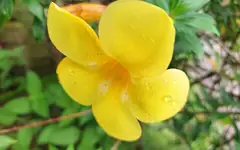 Golden Trumpet VineAllamanda catharticanot rated, Central Valleyno Central Valley rating
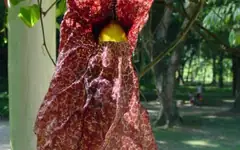 Pelican FlowerAristolochia giganteanot rated, Central Valleyno Central Valley rating
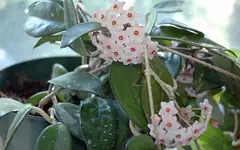 Wax PlantHoya carnosanot rated, Central Valleyno Central Valley rating
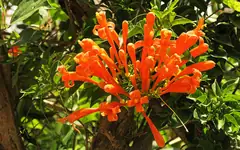 Flame VinePyrostegia venustanot rated, Central Valleyno Central Valley rating
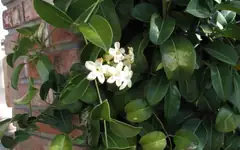 Madagascar JasmineStephanotis floribundanot rated, Central Valleyno Central Valley rating
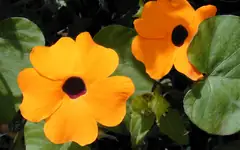 Black-Eyed Susan VineThunbergia alatanot rated, Central Valleyno Central Valley rating
 Sky Flower VineThunbergia grandifloranot rated, Central Valleyno Central Valley rating
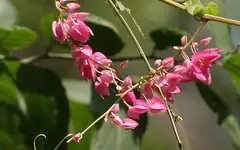 Coral VineAntigonon leptopusnot rated, Central Valleyno Central Valley rating
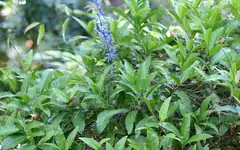 Queen's WreathPetrea volubilisnot rated, Central Valleyno Central Valley rating
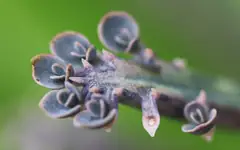 Beauverd's Widow's-ThrillKalanchoe beauverdiinot rated, Central Valleyno Central Valley rating
Turn this into minutes on your water days
Every city page has a calculator that takes cup-of-gold vine, your sprinkler type and the month, and gives the minutes per water day for that supplier's schedule. Or put it in a zone of the personal watering plan and get all twelve months printed.
Questions people ask
How often should I water cup-of-gold vine in summer?
In July, established cup-of-gold vine in loam needs a deep watering about every 11 days on the south coast and about every 9 days in the South Inland zone. Sandy soil holds less water, so waterings come closer together. Clay stretches them. Check the soil before each watering and skip one after a soaking rain.
How much water does cup-of-gold vine need per day?
In July on the north-central coast, established cup-of-gold vine needs about 0.2 gallons a day for a plant 2 feet across and about 0.7 gallons a day for a plant 4 feet across. Give it in deep waterings spread days apart rather than a little every day, so the whole root zone gets wet.
Does watering for cup-of-gold vine change across California?
Yes. WUCOLS rates cup-of-gold vine separately for each of the six California climate zones: moderate water in the North-Central Coastal zone, not suited to this region in the Central Valley zone, moderate water in the South Coastal zone, moderate water in the South Inland zone, not suited to this region in the High and Intermediate Desert zone, not suited to this region in the Low Desert zone. The monthly table above shows how the same rating translates into different gallon amounts as reference evapotranspiration changes.
Is cup-of-gold vine poisonous?
It is listed as possibly poisonous, and it belongs to the nightshade family with potatoes, tomatoes and peppers. Plant it where children will not chew the leaves or flowers.
When does cup-of-gold vine bloom?
Peak bloom comes in spring in California. Flowers can open as early as January in Santa Barbara and often last into June or July. They darken as they age and smell of banana or vanilla, most of all in the evening.
How big does cup-of-gold vine get?
With support it can climb 20 feet or more and spread to 40 feet wide. Its thick stems carry leaves 6 to 8 inches long. Give it a strong fence, wall or arbor and plenty of room.
Can cup-of-gold vine grow by the beach?
Yes. It tolerates seaside conditions, even direct salt spray. Give it full sun there and regular water.
How much cold can cup-of-gold vine take?
It is hardy to around 28 F. Long spells below freezing can damage tip growth. In frost-prone spots, keep a young plant in a container that can come under cover.
Is cup-of-gold vine the same as Solandra guttata?
No, though it was often sold under that name. Solandra guttata is a very similar Mexican species with smaller flowers and hairy leaves and stems. Other common names for cup-of-gold vine include golden chalice vine and Hawaiian lily.
More plant watering guides
Sources
- WUCOLS IV plant water use classification for Solandra maxima, the University of California survey California agencies use for landscape plan reviewRead August 23, 2026 on wucols.ucdavis.edu
- Model Water Efficient Landscape Ordinance, adopted text and appendices, effective 2025-01-02 · monthly reference evapotranspiration per city, Appendix CRead August 23, 2026 on water.ca.gov/-/media/DWR-Website/Web-Pages/Programs/Water-Use-And-Efficiency/MWELO-Rulemaking/Final-MWELO-Text-and-Appendices_20250103.pdf
- UC Statewide IPM Program, irrigation scheduling using evapotranspirationRead September 30, 2026 on ipm.ucanr.edu/PMG/GARDEN/ENVIRON/evap.html
- Shaw and Pittenger, Landscape Irrigation System Evaluation and Management, UC Cooperative Extension, 2009Read September 30, 2026 on ucanr.edu/sites/default/files/2013-02/160836.pdf
- Pittenger, Water Management in Gardens and Landscapes, UC Riverside, 2017Read September 30, 2026 on ucanr.edu/sites/default/files/2017-03/258022.pdf