How often to water black-eyed Susan vine in California
In July on the north-central coast, established black-eyed Susan vine in loam needs a deep watering about every 13 days: about 2.2 gallons each time for a plant 2 feet across, about 1.1 gallons a week. Black-eyed Susan vine is a twining tropical vine with soft, heart-shaped leaves and orange to yellow flowers with dark throats. It is unrelated to the black-eyed Susan daisy. Because it is frost tender, it is often grown as an annual and replaced each year. It flowers from summer through fall, with the best show after the hottest weeks.
How often to water black-eyed Susan vine, month by month
Type your city above and the days between waterings and the gallons appear here, worked out from your city's climate table. Or read the figures by climate zone further down.
How this is worked out: established roots fill the top 1.5 feet of soil, and you water again when that soil has dried halfway. Loam soil holds about 1.5 inches of water per foot. Water the whole area the plant covers, and skip a watering after a good soaking rain.
How to tell it needs water
- Soil dry an inch or two down around the base means black-eyed Susan vine is ready for a drink
- Soft leaves that wilt in the afternoon and are still limp by evening point to a dry root zone
- Few flowers during the hottest part of summer are normal, since blooms pick up as heat eases
- Yellowing lower leaves over soggy soil suggest the roots are staying too wet
- Fine webbing and speckled leaves on plants kept indoors point to spider mites
How to water it
- Water black-eyed Susan vine at the base of the stems rather than over the leaves
- Moisten the soil 6 to 8 inches deep, then let the top inch dry before watering again
- Plant in rich, well-drained soil with full sun and some afternoon shade
- Mulch around the base with compost to keep the root zone evenly moist
- Widen the watered area as new stems and self-sown seedlings fill in around the trellis
Through the seasons
Water new plants or seedlings often enough to keep the soil lightly moist until they start climbing. Established vines need regular checks from late spring through fall, while they grow and flower. Bloom runs from summer into fall, and flowering often improves once the hottest weeks pass. Frost ends the season in most gardens, and many people simply replant each spring. WUCOLS rates black-eyed Susan vine moderate water on the north-central coast, on the south coast and in South Inland. It carries the same moderate water rating in the high desert and the low desert. WUCOLS marks it as not suited to the Central Valley.
In pots
Black-eyed Susan vine is a classic for hanging baskets and for pots with a small trellis. Containers dry fast, so check the mix daily in summer heat and water when the top inch is dry. Soak until water drips from the bottom, then empty any saucer. A basket in full afternoon sun may need water more than once on hot days. Before frost, move a potted plant indoors to a bright spot, and watch it for spider mites there.
- A year
- no figure
- Reference
- Sacramento climate table
- Counts
- Plant need, before sprinkler losses
WUCOLS lists Black-Eyed Susan Vine as not suited to this region for the Central Valley zone, so no monthly figure is computed here.
Monthly water need by climate zone
Black-Eyed Susan Vine: gallons per square foot per month, by WUCOLS climate zone
| Month | N. Coast | C. Valley | S. Coast | S. Inland | Hi Desert | Lo Desert |
|---|---|---|---|---|---|---|
| Jan | 0.37 | – | 0.78 | 0.78 | 0.74 | 0.78 |
| Feb | 0.53 | – | 0.81 | 0.87 | 0.93 | 0.93 |
| Mar | 0.87 | – | 1.15 | 1.3 | 1.46 | 1.52 |
| Apr | 1.18 | – | 1.4 | 1.61 | 1.89 | 1.95 |
| May | 1.46 | – | 1.61 | 1.95 | 2.39 | 2.45 |
| Jun | 1.61 | – | 1.74 | 2.29 | 2.85 | 2.79 |
| Jul | 1.61 | – | 1.98 | 2.51 | 3.04 | 2.85 |
| Aug | 1.49 | – | 1.86 | 2.33 | 2.79 | 2.6 |
| Sep | 1.24 | – | 1.49 | 1.86 | 2.14 | 2.08 |
| Oct | 0.87 | – | 1.15 | 1.33 | 1.46 | 1.49 |
| Nov | 0.47 | – | 0.84 | 0.9 | 0.93 | 0.96 |
| Dec | 0.31 | – | 0.65 | 0.68 | 0.65 | 0.68 |
| Year | 12 | – | 15.5 | 18.41 | 21.27 | 21.08 |
How this is worked out: the WUCOLS water rating for each zone times that zone’s climate for the month. A dash means WUCOLS does not rate the plant there. The figures are what the plant uses, before sprinkler losses.
Plants with the same water needs 10
Rated not suited to this region in the Central Valley, like black-eyed Susan vine. Plants that drink alike can share one valve and one schedule.
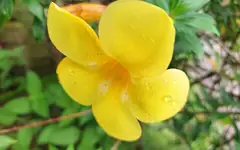 Golden Trumpet VineAllamanda catharticanot rated, Central Valleyno Central Valley rating
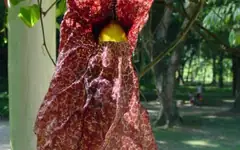 Pelican FlowerAristolochia giganteanot rated, Central Valleyno Central Valley rating
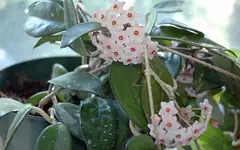 Wax PlantHoya carnosanot rated, Central Valleyno Central Valley rating
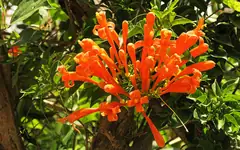 Flame VinePyrostegia venustanot rated, Central Valleyno Central Valley rating
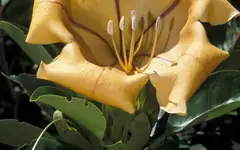 Cup-of-Gold VineSolandra maximanot rated, Central Valleyno Central Valley rating
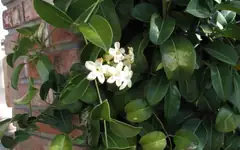 Madagascar JasmineStephanotis floribundanot rated, Central Valleyno Central Valley rating
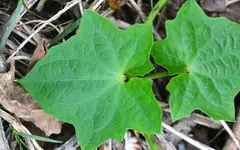 Sky Flower VineThunbergia grandifloranot rated, Central Valleyno Central Valley rating
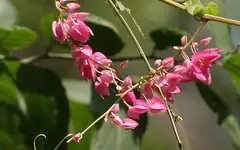 Coral VineAntigonon leptopusnot rated, Central Valleyno Central Valley rating
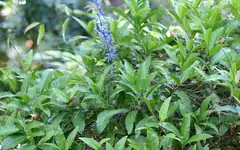 Queen's WreathPetrea volubilisnot rated, Central Valleyno Central Valley rating
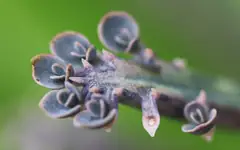 Beauverd's Widow's-ThrillKalanchoe beauverdiinot rated, Central Valleyno Central Valley rating
Turn this into minutes on your water days
Every city page has a calculator that takes black-eyed Susan vine, your sprinkler type and the month, and gives the minutes per water day for that supplier's schedule. Or put it in a zone of the personal watering plan and get all twelve months printed.
Questions people ask
How often should I water black-eyed Susan vine in summer?
In July, established black-eyed Susan vine in loam needs a deep watering about every 11 days on the south coast and about every 9 days in the South Inland zone. Sandy soil holds less water, so waterings come closer together. Clay stretches them. Check the soil before each watering and skip one after a soaking rain.
How much water does black-eyed Susan vine need per day?
In July on the north-central coast, established black-eyed Susan vine needs about 0.2 gallons a day for a plant 2 feet across and about 0.7 gallons a day for a plant 4 feet across. Give it in deep waterings spread days apart rather than a little every day, so the whole root zone gets wet.
Does watering for black-eyed Susan vine change across California?
Yes. WUCOLS rates black-eyed Susan vine separately for each of the six California climate zones: moderate water in the North-Central Coastal zone, not suited to this region in the Central Valley zone, moderate water in the South Coastal zone, moderate water in the South Inland zone, moderate water in the High and Intermediate Desert zone, moderate water in the Low Desert zone. The monthly table above shows how the same rating translates into different gallon amounts as reference evapotranspiration changes.
Is black-eyed Susan vine related to black-eyed Susan?
No. Despite the shared name, it has no botanical tie to the Rudbeckia daisy. This one is a twining vine that needs support and steady moisture.
Will black-eyed Susan vine come back next year?
It is frost tender, so a freeze usually ends it. It reseeds easily, and seedlings may appear the following spring. You can also root stem cuttings before cold weather or bring a pot indoors.
Why did my black-eyed Susan vine stop blooming in July?
Flowering often slows in the hottest part of summer. Blooms usually pick up as the heat eases. Keep the soil evenly moist rather than drenching it, since extra water does not bring flowers back faster.
Does black-eyed Susan vine need a trellis?
It twines and does best with support such as a trellis, fence or arbor. Without one, it sprawls as a groundcover or spills from a basket. Water at the base however you grow it.
Can you overwater black-eyed Susan vine?
Yes. It wants rich soil with medium moisture that drains well. Soggy ground around the base can yellow the leaves, so let the surface dry before watering again.
More plant watering guides
Sources
- WUCOLS IV plant water use classification for Thunbergia alata, the University of California survey California agencies use for landscape plan reviewRead August 23, 2026 on wucols.ucdavis.edu
- Model Water Efficient Landscape Ordinance, adopted text and appendices, effective 2025-01-02 · monthly reference evapotranspiration per city, Appendix CRead August 23, 2026 on water.ca.gov/-/media/DWR-Website/Web-Pages/Programs/Water-Use-And-Efficiency/MWELO-Rulemaking/Final-MWELO-Text-and-Appendices_20250103.pdf
- UC Statewide IPM Program, irrigation scheduling using evapotranspirationRead September 30, 2026 on ipm.ucanr.edu/PMG/GARDEN/ENVIRON/evap.html
- Shaw and Pittenger, Landscape Irrigation System Evaluation and Management, UC Cooperative Extension, 2009Read September 30, 2026 on ucanr.edu/sites/default/files/2013-02/160836.pdf
- Pittenger, Water Management in Gardens and Landscapes, UC Riverside, 2017Read September 30, 2026 on ucanr.edu/sites/default/files/2017-03/258022.pdf