How often to water ground ivy in California
In July in the Central Valley, established ground ivy in loam needs a deep watering about every 8 days: about 2.2 gallons each time for a plant 2 feet across, about 1.9 gallons a week. Ground ivy is an aromatic, evergreen creeper in the mint family. It roots at every leaf node and forms a low mat of rounded, scalloped leaves. Small blue-violet flowers open from mid-spring into early summer. It favors shade and moist, fertile soil, and it spreads so aggressively that it is widely treated as a lawn weed.
How often to water ground ivy, month by month
Type your city above and the days between waterings and the gallons appear here, worked out from your city's climate table. Or read the figures by climate zone further down.
How this is worked out: established roots fill the top 1.5 feet of soil, and you water again when that soil has dried halfway. Loam soil holds about 1.5 inches of water per foot. Water the whole area the plant covers, and skip a watering after a good soaking rain.
How to tell it needs water
- Soil dry an inch down beneath the mat signals that ground ivy needs water, especially in a sunny spot
- Leaves wilting and turning dull at midday over dry soil can indicate thirst
- Growth stalling in hot summer weather is a natural pause, not always a sign of dry soil
- Yellowing, collapsing stems in a patch that never dries can indicate overwatering or poor drainage
- Leaf edges browning in salty or acidic soil reflect ground the plant does not tolerate rather than thirst
How to water it
- Water ground ivy evenly across the whole mat with a soaker line or gentle spray at soil level
- Moisten the top 4 to 6 inches of soil, then let the surface dry before watering again
- Confine the planting with buried edging, since rooted runners spread quickly into moist lawn and beds
- Plant it in shade or part shade with fertile, loamy soil, where the ground stays moist longer
- Extend water only as far as you want the mat to grow
Through the seasons
Keep new plantings or divisions evenly moist until they root in and start to spread. Established mats take deeper, less frequent watering. It flowers from mid-spring into early summer, then often slows or goes dormant in hot weather, when it uses less water. Winter rain usually covers this evergreen on the coast and in the Central Valley. WUCOLS rates ground ivy low water on the north-central coast and high water in South Inland. It rates moderate water in the Central Valley and on the south coast. WUCOLS marks it as not suited to the high desert or the low desert.
In pots
Ground ivy is easiest to control in a container or hanging basket, where its trailing stems spill over the edge. A variegated form with white edged leaves also exists. Check the mix an inch down every few days in summer heat and water when it is dry there. Water until excess drains, then empty the saucer. Trim stems that touch the ground so they cannot root outside the pot. In winter, water only when the mix starts to dry.
- A year
- 17.11 gal per sq ft
- Reference
- Sacramento climate table
- Counts
- Plant need, before sprinkler losses
Monthly water need by climate zone
Ground Ivy: gallons per square foot per month, by WUCOLS climate zone
| Month | N. Coast | C. Valley | S. Coast | S. Inland | Hi Desert | Lo Desert |
|---|---|---|---|---|---|---|
| Jan | 0.15 | 0.4 | 0.78 | 1.24 | – | – |
| Feb | 0.21 | 0.65 | 0.81 | 1.39 | – | – |
| Mar | 0.35 | 1.09 | 1.15 | 2.08 | – | – |
| Apr | 0.47 | 1.52 | 1.4 | 2.58 | – | – |
| May | 0.58 | 2.08 | 1.61 | 3.12 | – | – |
| Jun | 0.64 | 2.48 | 1.74 | 3.67 | – | – |
| Jul | 0.64 | 2.67 | 1.98 | 4.02 | – | – |
| Aug | 0.6 | 2.39 | 1.86 | 3.72 | – | – |
| Sep | 0.5 | 1.8 | 1.49 | 2.98 | – | – |
| Oct | 0.35 | 1.18 | 1.15 | 2.13 | – | – |
| Nov | 0.19 | 0.56 | 0.84 | 1.44 | – | – |
| Dec | 0.12 | 0.34 | 0.65 | 1.09 | – | – |
| Year | 4.8 | 17.11 | 15.5 | 29.46 | – | – |
How this is worked out: the WUCOLS water rating for each zone times that zone’s climate for the month. A dash means WUCOLS does not rate the plant there. The figures are what the plant uses, before sprinkler losses.
Plants with the same water needs 16
Rated moderate water in the Central Valley, like ground ivy. Plants that drink alike can share one valve and one schedule.
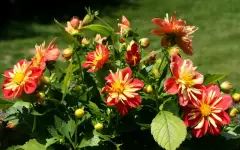 DahliasDahlia spp.moderate water, Central Valley2.67 gal/sq ft in July
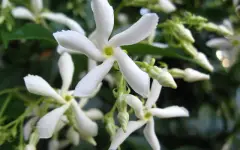 Star JasmineTrachelospermum jasminoides and cvs.moderate water, Central Valley2.67 gal/sq ft in July
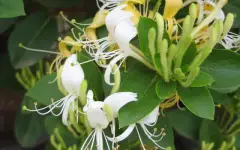 HoneysuckleLonicera japonicamoderate water, Central Valley2.67 gal/sq ft in July
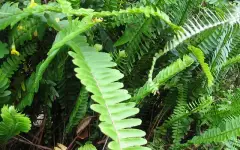 FernsNephrolepis cordifolia (SHADE IN DESERT)moderate water, Central Valley2.67 gal/sq ft in July
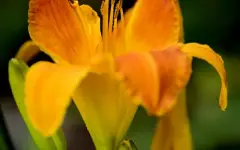 DayliliesHemerocallis spp. & cvs.moderate water, Central Valley2.67 gal/sq ft in July
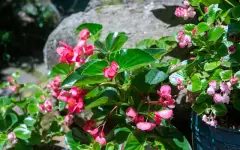 BegoniasBegonia & ssp. & cvs. (shade in the desert)moderate water, Central Valley2.67 gal/sq ft in July
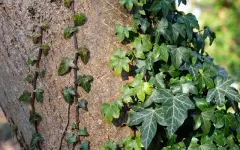 IvyHedera helixmoderate water, Central Valley2.67 gal/sq ft in July
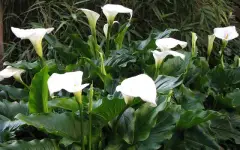 Calla LiliesZantedeschia aethiopica SHADE IN DESERTmoderate water, Central Valley2.67 gal/sq ft in July
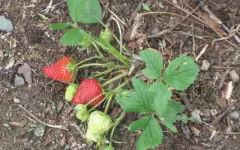 StrawberriesFragaria spp. & cvs. (CA native and non-natives species)moderate water, Central Valley2.67 gal/sq ft in July
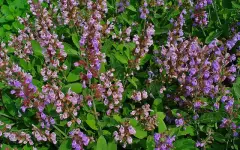 SageSalvia officinalis and cvs.moderate water, Central Valley2.67 gal/sq ft in July
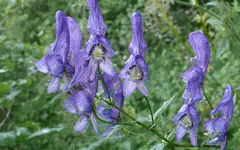 Bicolor MonkshoodAconitum cammarummoderate water, Central Valley2.67 gal/sq ft in July
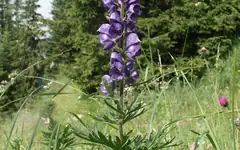 Garden MonkshoodAconitum napellusmoderate water, Central Valley2.67 gal/sq ft in July
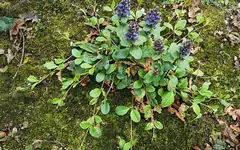 Carpet BugleAjuga reptans (shade)moderate water, Central Valley2.67 gal/sq ft in July
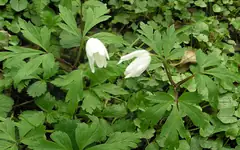 Snowdrop WindflowerAnemone sylvestrismoderate water, Central Valley2.67 gal/sq ft in July
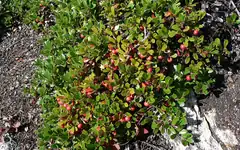 Green Supreme ManzanitaArctostaphylos uva-ursi 'Green Supreme'moderate water, Central Valley2.67 gal/sq ft in July
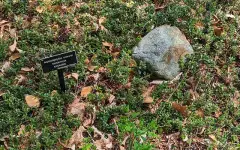 Massachusetts ManzanitaArctostaphylos uva-ursi 'Massachusetts'moderate water, Central Valley2.67 gal/sq ft in July
Similar plants that need less water 16
Rated lower than ground ivy in the Central Valley. Worth a look for a new bed or a lawn replacement.
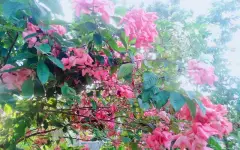 BougainvilleaBougainvillea & spp. & cvs.low water, Central Valley1.07 gal/sq ft in July
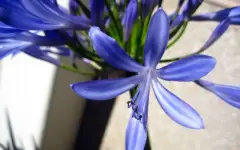 AgapanthusAgapanthus orientalislow water, Central Valley1.07 gal/sq ft in July
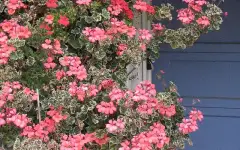 GeraniumsPelargonium x hortorum and cvs.low water, Central Valley1.07 gal/sq ft in July
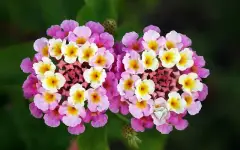 LantanaLantana camara ssp. & cvs.low water, Central Valley1.07 gal/sq ft in July
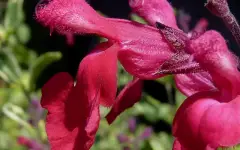 SalviaSalvia greggii ssp., cvs. & hybridslow water, Central Valley1.07 gal/sq ft in July
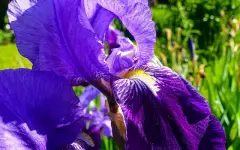 IrisesIris germanicalow water, Central Valley1.07 gal/sq ft in July
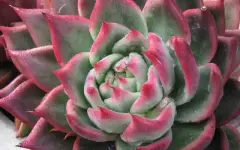 SucculentsEcheveria spp. & cvs.low water, Central Valley1.07 gal/sq ft in July
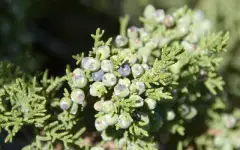 JunipersJuniperus spp. & cvs.low water, Central Valley1.07 gal/sq ft in July
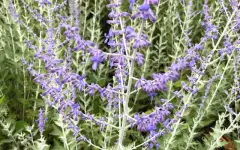 Russian SagePerovskia spp. & cvs.low water, Central Valley1.07 gal/sq ft in July
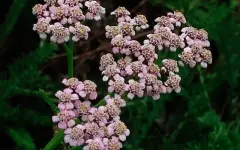 YarrowAchillea millefolium (non-native hybrids)low water, Central Valley1.07 gal/sq ft in July
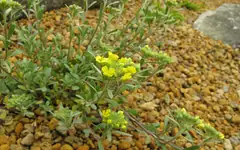 Mountain AlyssumAlyssum montanumlow water, Central Valley1.07 gal/sq ft in July
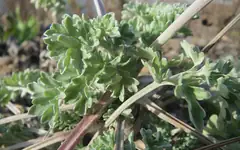 SagebrushArtemisia spp. (shrubby)low water, Central Valley1.07 gal/sq ft in July
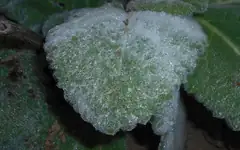 Silver SageSalvia argentealow water, Central Valley1.07 gal/sq ft in July
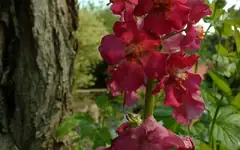 Purple MulleinVerbascum phoeniceumlow water, Central Valley1.07 gal/sq ft in July
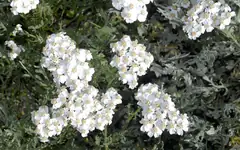 Silvery YarrowAchillea clavennaelow water, Central Valley1.07 gal/sq ft in July
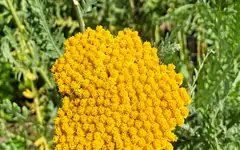 Fern Leaf YarrowAchillea filipendulinalow water, Central Valley1.07 gal/sq ft in July
Turn this into minutes on your water days
Every city page has a calculator that takes ground ivy, your sprinkler type and the month, and gives the minutes per water day for that supplier's schedule. Or put it in a zone of the personal watering plan and get all twelve months printed.
Questions people ask
How often should I water ground ivy in summer?
In July, established ground ivy in loam needs a deep watering about every 8 days in the Central Valley, about every 11 days on the south coast and about every 5 days in the South Inland zone. Sandy soil holds less water, so waterings come closer together. Clay stretches them. Check the soil before each watering and skip one after a soaking rain.
How much water does ground ivy need per day?
In July in the Central Valley, established ground ivy needs about 0.3 gallons a day for a plant 2 feet across and about 1.1 gallons a day for a plant 4 feet across. Give it in deep waterings spread days apart rather than a little every day, so the whole root zone gets wet.
Does watering for ground ivy change across California?
Yes. WUCOLS rates ground ivy separately for each of the six California climate zones: low water in the North-Central Coastal zone, moderate water in the Central Valley zone, moderate water in the South Coastal zone, high water in the South Inland zone, not suited to this region in the High and Intermediate Desert zone, not suited to this region in the Low Desert zone. The monthly table above shows how the same rating translates into different gallon amounts as reference evapotranspiration changes.
Is ground ivy invasive?
Yes. It spreads aggressively by stems that root at each node and is a common lawn weed. Plant it only where it can be contained, away from lawns and natural areas.
How do I get rid of ground ivy in my lawn?
Pull it by hand, removing the entire plant and its rooted runners, or it will return. A dense, healthy lawn helps keep it from moving in. It favors thin turf in shady, moist spots.
Does ground ivy need shade?
It prefers shade and moist, fertile soil but also grows in sun. In a sunny spot the soil dries faster, so check it more often. Hot summer weather can push it into a dormant pause.
Is ground ivy safe for animals?
It is listed as a problem for horses. Keep it out of pastures and paddocks. Pull it from any area where horses graze.
Can you overwater ground ivy?
It tolerates moist and occasionally wet soil, so it is harder to overwater than many plants. Still, ease off during its summer slowdown, when it uses less. Extra water also encourages it to spread.
More plant watering guides
Sources
- WUCOLS IV plant water use classification for Glechoma hederacea, the University of California survey California agencies use for landscape plan reviewRead August 23, 2026 on wucols.ucdavis.edu
- Model Water Efficient Landscape Ordinance, adopted text and appendices, effective 2025-01-02 · monthly reference evapotranspiration per city, Appendix CRead August 23, 2026 on water.ca.gov/-/media/DWR-Website/Web-Pages/Programs/Water-Use-And-Efficiency/MWELO-Rulemaking/Final-MWELO-Text-and-Appendices_20250103.pdf
- UC Statewide IPM Program, irrigation scheduling using evapotranspirationRead September 30, 2026 on ipm.ucanr.edu/PMG/GARDEN/ENVIRON/evap.html
- Shaw and Pittenger, Landscape Irrigation System Evaluation and Management, UC Cooperative Extension, 2009Read September 30, 2026 on ucanr.edu/sites/default/files/2013-02/160836.pdf
- Pittenger, Water Management in Gardens and Landscapes, UC Riverside, 2017Read September 30, 2026 on ucanr.edu/sites/default/files/2017-03/258022.pdf