How often to water Himalayan blueberry in California
In July on the north-central coast, established Himalayan blueberry in loam needs a deep watering about every 13 days: about 8.8 gallons each time for a plant 4 feet across, about 4.6 gallons a week. Himalayan blueberry is a compact, rounded evergreen shrub from western China, 2 to 3 feet tall. Its dark green leaves open bronze and flush red in winter, and clusters of urn-shaped, reddish brown flowers in late spring give way to edible black-purple berries. It needs moist but well-drained, acidic soil in a sheltered spot in sun or part shade.
How often to water Himalayan blueberry, month by month
Type your city above and the days between waterings and the gallons appear here, worked out from your city's climate table. Or read the figures by climate zone further down.
How this is worked out: established roots fill the top 1.5 feet of soil, and you water again when that soil has dried halfway. Loam soil holds about 1.5 inches of water per foot. Water the whole area the plant covers, and skip a watering after a good soaking rain.
How to tell it needs water
- Acidic mix or soil dry an inch or two down in summer signals Himalayan blueberry needs water
- Leaves curling and drooping in afternoon heat can indicate thirst
- Berries shriveling before they ripen can follow a dry root zone
- Yellow leaves with green veins point to soil that is not acidic enough
How to water it
- Water the shallow roots with drip or a soaker under the shrub
- Wet the soil several inches down and water again as the top inch dries
- Plant in acidic, moisture-retentive, well-drained soil, or a raised bed of acidic mix
- Mulch with pine needles or bark to keep roots cool and moist
- Choose a sheltered site in sun or part shade
Through the seasons
Keep a new plant evenly moist through its first summer while roots spread. Established shrubs still want steady moisture, since their roots stay shallow. It is evergreen, with bronze spring growth, red winter color, flowers in late spring and berries after. Mature plants benefit from regular pruning. On the north-central coast, WUCOLS rates Himalayan blueberry moderate water. WUCOLS marks it as not suited to the high desert or the low desert, and has not evaluated it for the Central Valley, the south coast or South Inland.
In pots
Himalayan blueberry is well suited to containers, which make acid soil easy to provide. Fill the pot with a peat-free acidic mix and keep it evenly moist, watering when the top inch dries. In summer, check daily. Let it drain and empty the saucer. Watch for vine weevil damage in pots. In winter, water when the mix dries and protect the pot from hard frost.
- A year
- no figure
- Reference
- Sacramento climate table
- Counts
- Plant need, before sprinkler losses
WUCOLS lists Himalayan Blueberry as not evaluated for the Central Valley zone, so no monthly figure is computed here.
Monthly water need by climate zone
Himalayan Blueberry: gallons per square foot per month, by WUCOLS climate zone
| Month | N. Coast | C. Valley | S. Coast | S. Inland | Hi Desert | Lo Desert |
|---|---|---|---|---|---|---|
| Jan | 0.37 | – | – | – | – | – |
| Feb | 0.53 | – | – | – | – | – |
| Mar | 0.87 | – | – | – | – | – |
| Apr | 1.18 | – | – | – | – | – |
| May | 1.46 | – | – | – | – | – |
| Jun | 1.61 | – | – | – | – | – |
| Jul | 1.61 | – | – | – | – | – |
| Aug | 1.49 | – | – | – | – | – |
| Sep | 1.24 | – | – | – | – | – |
| Oct | 0.87 | – | – | – | – | – |
| Nov | 0.47 | – | – | – | – | – |
| Dec | 0.31 | – | – | – | – | – |
| Year | 12 | – | – | – | – | – |
How this is worked out: the WUCOLS water rating for each zone times that zone’s climate for the month. A dash means WUCOLS does not rate the plant there. The figures are what the plant uses, before sprinkler losses.
Plants with the same water needs 16
Rated not evaluated in the Central Valley, like Himalayan blueberry. Plants that drink alike can share one valve and one schedule.
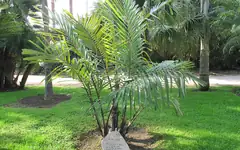 Formosa Sugar PalmArenga englerinot rated, Central Valleyno Central Valley rating
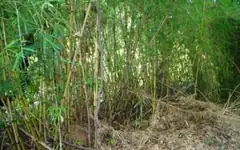 Chilean Feather BambooChusquea culeou (C. breviglumis)not rated, Central Valleyno Central Valley rating
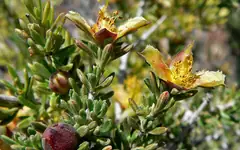 BlackbrushColeogyne ramosissimanot rated, Central Valleyno Central Valley rating
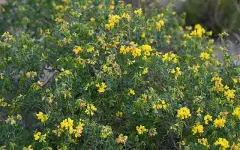 Glaucous Scorpion VetchCoronilla valentina glaucanot rated, Central Valleyno Central Valley rating
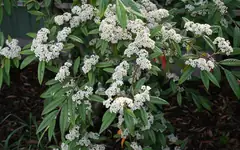 Willowleaf CotoneasterCotoneaster salicifoliusnot rated, Central Valleyno Central Valley rating
 Madagascar SagoCycas thouarsii (SHADE)not rated, Central Valleyno Central Valley rating
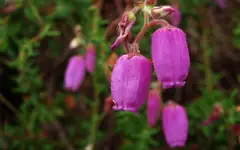 Irish HeathDaboecia cantabricanot rated, Central Valleyno Central Valley rating
 Butterfly PalmDypsis lutescens (Areca)not rated, Central Valleyno Central Valley rating
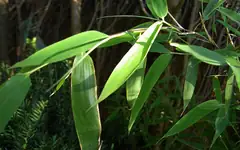 Umbrella BambooFargesia murielaenot rated, Central Valleyno Central Valley rating
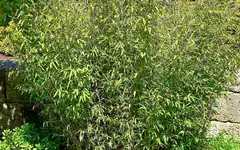 Blue Fountain BambooFargesia nitida (Sinarundinaria nitida) (BAMBOO)not rated, Central Valleyno Central Valley rating
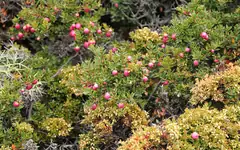 Prickly HeathGaultheria mucronata (Pernettya mucronata)not rated, Central Valleyno Central Valley rating
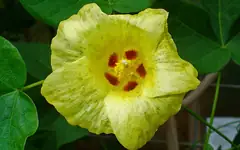 OtterbossieGossypium harknessiinot rated, Central Valleyno Central Valley rating
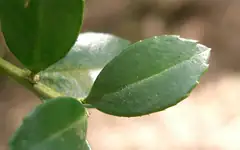 Box-leaved HollyIlex crenatanot rated, Central Valleyno Central Valley rating
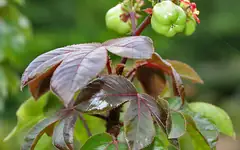 Bellyache BushJatropha gossypiifolianot rated, Central Valleyno Central Valley rating
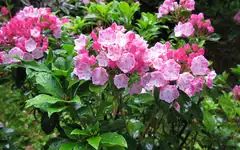 Mountain LaurelKalmia latifolianot rated, Central Valleyno Central Valley rating
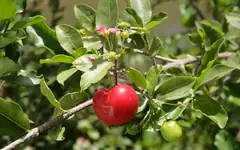 Barbados CherryMalpighia glabranot rated, Central Valleyno Central Valley rating
Turn this into minutes on your water days
Every city page has a calculator that takes Himalayan blueberry, your sprinkler type and the month, and gives the minutes per water day for that supplier's schedule. Or put it in a zone of the personal watering plan and get all twelve months printed.
Questions people ask
How much water does Himalayan blueberry need per day?
In July on the north-central coast, established Himalayan blueberry needs about 0.7 gallons a day for a plant 4 feet across and about 2.6 gallons a day for a plant 8 feet across. Give it in deep waterings spread days apart rather than a little every day, so the whole root zone gets wet.
Does watering for Himalayan blueberry change across California?
Yes. WUCOLS rates Himalayan blueberry separately for each of the six California climate zones: moderate water in the North-Central Coastal zone, not evaluated in the Central Valley zone, not evaluated in the South Coastal zone, not evaluated in the South Inland zone, not suited to this region in the High and Intermediate Desert zone, not suited to this region in the Low Desert zone. The monthly table above shows how the same rating translates into different gallon amounts as reference evapotranspiration changes.
Are Himalayan blueberry fruits edible?
Yes, the black-purple berries are edible. Netting protects ripening fruit from birds. Planting several blueberries improves pollination.
Does Himalayan blueberry need acid soil?
Yes, it needs acidic soil, around pH 4.5 to 5.5. Most California soils are not that acidic. A pot or raised bed of acidic mix is easiest.
Why are the leaves red?
New growth is bronze, and the foliage flushes red in winter. It is normal coloring. It is not a sign of stress.
Can Himalayan blueberry grow in a pot?
Yes, it is compact and grows well in containers of acidic mix. Keep the mix evenly moist. Watch for vine weevil larvae in pots.
How big does Himalayan blueberry get?
It stays compact, about 2 to 3 feet tall and wide. It grows slowly. It suits small gardens and pots.
More plant watering guides
Sources
- WUCOLS IV plant water use classification for Vaccinium moupinense, the University of California survey California agencies use for landscape plan reviewRead August 23, 2026 on wucols.ucdavis.edu
- Model Water Efficient Landscape Ordinance, adopted text and appendices, effective 2025-01-02 · monthly reference evapotranspiration per city, Appendix CRead August 23, 2026 on water.ca.gov/-/media/DWR-Website/Web-Pages/Programs/Water-Use-And-Efficiency/MWELO-Rulemaking/Final-MWELO-Text-and-Appendices_20250103.pdf
- UC Statewide IPM Program, irrigation scheduling using evapotranspirationRead September 30, 2026 on ipm.ucanr.edu/PMG/GARDEN/ENVIRON/evap.html
- Shaw and Pittenger, Landscape Irrigation System Evaluation and Management, UC Cooperative Extension, 2009Read September 30, 2026 on ucanr.edu/sites/default/files/2013-02/160836.pdf
- Pittenger, Water Management in Gardens and Landscapes, UC Riverside, 2017Read September 30, 2026 on ucanr.edu/sites/default/files/2017-03/258022.pdf