How often to water Japanese larch in California
In July on the north-central coast, established Japanese larch in loam needs a deep watering about every 13 days: about 55 gallons each time under a 10 foot canopy, about 29 gallons a week. Japanese larch is a large conifer that loses its needles: soft, bright green tufts turn yellow in fall and drop for winter. It comes from cool mountain climates in Japan. It wants rich, acidic, well drained soil with consistent moisture, and it does poorly in dry soil or hot summers.
How often to water Japanese larch, month by month
Type your city above and the days between waterings and the gallons appear here, worked out from your city's climate table. Or read the figures by climate zone further down.
How this is worked out: established roots fill the top 1.5 feet of soil, and you water again when that soil has dried halfway. Loam soil holds about 1.5 inches of water per foot. Water the whole area under the branches, and skip a watering after a good soaking rain.
How to tell it needs water
- Soil dry 3 inches down at the edge of the root ball means a young larch needs a deep soak
- Needles browning at the tips in summer, well before fall color, point to dry soil or heat stress
- Bare branches in winter are normal for this deciduous conifer and do not mean the tree has died
- Yellowing needles over soggy, poorly drained ground point to stressed roots despite its taste for moisture
- Needles mined or chewed in spring point to larch case-bearer or sawfly larvae, not to watering
How to water it
- Water a young larch slowly over the root ball and the soil around it, keeping the zone evenly moist
- Let water reach about 18 inches down, and water again before the top 2 inches dry out
- Plant in full sun in rich, acidic loam that holds moisture but drains, with shelter from strong wind
- Mulch the root zone with bark or needles to keep the soil cool and evenly damp
- Keep it away from paving and walls that throw reflected heat in summer
Through the seasons
Keep a new Japanese larch evenly moist through its first summers. Trees grown from seed are slow for two or three years, then grow fast. Needles emerge soft green in spring and color yellow before falling in autumn, leaving a bare tree that needs little water. Winter rain on the north-central coast usually covers the dormant months. WUCOLS rates Japanese larch moderate water on the north-central coast. It is marked not suited to the south coast and South Inland. The Central Valley, the high desert and the low desert have not been evaluated.
In pots
Dwarf forms such as 'Nana' and 'Blue Dwarf' suit large containers for many years. Use an acidic, moisture-holding mix in a pot with open drainage holes. Check the mix 1 to 2 inches down every day or two in summer, and never let it dry out. Water until it drains, then empty the saucer. Shade the pot from hot afternoon sun. In winter the leafless tree needs little water, but keep the mix lightly moist.
- A year
- no figure
- Reference
- Sacramento climate table
- Counts
- Plant need, before sprinkler losses
WUCOLS lists Japanese Larch as not evaluated for the Central Valley zone, so no monthly figure is computed here.
Monthly water need by climate zone
Japanese Larch: gallons per square foot per month, by WUCOLS climate zone
| Month | N. Coast | C. Valley | S. Coast | S. Inland | Hi Desert | Lo Desert |
|---|---|---|---|---|---|---|
| Jan | 0.37 | – | – | – | – | – |
| Feb | 0.53 | – | – | – | – | – |
| Mar | 0.87 | – | – | – | – | – |
| Apr | 1.18 | – | – | – | – | – |
| May | 1.46 | – | – | – | – | – |
| Jun | 1.61 | – | – | – | – | – |
| Jul | 1.61 | – | – | – | – | – |
| Aug | 1.49 | – | – | – | – | – |
| Sep | 1.24 | – | – | – | – | – |
| Oct | 0.87 | – | – | – | – | – |
| Nov | 0.47 | – | – | – | – | – |
| Dec | 0.31 | – | – | – | – | – |
| Year | 12 | – | – | – | – | – |
How this is worked out: the WUCOLS water rating for each zone times that zone’s climate for the month. A dash means WUCOLS does not rate the plant there. The figures are what the plant uses, before sprinkler losses.
Plants with the same water needs 16
Rated not evaluated in the Central Valley, like Japanese larch. Plants that drink alike can share one valve and one schedule.
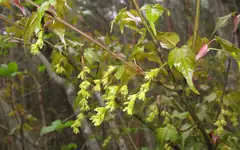 Hawthorn MapleAcer crataegifoliumnot rated, Central Valleyno Central Valley rating
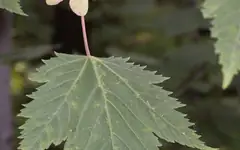 Mountain MapleAcer glabrumnot rated, Central Valleyno Central Valley rating
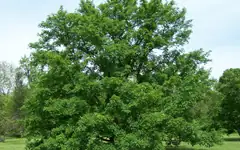 Miyabe MapleAcer miyabeinot rated, Central Valleyno Central Valley rating
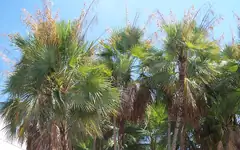 Everglades PalmAcoelorraphe wrightiinot rated, Central Valleyno Central Valley rating
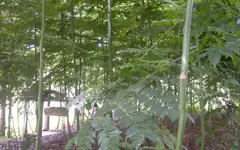 Pink CedarAcrocarpus fraxinifoliusnot rated, Central Valleyno Central Valley rating
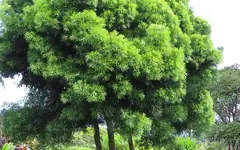 YellowwoodAfrocarpus falcatus (Podocarpus falcatus)not rated, Central Valleyno Central Valley rating
 New Caledonian PineAraucaria columnaris (A. cookii)not rated, Central Valleyno Central Valley rating
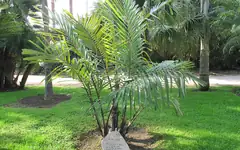 Formosa Sugar PalmArenga englerinot rated, Central Valleyno Central Valley rating
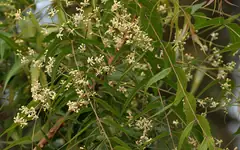 NeemAzadirachta indicanot rated, Central Valleyno Central Valley rating
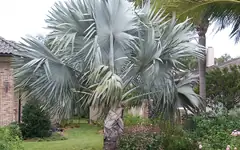 Bismarck PalmBismarckia nobilisnot rated, Central Valleyno Central Valley rating
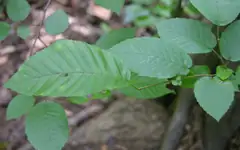 American HornbeamCarpinus caroliniananot rated, Central Valleyno Central Valley rating
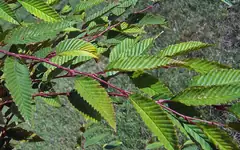 Japanese HornbeamCarpinus japonicanot rated, Central Valleyno Central Valley rating
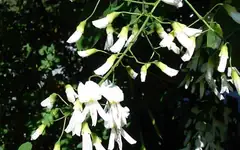 American YellowwoodCladrastis kentukeanot rated, Central Valleyno Central Valley rating
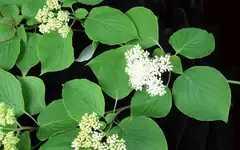 Pagoda DogwoodCornus alternifolianot rated, Central Valleyno Central Valley rating
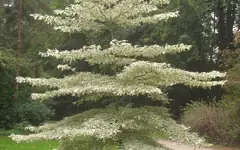 Giant DogwoodCornus controversanot rated, Central Valleyno Central Valley rating
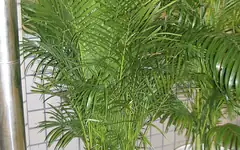 Butterfly PalmDypsis lutescens (Areca)not rated, Central Valleyno Central Valley rating
Turn this into minutes on your water days
Every city page has a calculator that takes Japanese larch, your sprinkler type and the month, and gives the minutes per water day for that supplier's schedule. Or put it in a zone of the personal watering plan and get all twelve months printed.
Questions people ask
How much water does Japanese larch need per day?
In July on the north-central coast, established Japanese larch needs about 4.1 gallons a day under a 10 foot canopy and about 16 gallons a day under a 20 foot canopy. Give it in deep waterings spread days apart rather than a little every day, so the whole root zone gets wet.
Does watering for Japanese larch change across California?
Yes. WUCOLS rates Japanese larch separately for each of the six California climate zones: moderate water in the North-Central Coastal zone, not evaluated in the Central Valley zone, not suited to this region in the South Coastal zone, not suited to this region in the South Inland zone, not evaluated in the High and Intermediate Desert zone, not evaluated in the Low Desert zone. The monthly table above shows how the same rating translates into different gallon amounts as reference evapotranspiration changes.
Is my Japanese larch dead in winter?
Probably not. Larches are conifers that drop their needles in fall, so bare winter branches are normal. Scratch a twig, and green tissue under the bark means it is alive.
Can Japanese larch handle hot summers?
It prefers cool summers and cold winters and struggles in hot, humid weather. Where summers run warm, keep the soil steadily moist and plant away from reflected heat.
How big does Japanese larch get?
It can reach 70 to 90 feet tall and up to 40 feet wide. Dwarf cultivars such as 'Nana' stay small enough for a courtyard or a large pot.
Why are my larch needles yellow in summer?
Early yellowing usually means dry soil or heat stress. Check 2 to 3 inches down and soak deeply if it is dry. Normal yellow color comes in fall, just before the needles drop.
Are Japanese larch cones decorative?
Yes. Young cones are violet, then mature to orange-brown tinged with purple and finally gray-brown. It is considered the most ornamental of the larches.
More plant watering guides
Sources
- WUCOLS IV plant water use classification for Larix kaempferi, the University of California survey California agencies use for landscape plan reviewRead August 23, 2026 on wucols.ucdavis.edu
- Model Water Efficient Landscape Ordinance, adopted text and appendices, effective 2025-01-02 · monthly reference evapotranspiration per city, Appendix CRead August 23, 2026 on water.ca.gov/-/media/DWR-Website/Web-Pages/Programs/Water-Use-And-Efficiency/MWELO-Rulemaking/Final-MWELO-Text-and-Appendices_20250103.pdf
- UC Statewide IPM Program, irrigation scheduling using evapotranspirationRead September 30, 2026 on ipm.ucanr.edu/PMG/GARDEN/ENVIRON/evap.html
- Shaw and Pittenger, Landscape Irrigation System Evaluation and Management, UC Cooperative Extension, 2009Read September 30, 2026 on ucanr.edu/sites/default/files/2013-02/160836.pdf
- Pittenger, Water Management in Gardens and Landscapes, UC Riverside, 2017Read September 30, 2026 on ucanr.edu/sites/default/files/2017-03/258022.pdf