How often to water Moses-in-the-cradle in California
In July on the north-central coast, established Moses-in-the-cradle in loam needs a deep watering about every 9 days: about 1.5 gallons each time for a plant 2 feet across, about 1.1 gallons a week. Moses-in-the-cradle is a clumping evergreen with stiff, sword-like leaves, dark green above and purple beneath, set in tight rosettes. Small white flowers tucked inside boat-shaped purple bracts can appear at any time of year. It tolerates short dry spells, but overwatering causes root rot.
How often to water Moses-in-the-cradle, month by month
Type your city above and the days between waterings and the gallons appear here, worked out from your city's climate table. Or read the figures by climate zone further down.
How this is worked out: established roots fill the top 1 foot of soil, and you water again when that soil has dried halfway. Loam soil holds about 1.5 inches of water per foot. Water the whole area the plant covers, and skip a watering after a good soaking rain.
How to tell it needs water
- Once the top inch or two of soil has dried, Moses-in-the-cradle is ready for water
- Leaves curling inward and dulling in hot, dry weather point to a dry root zone
- Soft, rotting bases and yellowing outer leaves point to root rot from overwatering
- Seedlings and new rosettes appearing nearby show it naturalizing, not a watering issue
How to water it
- Water Moses-in-the-cradle at the soil around the rosettes, not over the leaves
- Soak the soil 6 to 8 inches deep, then let the top inch or two dry before watering again
- Plant in well-drained soil in sun to part shade
- Keep mulch light and away from the rosette bases
- Water a wider area as new rosettes fill in and the clump spreads
Through the seasons
Water new plants regularly until roots settle, then let the soil dry an inch or two between drinks. The rosettes stay evergreen, and flowers can appear at any time of year, so the plant uses some water in every season. Cool weather slows growth, and soggy soil is then the bigger risk. WUCOLS rates Moses-in-the-cradle moderate water on the north-central coast, on the south coast and in South Inland. It is marked not suited to the Central Valley. WUCOLS has not evaluated it for the high desert or the low desert.
In pots
Moses-in-the-cradle is a common houseplant and also does well in outdoor pots. Use a container with drainage holes and a well-drained mix. Water when the top 1 to 2 inches of mix are dry, checking every few days outdoors in summer heat. Empty the saucer each time, since overwatering causes root rot. Indoors, give it bright, indirect light. Bring outdoor pots under cover on frosty nights, since it is hardy only where winters are mild.
- A year
- no figure
- Reference
- Sacramento climate table
- Counts
- Plant need, before sprinkler losses
WUCOLS lists Moses-in-the-Cradle as not suited to this region for the Central Valley zone, so no monthly figure is computed here.
Monthly water need by climate zone
Moses-in-the-Cradle: gallons per square foot per month, by WUCOLS climate zone
| Month | N. Coast | C. Valley | S. Coast | S. Inland | Hi Desert | Lo Desert |
|---|---|---|---|---|---|---|
| Jan | 0.37 | – | 0.78 | 0.78 | – | – |
| Feb | 0.53 | – | 0.81 | 0.87 | – | – |
| Mar | 0.87 | – | 1.15 | 1.3 | – | – |
| Apr | 1.18 | – | 1.4 | 1.61 | – | – |
| May | 1.46 | – | 1.61 | 1.95 | – | – |
| Jun | 1.61 | – | 1.74 | 2.29 | – | – |
| Jul | 1.61 | – | 1.98 | 2.51 | – | – |
| Aug | 1.49 | – | 1.86 | 2.33 | – | – |
| Sep | 1.24 | – | 1.49 | 1.86 | – | – |
| Oct | 0.87 | – | 1.15 | 1.33 | – | – |
| Nov | 0.47 | – | 0.84 | 0.9 | – | – |
| Dec | 0.31 | – | 0.65 | 0.68 | – | – |
| Year | 12 | – | 15.5 | 18.41 | – | – |
How this is worked out: the WUCOLS water rating for each zone times that zone’s climate for the month. A dash means WUCOLS does not rate the plant there. The figures are what the plant uses, before sprinkler losses.
Plants with the same water needs 10
Rated not suited to this region in the Central Valley, like Moses-in-the-cradle. Plants that drink alike can share one valve and one schedule.
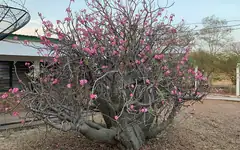 Desert RoseAdenium obesumnot rated, Central Valleyno Central Valley rating
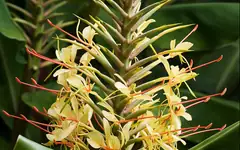 Kahili GingerHedychium gardnerianumnot rated, Central Valleyno Central Valley rating
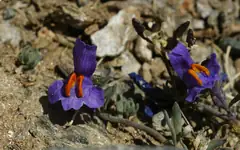 Alpine ToadflaxLinaria alpinanot rated, Central Valleyno Central Valley rating
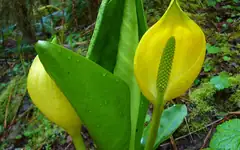 Skunk CabbageLysichiton americanusnot rated, Central Valleyno Central Valley rating
 Egyptian Star FlowerPentas lanceolatanot rated, Central Valleyno Central Valley rating
 Swedish IvyPlectranthus verticillatusnot rated, Central Valleyno Central Valley rating
 Solomon's SealPolygonatum odoratum (japonicum)not rated, Central Valleyno Central Valley rating
 Painted DaisyTanacetum coccineum (Pyrethrum roseum)not rated, Central Valleyno Central Valley rating
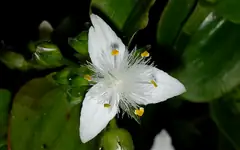 Wandering JewTradescantia fluminensis (SHADE)not rated, Central Valleyno Central Valley rating
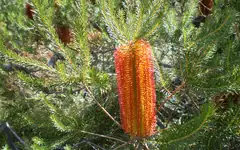 Heath-Leafed BanksiaBanksia ericifolianot rated, Central Valleyno Central Valley rating
Turn this into minutes on your water days
Every city page has a calculator that takes Moses-in-the-cradle, your sprinkler type and the month, and gives the minutes per water day for that supplier's schedule. Or put it in a zone of the personal watering plan and get all twelve months printed.
Questions people ask
How often should I water Moses-in-the-cradle in summer?
In July, established Moses-in-the-cradle in loam needs a deep watering about every 7 days on the south coast and about every 6 days in the South Inland zone. Sandy soil holds less water, so waterings come closer together. Clay stretches them. Check the soil before each watering and skip one after a soaking rain.
How much water does Moses-in-the-cradle need per day?
In July on the north-central coast, established Moses-in-the-cradle needs about 0.2 gallons a day for a plant 2 feet across and about 0.7 gallons a day for a plant 4 feet across. Give it in deep waterings spread days apart rather than a little every day, so the whole root zone gets wet.
Does watering for Moses-in-the-cradle change across California?
Yes. WUCOLS rates Moses-in-the-cradle separately for each of the six California climate zones: moderate water in the North-Central Coastal zone, not suited to this region in the Central Valley zone, moderate water in the South Coastal zone, moderate water in the South Inland zone, not evaluated in the High and Intermediate Desert zone, not evaluated in the Low Desert zone. The monthly table above shows how the same rating translates into different gallon amounts as reference evapotranspiration changes.
Is Moses-in-the-cradle poisonous?
Yes. It is toxic to people and pets, and the sap can cause skin irritation. Wear gloves when dividing it and keep it away from children and pets.
Why is my Moses-in-the-cradle rotting?
Overwatering is the usual cause. Let the top inch or two of soil dry before watering, and make sure the pot or bed drains freely.
Can Moses-in-the-cradle grow outdoors in California?
Yes, where winters are mild, such as along the coast. On the south coast WUCOLS rates it moderate water, while the Central Valley is listed as not suited.
How do I propagate Moses-in-the-cradle?
It grows easily from seed, division or stem cuttings. Keep new pieces lightly moist, not wet, until they root.
Will Moses-in-the-cradle spread?
It naturalizes easily and can become weedy. Pull unwanted seedlings and offsets to keep it in bounds.
More plant watering guides
Sources
- WUCOLS IV plant water use classification for Tradescantia spathacea (Rhoeo spathacea), the University of California survey California agencies use for landscape plan reviewRead August 23, 2026 on wucols.ucdavis.edu
- Model Water Efficient Landscape Ordinance, adopted text and appendices, effective 2025-01-02 · monthly reference evapotranspiration per city, Appendix CRead August 23, 2026 on water.ca.gov/-/media/DWR-Website/Web-Pages/Programs/Water-Use-And-Efficiency/MWELO-Rulemaking/Final-MWELO-Text-and-Appendices_20250103.pdf
- UC Statewide IPM Program, irrigation scheduling using evapotranspirationRead September 30, 2026 on ipm.ucanr.edu/PMG/GARDEN/ENVIRON/evap.html
- Shaw and Pittenger, Landscape Irrigation System Evaluation and Management, UC Cooperative Extension, 2009Read September 30, 2026 on ucanr.edu/sites/default/files/2013-02/160836.pdf
- Pittenger, Water Management in Gardens and Landscapes, UC Riverside, 2017Read September 30, 2026 on ucanr.edu/sites/default/files/2017-03/258022.pdf