How often to water desert rose in California
In July in the South Inland zone, established desert rose in loam needs a deep watering about every 14 days: about 1.5 gallons each time for a plant 2 feet across, about 0.7 gallons a week. Desert rose is a slow-growing succulent shrub from dry parts of Africa and Arabia, grown for its swollen, bottle-shaped trunk, or caudex. Trumpet-shaped red, pink or white flowers with pale throats appear mainly in summer. It drops its leaves for a cool-season rest. It needs bright light, warmth and gritty soil that dries between waterings.
How often to water desert rose, month by month
Type your city above and the days between waterings and the gallons appear here, worked out from your city's climate table. Or read the figures by climate zone further down.
How this is worked out: established roots fill the top 1 foot of soil, and you water again when that soil has dried halfway. Loam soil holds about 1.5 inches of water per foot. Water the whole area the plant covers, and skip a watering after a good soaking rain.
How to tell it needs water
- Gritty soil dry several inches down during summer growth means it is time for a thorough watering
- A soft, mushy trunk base in wet soil points to rot from too much water
- Leaves yellowing and dropping as nights cool mark its normal rest, not thirst
- Sticky leaves with white, cottony clusters point to mealybugs, and small bumps on the stems to scale
- Spots on the leaves suggest fungal leaf spot rather than a watering problem
How to water it
- Grow it in gritty, fast-draining soil or a raised bed in full sun, with light afternoon shade in extreme heat
- Water deeply during warm-season growth, then let the soil dry completely before the next watering
- Cut watering back sharply once the leaves drop, and keep the plant nearly dry through its rest
- Keep sprinklers and drip lines for thirstier plants away from its roots
- Feed lightly in spring, as growth resumes, to encourage flowering
Through the seasons
Desert rose grows and flowers in the warm months, when it takes deep watering with dry spells between. As nights cool it slows, drops its leaves and rests, and watering should fall to almost nothing. Cold, wet soil in winter leads to rot, so in the ground it suits only warm, sheltered spots. WUCOLS rates desert rose low water in South Inland and in the low desert. WUCOLS marks it as not suited to the north-central coast, the Central Valley, the south coast or the high desert.
In pots
Desert rose is usually grown in a container, which makes it easy to move under cover in cold weather. Use a cactus and succulent mix and a pot with several drainage holes. In summer heat, check the mix every few days and water thoroughly once it has dried well. Let all excess drain, and never leave water in the saucer. Bring it indoors when nights reach about 55 degrees F, and water very little while it rests.
- A year
- no figure
- Reference
- Sacramento climate table
- Counts
- Plant need, before sprinkler losses
WUCOLS lists Desert Rose as not suited to this region for the Central Valley zone, so no monthly figure is computed here.
Monthly water need by climate zone
Desert Rose: gallons per square foot per month, by WUCOLS climate zone
| Month | N. Coast | C. Valley | S. Coast | S. Inland | Hi Desert | Lo Desert |
|---|---|---|---|---|---|---|
| Jan | – | – | – | 0.31 | – | 0.31 |
| Feb | – | – | – | 0.35 | – | 0.37 |
| Mar | – | – | – | 0.52 | – | 0.61 |
| Apr | – | – | – | 0.64 | – | 0.78 |
| May | – | – | – | 0.78 | – | 0.98 |
| Jun | – | – | – | 0.92 | – | 1.12 |
| Jul | – | – | – | 1 | – | 1.14 |
| Aug | – | – | – | 0.93 | – | 1.04 |
| Sep | – | – | – | 0.74 | – | 0.83 |
| Oct | – | – | – | 0.53 | – | 0.6 |
| Nov | – | – | – | 0.36 | – | 0.38 |
| Dec | – | – | – | 0.27 | – | 0.27 |
| Year | – | – | – | 7.37 | – | 8.43 |
How this is worked out: the WUCOLS water rating for each zone times that zone’s climate for the month. A dash means WUCOLS does not rate the plant there. The figures are what the plant uses, before sprinkler losses.
Plants with the same water needs 10
Rated not suited to this region in the Central Valley, like desert rose. Plants that drink alike can share one valve and one schedule.
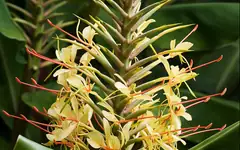 Kahili GingerHedychium gardnerianumnot rated, Central Valleyno Central Valley rating
 Alpine ToadflaxLinaria alpinanot rated, Central Valleyno Central Valley rating
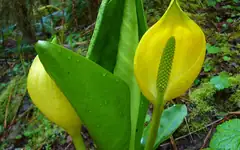 Skunk CabbageLysichiton americanusnot rated, Central Valleyno Central Valley rating
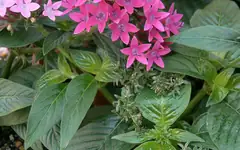 Egyptian Star FlowerPentas lanceolatanot rated, Central Valleyno Central Valley rating
 Swedish IvyPlectranthus verticillatusnot rated, Central Valleyno Central Valley rating
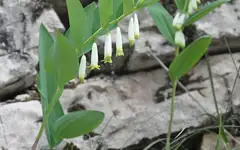 Solomon's SealPolygonatum odoratum (japonicum)not rated, Central Valleyno Central Valley rating
 Painted DaisyTanacetum coccineum (Pyrethrum roseum)not rated, Central Valleyno Central Valley rating
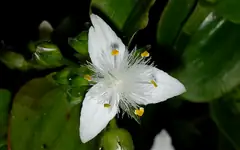 Wandering JewTradescantia fluminensis (SHADE)not rated, Central Valleyno Central Valley rating
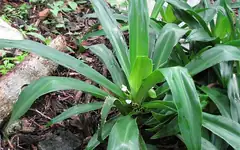 Moses-in-the-CradleTradescantia spathacea (Rhoeo spathacea)not rated, Central Valleyno Central Valley rating
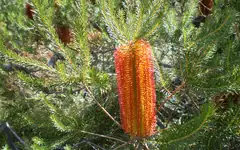 Heath-Leafed BanksiaBanksia ericifolianot rated, Central Valleyno Central Valley rating
Turn this into minutes on your water days
Every city page has a calculator that takes desert rose, your sprinkler type and the month, and gives the minutes per water day for that supplier's schedule. Or put it in a zone of the personal watering plan and get all twelve months printed.
Questions people ask
How much water does desert rose need per day?
In July in the South Inland zone, established desert rose needs about 0.1 gallons a day for a plant 2 feet across and about 0.4 gallons a day for a plant 4 feet across. Give it in deep waterings spread days apart rather than a little every day, so the whole root zone gets wet.
Does watering for desert rose change across California?
Yes. WUCOLS rates desert rose separately for each of the six California climate zones: not suited to this region in the North-Central Coastal zone, not suited to this region in the Central Valley zone, not suited to this region in the South Coastal zone, low water in the South Inland zone, not suited to this region in the High and Intermediate Desert zone, low water in the Low Desert zone. The monthly table above shows how the same rating translates into different gallon amounts as reference evapotranspiration changes.
Is desert rose poisonous?
Yes. Its milky sap irritates skin, and all parts are poisonous if eaten. It is a problem for cats, dogs and horses. Wear gloves when pruning or repotting.
Why is my desert rose dropping its leaves?
Leaf drop as nights cool in fall is its normal rest. Cut back on water then. If leaves drop while the soil stays wet, check the trunk base for soft rot.
When does desert rose bloom?
It blooms mainly in summer and may repeat later. The flowers can open before the new leaves. Feeding lightly in spring encourages blooming.
Can desert rose grow outdoors in California?
WUCOLS rates it only for South Inland and the low desert. Elsewhere, grow it in a pot and move it indoors once nights fall to about 55 degrees F.
Can you overwater desert rose?
Yes. Soil that stays too wet causes rot. Let the mix dry between waterings in summer, and keep it nearly dry while the plant rests.
More plant watering guides
Sources
- WUCOLS IV plant water use classification for Adenium obesum, the University of California survey California agencies use for landscape plan reviewRead August 23, 2026 on wucols.ucdavis.edu
- Model Water Efficient Landscape Ordinance, adopted text and appendices, effective 2025-01-02 · monthly reference evapotranspiration per city, Appendix CRead August 23, 2026 on water.ca.gov/-/media/DWR-Website/Web-Pages/Programs/Water-Use-And-Efficiency/MWELO-Rulemaking/Final-MWELO-Text-and-Appendices_20250103.pdf
- UC Statewide IPM Program, irrigation scheduling using evapotranspirationRead September 30, 2026 on ipm.ucanr.edu/PMG/GARDEN/ENVIRON/evap.html
- Shaw and Pittenger, Landscape Irrigation System Evaluation and Management, UC Cooperative Extension, 2009Read September 30, 2026 on ucanr.edu/sites/default/files/2013-02/160836.pdf
- Pittenger, Water Management in Gardens and Landscapes, UC Riverside, 2017Read September 30, 2026 on ucanr.edu/sites/default/files/2017-03/258022.pdf