How often to water boojum in California
In July on the south coast, established boojum in loam needs a deep soak only about once a month or less: about 8.8 gallons each time for a plant 4 feet across. The boojum is a strange, slow-growing succulent tree from rocky slopes of Baja California and a small area of mainland Sonora. Its tapering, carrot-like trunk can reach 20 to 50 feet, bristling with short, spiny branches. Small leaves appear after rain and drop as the soil dries, sometimes several times a year. It is related to the ocotillo.
How often to water boojum, month by month
Type your city above and the days between waterings and the gallons appear here, worked out from your city's climate table. Or read the figures by climate zone further down.
How this is worked out: established roots fill the top 1.5 feet of soil, and you water again when that soil has dried halfway. Loam soil holds about 1.5 inches of water per foot. Water the whole area the plant covers, and skip a watering after a good soaking rain.
How to tell it needs water
- Leaves appearing on the branches means the boojum has had water, not that it needs more
- Leaves dropping as the soil dries is normal behavior
- A soft, bruised or shriveling trunk base in wet soil points to rot
- A trunk looking shrunken after a very long, hot dry spell can signal thirst
How to water it
- Water very rarely, and only after the soil has dried completely
- Water in the cooler months, when it grows
- Plant in full sun in soil with excellent drainage
- Keep it far from lawns and sprinklers
- Handle the soft trunk with care, since it bruises easily
Through the seasons
Water a young plant lightly during its first cool season, when it is growing, then cut back. Established boojums grow in cooler weather and need only rare, deep water. Its small leaves come and go with soil moisture, and creamy flowers appear near the top in late summer and fall. WUCOLS rates boojum very low water on the south coast, in South Inland and in the low desert. WUCOLS marks it as not suited to the north-central coast, the Central Valley or the high desert.
In pots
Boojums are often grown in large, deep pots of fast-draining cactus mix, which keeps their soft trunks safe from soggy ground. Water only after the mix is dry all the way through, then let it drain completely. In summer heat, water sparingly. Never leave water standing in the saucer. A pot also lets you move it out of the rain during cold, wet spells.
- A year
- no figure
- Reference
- Sacramento climate table
- Counts
- Plant need, before sprinkler losses
WUCOLS lists Boojum as not suited to this region for the Central Valley zone, so no monthly figure is computed here.
Monthly water need by climate zone
Boojum: gallons per square foot per month, by WUCOLS climate zone
| Month | N. Coast | C. Valley | S. Coast | S. Inland | Hi Desert | Lo Desert |
|---|---|---|---|---|---|---|
| Jan | – | – | 0.08 | 0.08 | – | 0.08 |
| Feb | – | – | 0.08 | 0.09 | – | 0.09 |
| Mar | – | – | 0.11 | 0.13 | – | 0.15 |
| Apr | – | – | 0.14 | 0.16 | – | 0.2 |
| May | – | – | 0.16 | 0.2 | – | 0.24 |
| Jun | – | – | 0.17 | 0.23 | – | 0.28 |
| Jul | – | – | 0.2 | 0.25 | – | 0.29 |
| Aug | – | – | 0.19 | 0.23 | – | 0.26 |
| Sep | – | – | 0.15 | 0.19 | – | 0.21 |
| Oct | – | – | 0.11 | 0.13 | – | 0.15 |
| Nov | – | – | 0.08 | 0.09 | – | 0.1 |
| Dec | – | – | 0.07 | 0.07 | – | 0.07 |
| Year | – | – | 1.55 | 1.84 | – | 2.11 |
How this is worked out: the WUCOLS water rating for each zone times that zone’s climate for the month. A dash means WUCOLS does not rate the plant there. The figures are what the plant uses, before sprinkler losses.
Plants with the same water needs 16
Rated not suited to this region in the Central Valley, like boojum. Plants that drink alike can share one valve and one schedule.
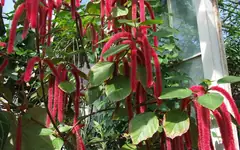 Chenille PlantAcalypha hispidanot rated, Central Valleyno Central Valley rating
 CopperleafAcalypha wilkesiananot rated, Central Valleyno Central Valley rating
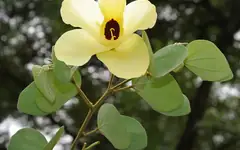 Yellow Bell BauhiniaBauhinia tomentosanot rated, Central Valleyno Central Valley rating
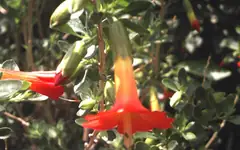 Magic FlowerCantua buxifolianot rated, Central Valleyno Central Valley rating
 Clustered Fishtail PalmCaryota mitisnot rated, Central Valleyno Central Valley rating
 Hawaiian TiCordyline fruticosa (Cordyline terminalis)not rated, Central Valleyno Central Valley rating
 FilbertCorylus maximanot rated, Central Valleyno Central Valley rating
 PoinsettiaEuphorbia pulcherrimanot rated, Central Valleyno Central Valley rating
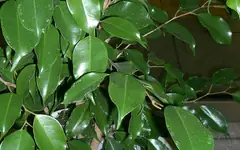 Weeping Chinese BanyanFicus benjaminanot rated, Central Valleyno Central Valley rating
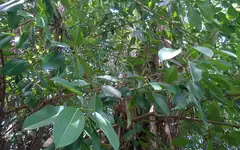 Rubber PlantFicus elasticanot rated, Central Valleyno Central Valley rating
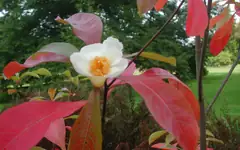 Franklin TreeFranklinia alatamaha (Gordonia alatamaha)not rated, Central Valleyno Central Valley rating
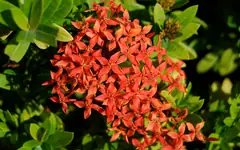 Jungle GeraniumIxora coccineanot rated, Central Valleyno Central Valley rating
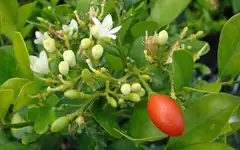 Orange JessamineMurraya paniculatanot rated, Central Valleyno Central Valley rating
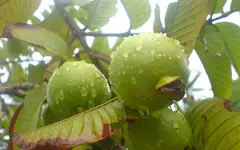 Common GuavaPsidium guajavanot rated, Central Valleyno Central Valley rating
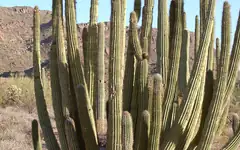 Organ Pipe CactusStenocereus thurberi (Lemaireocereus thurberi)not rated, Central Valleyno Central Valley rating
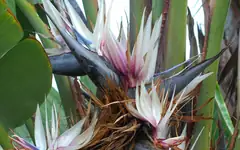 Giant Bird of ParadiseStrelitzia nicolai (shade in desert)not rated, Central Valleyno Central Valley rating
Turn this into minutes on your water days
Every city page has a calculator that takes boojum, your sprinkler type and the month, and gives the minutes per water day for that supplier's schedule. Or put it in a zone of the personal watering plan and get all twelve months printed.
Questions people ask
How often should I water boojum in summer?
In July, established boojum in loam needs a deep watering about once a month or less on the south coast and about once a month or less in the South Inland zone. Sandy soil holds less water, so waterings come closer together. Clay stretches them. Check the soil before each watering and skip one after a soaking rain.
How much water does boojum need per day?
In July on the south coast, established boojum needs about 0.1 gallons a day for a plant 4 feet across and about 0.3 gallons a day for a plant 8 feet across. Give it in deep waterings spread days apart rather than a little every day, so the whole root zone gets wet.
Does watering for boojum change across California?
Yes. WUCOLS rates boojum separately for each of the six California climate zones: not suited to this region in the North-Central Coastal zone, not suited to this region in the Central Valley zone, very low water in the South Coastal zone, very low water in the South Inland zone, not suited to this region in the High and Intermediate Desert zone, very low water in the Low Desert zone. The monthly table above shows how the same rating translates into different gallon amounts as reference evapotranspiration changes.
Why does my boojum keep losing its leaves?
Its leaves are short-lived and depend on soil moisture. They can come and go several times a year. That is normal.
When does a boojum grow?
It grows during cooler weather, when winter rain or fog brings moisture. Summer is a slow time. Water little then.
How tall does a boojum get?
It grows very slowly, eventually to 20 to 50 feet. It is a plant for patient gardeners. Its trunk tapers like an upside-down carrot.
Is a boojum related to ocotillo?
Yes, both belong to the same plant family. Both drop leaves when dry. Both need excellent drainage.
Where does the boojum come from?
It grows on rocky slopes on the west coast of Baja California and in one small area of Sonora. Coastal humidity is high there. Rain is sporadic.
More plant watering guides
Sources
- WUCOLS IV plant water use classification for Fouquieria columnaris, the University of California survey California agencies use for landscape plan reviewRead August 23, 2026 on wucols.ucdavis.edu
- Model Water Efficient Landscape Ordinance, adopted text and appendices, effective 2025-01-02 · monthly reference evapotranspiration per city, Appendix CRead August 23, 2026 on water.ca.gov/-/media/DWR-Website/Web-Pages/Programs/Water-Use-And-Efficiency/MWELO-Rulemaking/Final-MWELO-Text-and-Appendices_20250103.pdf
- UC Statewide IPM Program, irrigation scheduling using evapotranspirationRead September 30, 2026 on ipm.ucanr.edu/PMG/GARDEN/ENVIRON/evap.html
- Shaw and Pittenger, Landscape Irrigation System Evaluation and Management, UC Cooperative Extension, 2009Read September 30, 2026 on ucanr.edu/sites/default/files/2013-02/160836.pdf
- Pittenger, Water Management in Gardens and Landscapes, UC Riverside, 2017Read September 30, 2026 on ucanr.edu/sites/default/files/2017-03/258022.pdf