How often to water orange jessamine in California
In July on the south coast, established orange jessamine in loam needs a deep watering about every 11 days: about 8.8 gallons each time for a plant 4 feet across, about 5.6 gallons a week. Orange jessamine is a glossy evergreen shrub whose white flowers smell of orange blossom, most strongly at night, and are followed by small red fruits. It blooms several times a year and is often clipped into a hedge or screen. It wants rich, moist but well drained soil, and its roots rot if the ground stays damp.
How often to water orange jessamine, month by month
Type your city above and the days between waterings and the gallons appear here, worked out from your city's climate table. Or read the figures by climate zone further down.
How this is worked out: established roots fill the top 1.5 feet of soil, and you water again when that soil has dried halfway. Loam soil holds about 1.5 inches of water per foot. Water the whole area the plant covers, and skip a watering after a good soaking rain.
How to tell it needs water
- Soil dry 2 to 3 inches down at the base of the shrub means orange jessamine needs water
- Glossy leaves going dull and limp in afternoon heat, over dry soil, point to thirst
- Yellowing leaves and dieback over soil that stays damp point to root rot
- Twisted or notched new leaves with white waxy specks can mean Asian citrus psyllid, a pest of citrus relatives
- Sticky leaves and black sooty mold point to scale, mealybugs or whiteflies rather than a watering problem
How to water it
- Water along the base of the shrub or hedge with drip line or a soaker hose, keeping the foliage dry
- Soak about 18 inches deep, then let the top few inches dry before the next watering
- Plant in rich, well drained loam in sun or part shade, sheltered from strong wind
- Raise the planting or improve drainage where heavy soil stays damp after watering
- Mulch the root zone and move drip lines outward as a hedge thickens
Through the seasons
Water a new orange jessamine regularly through its first summer while the roots spread, letting the surface dry between soakings. Established shrubs bloom in several flushes a year, often carrying flowers and red fruit at once, and keep their leaves all year. Water much less in winter, when growth slows. On the south coast, winter rain usually covers the cool months, while low desert gardens need soil checks in dry spells. WUCOLS rates orange jessamine moderate water on the south coast, in South Inland and in the low desert. WUCOLS marks it as not suited to the Central Valley or the high desert, and has not evaluated it for the north-central coast.
In pots
Orange jessamine makes a handsome container shrub for a sheltered patio. Let the top inch or two of mix dry between waterings, checking every few days in summer heat. Water until it drains from the holes, then empty the saucer, since constantly damp mix leads to root rot. Shield the pot from strong wind. It tolerates only an occasional light frost, so move pots under cover on the coldest nights and water sparingly through winter.
- A year
- no figure
- Reference
- Sacramento climate table
- Counts
- Plant need, before sprinkler losses
WUCOLS lists Orange Jessamine as not suited to this region for the Central Valley zone, so no monthly figure is computed here.
Monthly water need by climate zone
Orange Jessamine: gallons per square foot per month, by WUCOLS climate zone
| Month | N. Coast | C. Valley | S. Coast | S. Inland | Hi Desert | Lo Desert |
|---|---|---|---|---|---|---|
| Jan | – | – | 0.78 | 0.78 | – | 0.78 |
| Feb | – | – | 0.81 | 0.87 | – | 0.93 |
| Mar | – | – | 1.15 | 1.3 | – | 1.52 |
| Apr | – | – | 1.4 | 1.61 | – | 1.95 |
| May | – | – | 1.61 | 1.95 | – | 2.45 |
| Jun | – | – | 1.74 | 2.29 | – | 2.79 |
| Jul | – | – | 1.98 | 2.51 | – | 2.85 |
| Aug | – | – | 1.86 | 2.33 | – | 2.6 |
| Sep | – | – | 1.49 | 1.86 | – | 2.08 |
| Oct | – | – | 1.15 | 1.33 | – | 1.49 |
| Nov | – | – | 0.84 | 0.9 | – | 0.96 |
| Dec | – | – | 0.65 | 0.68 | – | 0.68 |
| Year | – | – | 15.5 | 18.41 | – | 21.08 |
How this is worked out: the WUCOLS water rating for each zone times that zone’s climate for the month. A dash means WUCOLS does not rate the plant there. The figures are what the plant uses, before sprinkler losses.
Plants with the same water needs 16
Rated not suited to this region in the Central Valley, like orange jessamine. Plants that drink alike can share one valve and one schedule.
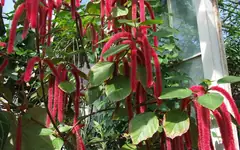 Chenille PlantAcalypha hispidanot rated, Central Valleyno Central Valley rating
 CopperleafAcalypha wilkesiananot rated, Central Valleyno Central Valley rating
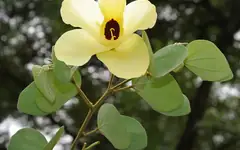 Yellow Bell BauhiniaBauhinia tomentosanot rated, Central Valleyno Central Valley rating
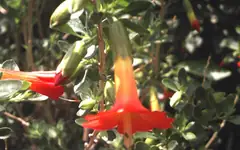 Magic FlowerCantua buxifolianot rated, Central Valleyno Central Valley rating
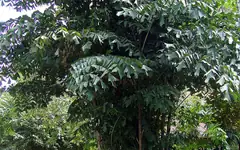 Clustered Fishtail PalmCaryota mitisnot rated, Central Valleyno Central Valley rating
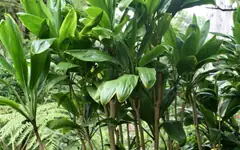 Hawaiian TiCordyline fruticosa (Cordyline terminalis)not rated, Central Valleyno Central Valley rating
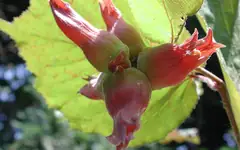 FilbertCorylus maximanot rated, Central Valleyno Central Valley rating
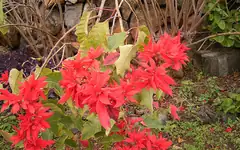 PoinsettiaEuphorbia pulcherrimanot rated, Central Valleyno Central Valley rating
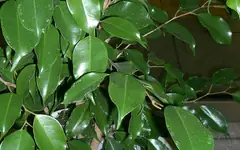 Weeping Chinese BanyanFicus benjaminanot rated, Central Valleyno Central Valley rating
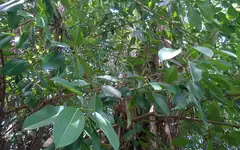 Rubber PlantFicus elasticanot rated, Central Valleyno Central Valley rating
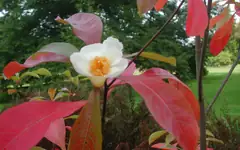 Franklin TreeFranklinia alatamaha (Gordonia alatamaha)not rated, Central Valleyno Central Valley rating
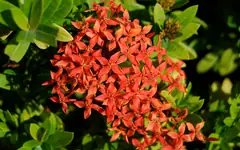 Jungle GeraniumIxora coccineanot rated, Central Valleyno Central Valley rating
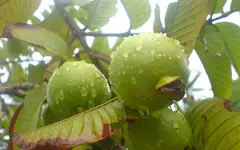 Common GuavaPsidium guajavanot rated, Central Valleyno Central Valley rating
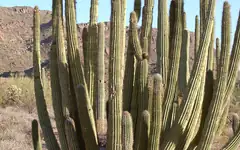 Organ Pipe CactusStenocereus thurberi (Lemaireocereus thurberi)not rated, Central Valleyno Central Valley rating
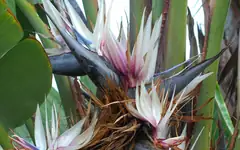 Giant Bird of ParadiseStrelitzia nicolai (shade in desert)not rated, Central Valleyno Central Valley rating
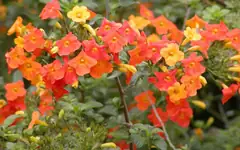 Marmalade BushStreptosolen jamesoniinot rated, Central Valleyno Central Valley rating
Turn this into minutes on your water days
Every city page has a calculator that takes orange jessamine, your sprinkler type and the month, and gives the minutes per water day for that supplier's schedule. Or put it in a zone of the personal watering plan and get all twelve months printed.
Questions people ask
How often should I water orange jessamine in summer?
In July, established orange jessamine in loam needs a deep watering about every 11 days on the south coast and about every 9 days in the South Inland zone. Sandy soil holds less water, so waterings come closer together. Clay stretches them. Check the soil before each watering and skip one after a soaking rain.
How much water does orange jessamine need per day?
In July on the south coast, established orange jessamine needs about 0.8 gallons a day for a plant 4 feet across and about 3.2 gallons a day for a plant 8 feet across. Give it in deep waterings spread days apart rather than a little every day, so the whole root zone gets wet.
Does watering for orange jessamine change across California?
Yes. WUCOLS rates orange jessamine separately for each of the six California climate zones: not evaluated in the North-Central Coastal zone, not suited to this region in the Central Valley zone, moderate water in the South Coastal zone, moderate water in the South Inland zone, not suited to this region in the High and Intermediate Desert zone, moderate water in the Low Desert zone. The monthly table above shows how the same rating translates into different gallon amounts as reference evapotranspiration changes.
Does orange jessamine attract the Asian citrus psyllid?
Yes. The psyllid feeds on orange jessamine and other citrus relatives, and it spreads a deadly citrus disease. Inspect new leaf flushes for twisted leaves, waxy specks and tiny insects. Contact your county agricultural commissioner if you find them.
Why does orange jessamine smell strongest at night?
Its flowers release most of their scent after dark. Plant it near a patio or window you use in the evening. Bloom comes in several flushes through the year.
How do I keep an orange jessamine hedge?
It can be clipped into a formal hedge as low as 2 to 3 feet. Run drip line along both sides so the whole row gets an even soak. Let the soil dry a few inches down before watering a clipped hedge again.
Can orange jessamine handle frost?
It tolerates an occasional light frost but not a hard freeze. Cover plants in the ground on frosty nights, or grow it in a pot you can move. Frost-damaged shoots can be trimmed once new growth starts.
Why are my orange jessamine leaves sticky?
Scale, mealybugs and whiteflies leave sticky honeydew, and black sooty mold grows on it. Check the undersides of leaves and the stems. Watering more or less will not clear them.
More plant watering guides
Sources
- WUCOLS IV plant water use classification for Murraya paniculata, the University of California survey California agencies use for landscape plan reviewRead August 23, 2026 on wucols.ucdavis.edu
- Model Water Efficient Landscape Ordinance, adopted text and appendices, effective 2025-01-02 · monthly reference evapotranspiration per city, Appendix CRead August 23, 2026 on water.ca.gov/-/media/DWR-Website/Web-Pages/Programs/Water-Use-And-Efficiency/MWELO-Rulemaking/Final-MWELO-Text-and-Appendices_20250103.pdf
- UC Statewide IPM Program, irrigation scheduling using evapotranspirationRead September 30, 2026 on ipm.ucanr.edu/PMG/GARDEN/ENVIRON/evap.html
- Shaw and Pittenger, Landscape Irrigation System Evaluation and Management, UC Cooperative Extension, 2009Read September 30, 2026 on ucanr.edu/sites/default/files/2013-02/160836.pdf
- Pittenger, Water Management in Gardens and Landscapes, UC Riverside, 2017Read September 30, 2026 on ucanr.edu/sites/default/files/2017-03/258022.pdf