How often to water cannas in California
In July in the Central Valley, established cannas need about 1.9 gallons a week for a plant 2 feet across. Cannas grow from thick rhizomes and unfurl broad, paddle-shaped leaves through the warm season. That large leaf area makes steady moisture valuable during growth and flowering. Keep the root zone moist without leaving dormant rhizomes in cold, soggy ground.
How often to water cannas, month by month
Type your city above and the days between waterings and the gallons appear here, worked out from your city's climate table. Or read the figures by climate zone further down.
How this is worked out: the plant’s WUCOLS rating times your city’s climate for the month, over the area the plant covers. Skip a watering after a good soaking rain.
How to tell it needs water
- Soil dry 2 to 3 inches down around a leafy canna clump signals that it needs a soak
- Papery leaf edges can accompany a dry root zone, so check beneath the broad foliage
- Short flower stalks and fading blooms can accompany dryness during bud growth but do not prove thirst
- Lower leaves yellowing over soggy soil can indicate trouble around the rhizomes, especially in cool weather
- Afternoon leaf droop that disappears by evening is not enough on its own to establish a need for water
How to water it
- Water the full canna clump at soil level, moistening about a foot of soil around and below its rhizomes
- Use drip or a slow hose beneath the broad leaves to put water directly into the soil
- Spread bark or compost mulch around the clump while keeping emerging shoots clear
- Work compost through the canna bed before planting, using a raised bed where winter water collects around dormant rhizomes
- Widen the watered band as rhizomes spread and new shoots extend the clump
Through the seasons
Keep newly planted rhizomes just damp until shoots emerge, then supply steady moisture as leaves expand. Established leafy clumps need soil checks through growth and flowering from late spring into fall. Frost can blacken the tops, leaving rhizomes resting underground with much lower water demand. In mild coastal gardens, cannas can remain leafy through winter. Coastal and Central Valley rain can supply dormant clumps; check desert soil through dry winter spells, especially where foliage remains. WUCOLS rates cannas moderate water in all six climate zones.
In pots
Canna leaves can draw moisture quickly from a container in California heat. Check the top inch or two of mix often while the plant is leafy, and water when it dries there. Soak until excess leaves the drainage holes, then empty the saucer. Reduce water as growth slows in fall. If frost blackens the tops, remove them and move the pot to a sheltered position. Keep dormant rhizomes in barely damp mix until new shoots appear.
- A year
- 17.11 gal per sq ft
- Reference
- Sacramento climate table
- Counts
- Plant need, before sprinkler losses
Monthly water need by climate zone
Cannas: gallons per square foot per month, by WUCOLS climate zone
| Month | N. Coast | C. Valley | S. Coast | S. Inland | Hi Desert | Lo Desert |
|---|---|---|---|---|---|---|
| Jan | 0.37 | 0.4 | 0.78 | 0.78 | 0.74 | 0.78 |
| Feb | 0.53 | 0.65 | 0.81 | 0.87 | 0.93 | 0.93 |
| Mar | 0.87 | 1.09 | 1.15 | 1.3 | 1.46 | 1.52 |
| Apr | 1.18 | 1.52 | 1.4 | 1.61 | 1.89 | 1.95 |
| May | 1.46 | 2.08 | 1.61 | 1.95 | 2.39 | 2.45 |
| Jun | 1.61 | 2.48 | 1.74 | 2.29 | 2.85 | 2.79 |
| Jul | 1.61 | 2.67 | 1.98 | 2.51 | 3.04 | 2.85 |
| Aug | 1.49 | 2.39 | 1.86 | 2.33 | 2.79 | 2.6 |
| Sep | 1.24 | 1.8 | 1.49 | 1.86 | 2.14 | 2.08 |
| Oct | 0.87 | 1.18 | 1.15 | 1.33 | 1.46 | 1.49 |
| Nov | 0.47 | 0.56 | 0.84 | 0.9 | 0.93 | 0.96 |
| Dec | 0.31 | 0.34 | 0.65 | 0.68 | 0.65 | 0.68 |
| Year | 12 | 17.11 | 15.5 | 18.41 | 21.27 | 21.08 |
How this is worked out: the WUCOLS water rating for each zone times that zone’s climate for the month. A dash means WUCOLS does not rate the plant there. The figures are what the plant uses, before sprinkler losses.
Plants with the same water needs 6
Rated moderate water in the Central Valley, like cannas. Plants that drink alike can share one valve and one schedule.
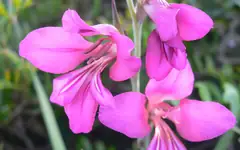 GladiolusGladiolus hybrids & selectionsmoderate water, Central Valley2.67 gal/sq ft in July
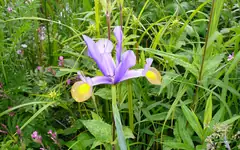 Spanish IrisIris xiphiummoderate water, Central Valley2.67 gal/sq ft in July
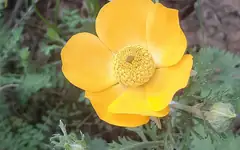 Creeping ButtercupRanunculus spp. (summer growing)moderate water, Central Valley2.67 gal/sq ft in July
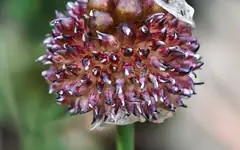 AlliumAllium spp.moderate water, Central Valley2.67 gal/sq ft in July
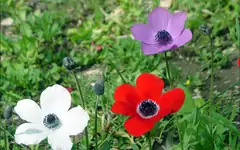 Poppy AnemoneAnemone coronariamoderate water, Central Valley2.67 gal/sq ft in July
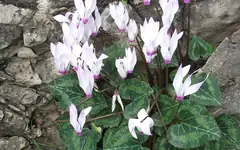 Persian CyclamenCyclamen persicum and hybrids (shade)moderate water, Central Valley2.67 gal/sq ft in July
Similar plants that need less water 9
Rated lower than cannas in the Central Valley. Worth a look for a new bed or a lawn replacement.
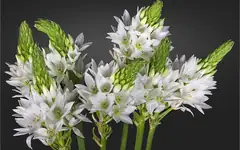 Star of BethlehemOrnithogalum arabicumlow water, Central Valley1.07 gal/sq ft in July
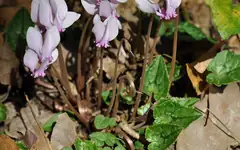 Ivy Leaf CyclamenCyclamen hederifoliumlow water, Central Valley1.07 gal/sq ft in July
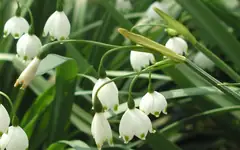 Summer SnowflakeLeucojum aestivumlow water, Central Valley1.07 gal/sq ft in July
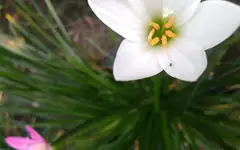 White Rain LilyZephyranthes candidalow water, Central Valley1.07 gal/sq ft in July
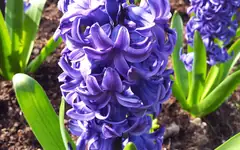 HyacinthHyacinthus spp.low water, Central Valley1.07 gal/sq ft in July
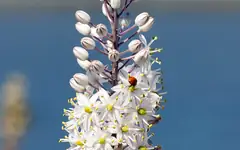 Sea SquillDrimia maritimalow water, Central Valley1.07 gal/sq ft in July
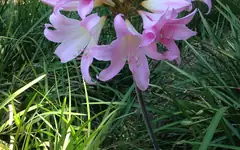 Naked LadyAmaryllis belladonnavery low water, Central Valley0.27 gal/sq ft in July
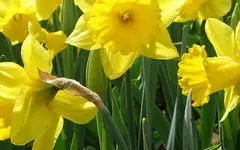 DaffodilNarcissus spp.very low water, Central Valley0.27 gal/sq ft in July
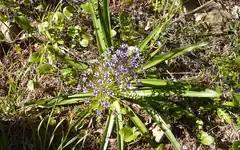 Giant ScillaScilla peruviana (Scilla hughii)very low water, Central Valley0.27 gal/sq ft in July
Turn this into minutes on your water days
Every city page has a calculator that takes cannas, your sprinkler type and the month, and gives the minutes per water day for that supplier's schedule. Or put it in a zone of the personal watering plan and get all twelve months printed.
Questions people ask
How much should I water cannas in summer?
In July, established cannas need about 1.9 gallons in the Central Valley, 1.4 gallons on the south coast and 1.8 gallons in the South Inland zone each week, for a plant 2 feet across. Water deeply and let the top of the soil dry before the next watering. Skip a watering after a soaking rain.
How much water do cannas need per day?
In July in the Central Valley, established cannas need about 0.3 gallons a day for a plant 2 feet across and about 1.1 gallons a day for a plant 4 feet across. Give it in deep waterings spread days apart rather than a little every day, so the whole root zone gets wet.
Does watering for cannas change across California?
Yes. WUCOLS rates cannas separately for each of the six California climate zones: moderate water in the North-Central Coastal zone, moderate water in the Central Valley zone, moderate water in the South Coastal zone, moderate water in the South Inland zone, moderate water in the High and Intermediate Desert zone, moderate water in the Low Desert zone. The monthly table above shows how the same rating translates into different gallon amounts as reference evapotranspiration changes.
How do I water canna bulbs after planting?
Cannas grow from rhizomes rather than true bulbs. Water once to settle the bed, then avoid soaking a leafless rhizome repeatedly. Increase moisture when shoots rise and leaves begin opening.
Can you overwater cannas?
Yes, especially when the plant is dormant in cold ground. Inspect a soft rhizome and check drainage before adding water. Tolerance of damp soil during active growth does not remove that winter risk.
Why do my potted cannas have scorched leaf edges?
Repeated dry-outs can damage the edges of broad leaves on a hot patio. Check beneath the surface of the mix while the plant is growing. A dry pot needs a thorough soak instead of a light surface sprinkle.
Can cannas grow beside a pond?
Many cannas tolerate shallow water around their roots during the growing season. Keep the crown in soil rather than submerged through winter. A plant in an ordinary garden bed still needs steady moisture while leafy.
How do I water a canna indoors?
Weaker indoor light can leave mix wet longer than on a summer patio. Check below the surface and let the top dry before another soaking. Store a dormant rhizome in barely damp material in a cool, dark place.
More plant watering guides
Sources
- WUCOLS IV plant water use classification for Canna spp., the University of California survey California agencies use for landscape plan reviewRead August 23, 2026 on wucols.ucdavis.edu
- Model Water Efficient Landscape Ordinance, adopted text and appendices, effective 2025-01-02 · monthly reference evapotranspiration per city, Appendix CRead August 23, 2026 on water.ca.gov/-/media/DWR-Website/Web-Pages/Programs/Water-Use-And-Efficiency/MWELO-Rulemaking/Final-MWELO-Text-and-Appendices_20250103.pdf
- UC Statewide IPM Program, irrigation scheduling using evapotranspirationRead September 30, 2026 on ipm.ucanr.edu/PMG/GARDEN/ENVIRON/evap.html
- Shaw and Pittenger, Landscape Irrigation System Evaluation and Management, UC Cooperative Extension, 2009Read September 30, 2026 on ucanr.edu/sites/default/files/2013-02/160836.pdf
- Pittenger, Water Management in Gardens and Landscapes, UC Riverside, 2017Read September 30, 2026 on ucanr.edu/sites/default/files/2017-03/258022.pdf