How often to water gladiolus in California
In July in the Central Valley, established gladiolus needs about 1.9 gallons a week for a plant 2 feet across. Gladiolus grows from corms into upright fans of sword-shaped leaves. Tall spikes of funnel-shaped flowers follow, opening one at a time from the bottom up. Colors run through nearly every shade, and hummingbirds visit. It wants full sun, rich, well-drained sandy loam, and regular water while it grows and blooms.
How often to water gladiolus, month by month
Type your city above and the days between waterings and the gallons appear here, worked out from your city's climate table. Or read the figures by climate zone further down.
How this is worked out: the plant’s WUCOLS rating times your city’s climate for the month, over the area the plant covers. Skip a watering after a good soaking rain.
How to tell it needs water
- Buds stalling on the spike while the soil is dry 2 inches down mean the corms need water
- Fuzzy gray growth on petals during cool, wet spells is Botrytis blight, a fungus, rather than a watering issue
- Yellowing leaves and soft, rotting corms in soggy soil point to overwatering and crown rot
- Spikes leaning or snapping in wind call for staking, not more water
How to water it
- Water along the row with drip or a soaker, wetting the soil 6 to 8 inches deep around the corms
- Keep the soil from drying out while plants grow and bloom, letting only the surface dry between waterings
- Plant corms in full sun in rich, sandy loam, and avoid heavy clay
- Stake tall spikes early, and plant out of strong wind
- Make successive plantings to stretch the bloom season, and extend the watered row as you add them
Through the seasons
Keep newly planted corms evenly moist as shoots emerge and spikes form. Plants need regular water through the growing and blooming period, with flowers from late spring into fall depending on when the corms went in. In mild areas, hardy kinds overwinter in place with a mulch cover, and the rest are lifted for winter. WUCOLS rates gladiolus moderate water on the north-central coast, in the Central Valley, on the south coast and in South Inland. WUCOLS marks it as not suited to the high desert or the low desert.
In pots
Gladiolus grows well in containers, which suits a sunny patio. Use a rich, well-drained mix in a deep pot with drainage holes, and set the corms in groups. While plants grow and bloom, check the mix daily in hot weather and water before it dries out, until water drains. Empty the saucer afterward. Stake tall spikes. In winter, lift the corms for storage or keep the pot nearly dry.
- A year
- 17.11 gal per sq ft
- Reference
- Sacramento climate table
- Counts
- Plant need, before sprinkler losses
Monthly water need by climate zone
Gladiolus: gallons per square foot per month, by WUCOLS climate zone
| Month | N. Coast | C. Valley | S. Coast | S. Inland | Hi Desert | Lo Desert |
|---|---|---|---|---|---|---|
| Jan | 0.37 | 0.4 | 0.78 | 0.78 | – | – |
| Feb | 0.53 | 0.65 | 0.81 | 0.87 | – | – |
| Mar | 0.87 | 1.09 | 1.15 | 1.3 | – | – |
| Apr | 1.18 | 1.52 | 1.4 | 1.61 | – | – |
| May | 1.46 | 2.08 | 1.61 | 1.95 | – | – |
| Jun | 1.61 | 2.48 | 1.74 | 2.29 | – | – |
| Jul | 1.61 | 2.67 | 1.98 | 2.51 | – | – |
| Aug | 1.49 | 2.39 | 1.86 | 2.33 | – | – |
| Sep | 1.24 | 1.8 | 1.49 | 1.86 | – | – |
| Oct | 0.87 | 1.18 | 1.15 | 1.33 | – | – |
| Nov | 0.47 | 0.56 | 0.84 | 0.9 | – | – |
| Dec | 0.31 | 0.34 | 0.65 | 0.68 | – | – |
| Year | 12 | 17.11 | 15.5 | 18.41 | – | – |
How this is worked out: the WUCOLS water rating for each zone times that zone’s climate for the month. A dash means WUCOLS does not rate the plant there. The figures are what the plant uses, before sprinkler losses.
Plants with the same water needs 6
Rated moderate water in the Central Valley, like gladiolus. Plants that drink alike can share one valve and one schedule.
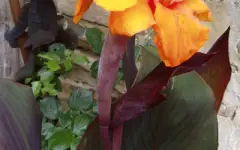 CannasCanna spp.moderate water, Central Valley2.67 gal/sq ft in July
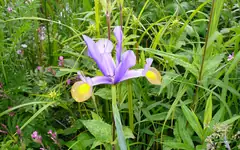 Spanish IrisIris xiphiummoderate water, Central Valley2.67 gal/sq ft in July
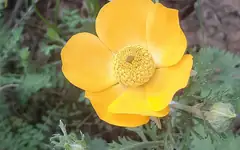 Creeping ButtercupRanunculus spp. (summer growing)moderate water, Central Valley2.67 gal/sq ft in July
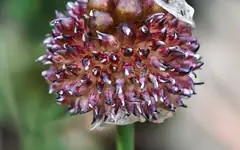 AlliumAllium spp.moderate water, Central Valley2.67 gal/sq ft in July
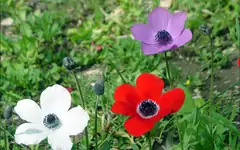 Poppy AnemoneAnemone coronariamoderate water, Central Valley2.67 gal/sq ft in July
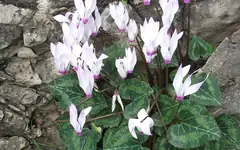 Persian CyclamenCyclamen persicum and hybrids (shade)moderate water, Central Valley2.67 gal/sq ft in July
Similar plants that need less water 9
Rated lower than gladiolus in the Central Valley. Worth a look for a new bed or a lawn replacement.
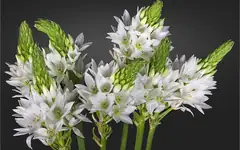 Star of BethlehemOrnithogalum arabicumlow water, Central Valley1.07 gal/sq ft in July
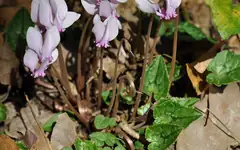 Ivy Leaf CyclamenCyclamen hederifoliumlow water, Central Valley1.07 gal/sq ft in July
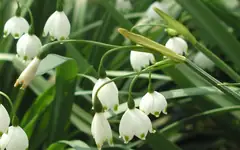 Summer SnowflakeLeucojum aestivumlow water, Central Valley1.07 gal/sq ft in July
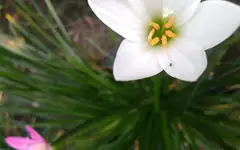 White Rain LilyZephyranthes candidalow water, Central Valley1.07 gal/sq ft in July
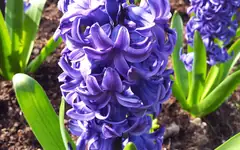 HyacinthHyacinthus spp.low water, Central Valley1.07 gal/sq ft in July
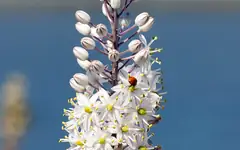 Sea SquillDrimia maritimalow water, Central Valley1.07 gal/sq ft in July
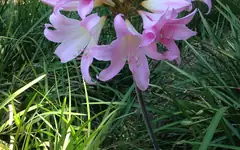 Naked LadyAmaryllis belladonnavery low water, Central Valley0.27 gal/sq ft in July
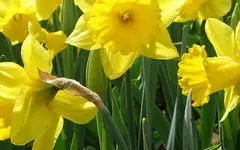 DaffodilNarcissus spp.very low water, Central Valley0.27 gal/sq ft in July
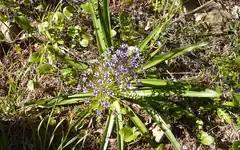 Giant ScillaScilla peruviana (Scilla hughii)very low water, Central Valley0.27 gal/sq ft in July
Turn this into minutes on your water days
Every city page has a calculator that takes gladiolus, your sprinkler type and the month, and gives the minutes per water day for that supplier's schedule. Or put it in a zone of the personal watering plan and get all twelve months printed.
Questions people ask
How much should I water gladiolus in summer?
In July, established gladiolus needs about 1.9 gallons in the Central Valley, 1.4 gallons on the south coast and 1.8 gallons in the South Inland zone each week, for a plant 2 feet across. Water deeply and let the top of the soil dry before the next watering. Skip a watering after a soaking rain.
How much water does gladiolus need per day?
In July in the Central Valley, established gladiolus needs about 0.3 gallons a day for a plant 2 feet across and about 1.1 gallons a day for a plant 4 feet across. Give it in deep waterings spread days apart rather than a little every day, so the whole root zone gets wet.
Does watering for gladiolus change across California?
Yes. WUCOLS rates gladiolus separately for each of the six California climate zones: moderate water in the North-Central Coastal zone, moderate water in the Central Valley zone, moderate water in the South Coastal zone, moderate water in the South Inland zone, not suited to this region in the High and Intermediate Desert zone, not suited to this region in the Low Desert zone. The monthly table above shows how the same rating translates into different gallon amounts as reference evapotranspiration changes.
Do I need to dig up gladiolus corms in winter?
It depends on the variety. Many are dug and stored over winter, while hardy kinds can stay in the ground under a good layer of mulch.
Why are my gladiolus falling over?
The tall flower spikes perform best with support, and wind easily topples them. Stake them early and plant in a sheltered spot.
How can I keep gladiolus blooming all summer?
Plant corms in successive batches so new spikes keep coming. Each spike opens gradually, starting with its lowest flowers.
Are gladiolus toxic to pets?
Yes. They are toxic to cats, dogs and horses, with the highest concentration in the corms. Store dug corms out of reach.
Are gladiolus good cut flowers?
Yes, they make excellent cut flowers, and some are fragrant. In the garden they also draw hummingbirds.
What causes gladiolus corms to rot?
Soggy soil, crown rot and dry rot are common causes. Plant in well-drained soil, and if thrips or fungus caused trouble during the season, treat the corms before storing them.
More plant watering guides
Sources
- WUCOLS IV plant water use classification for Gladiolus hybrids & selections, the University of California survey California agencies use for landscape plan reviewRead August 23, 2026 on wucols.ucdavis.edu
- Model Water Efficient Landscape Ordinance, adopted text and appendices, effective 2025-01-02 · monthly reference evapotranspiration per city, Appendix CRead August 23, 2026 on water.ca.gov/-/media/DWR-Website/Web-Pages/Programs/Water-Use-And-Efficiency/MWELO-Rulemaking/Final-MWELO-Text-and-Appendices_20250103.pdf
- UC Statewide IPM Program, irrigation scheduling using evapotranspirationRead September 30, 2026 on ipm.ucanr.edu/PMG/GARDEN/ENVIRON/evap.html
- Shaw and Pittenger, Landscape Irrigation System Evaluation and Management, UC Cooperative Extension, 2009Read September 30, 2026 on ucanr.edu/sites/default/files/2013-02/160836.pdf
- Pittenger, Water Management in Gardens and Landscapes, UC Riverside, 2017Read September 30, 2026 on ucanr.edu/sites/default/files/2017-03/258022.pdf