How often to water elephant's food in California
In July in the Central Valley, established elephant's food in loam needs a deep watering about every 20 days: about 8.8 gallons each time for a plant 4 feet across, about 3.0 gallons a week. Elephant's food is an upright succulent shrub from South Africa with reddish brown stems and small, round, emerald green leaves. It can reach 8 to 12 feet but is often kept much smaller by pruning. Tiny pale lavender flowers appear only after unusually dry winters. It grows in sun or shade with little or no supplemental water.
How often to water elephant's food, month by month
Type your city above and the days between waterings and the gallons appear here, worked out from your city's climate table. Or read the figures by climate zone further down.
How this is worked out: established roots fill the top 1.5 feet of soil, and you water again when that soil has dried halfway. Loam soil holds about 1.5 inches of water per foot. Water the whole area the plant covers, and skip a watering after a good soaking rain.
How to tell it needs water
- Soil dry 4 inches down beside the plant in a long hot spell signals elephant's food can take a soak
- Small leaves wrinkling and dropping can indicate a very long dry spell
- Soft, translucent leaves and stems blackening at the base point to overwatering
- Stems turning limp and mushy after cold, wet weather suggest rot or frost damage
How to water it
- Water at the base with a slow hose only after the soil has dried well down
- Soak deeply but rarely, then let the soil dry completely
- Plant in sun or shade in well-drained soil
- Prune to almost any size or shape, including a hedge
- Keep it apart from beds that are watered often
Through the seasons
Water a new plant lightly until roots grow into the soil, then give little or no supplemental water. It is evergreen and grows slowly through the warm months. Flowers appear only after dry winters, so blooms are a sign of lean conditions. It is hardy to about 25 degrees F. WUCOLS rates elephant's food very low water on the south coast. It rates low water on the north-central coast, in the Central Valley, in South Inland and in the high desert. In the low desert it carries a moderate water rating.
In pots
Elephant's food is an easy container succulent, upright or trailing depending on the form. Use a fast-draining cactus mix. Water only when the mix is dry several inches down, then let it drain fully. In summer heat, check every week or two. Never leave water in the saucer. Prune to shape at any time. In winter, water rarely and move the pot under cover in a hard frost.
- A year
- 6.84 gal per sq ft
- Reference
- Sacramento climate table
- Counts
- Plant need, before sprinkler losses
Monthly water need by climate zone
Elephant's Food: gallons per square foot per month, by WUCOLS climate zone
| Month | N. Coast | C. Valley | S. Coast | S. Inland | Hi Desert | Lo Desert |
|---|---|---|---|---|---|---|
| Jan | 0.15 | 0.16 | 0.08 | 0.31 | 0.3 | 0.78 |
| Feb | 0.21 | 0.26 | 0.08 | 0.35 | 0.37 | 0.93 |
| Mar | 0.35 | 0.43 | 0.11 | 0.52 | 0.58 | 1.52 |
| Apr | 0.47 | 0.61 | 0.14 | 0.64 | 0.76 | 1.95 |
| May | 0.58 | 0.83 | 0.16 | 0.78 | 0.95 | 2.45 |
| Jun | 0.64 | 0.99 | 0.17 | 0.92 | 1.14 | 2.79 |
| Jul | 0.64 | 1.07 | 0.2 | 1 | 1.22 | 2.85 |
| Aug | 0.6 | 0.95 | 0.19 | 0.93 | 1.12 | 2.6 |
| Sep | 0.5 | 0.72 | 0.15 | 0.74 | 0.86 | 2.08 |
| Oct | 0.35 | 0.47 | 0.11 | 0.53 | 0.58 | 1.49 |
| Nov | 0.19 | 0.22 | 0.08 | 0.36 | 0.37 | 0.96 |
| Dec | 0.12 | 0.14 | 0.07 | 0.27 | 0.26 | 0.68 |
| Year | 4.8 | 6.84 | 1.55 | 7.37 | 8.51 | 21.08 |
How this is worked out: the WUCOLS water rating for each zone times that zone’s climate for the month. A dash means WUCOLS does not rate the plant there. The figures are what the plant uses, before sprinkler losses.
Plants with the same water needs 16
Rated low water in the Central Valley, like elephant's food. Plants that drink alike can share one valve and one schedule.
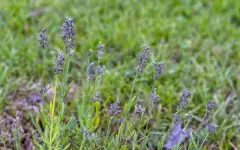 LavenderLavandula spp. & cvs.low water, Central Valley1.07 gal/sq ft in July
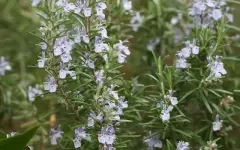 RosemaryRosmarinus officinalislow water, Central Valley1.07 gal/sq ft in July
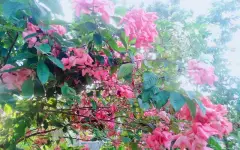 BougainvilleaBougainvillea & spp. & cvs.low water, Central Valley1.07 gal/sq ft in July
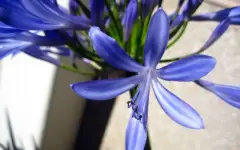 AgapanthusAgapanthus orientalislow water, Central Valley1.07 gal/sq ft in July
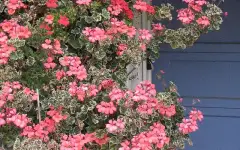 GeraniumsPelargonium x hortorum and cvs.low water, Central Valley1.07 gal/sq ft in July
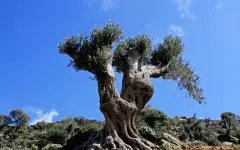 Olive TreesOlea europaea ssp. & cvs.low water, Central Valley1.07 gal/sq ft in July
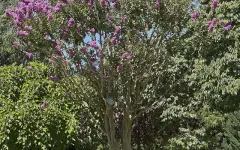 Crape MyrtleLagerstroemia spp., hybrids & cvs.low water, Central Valley1.07 gal/sq ft in July
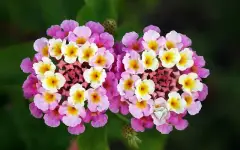 LantanaLantana camara ssp. & cvs.low water, Central Valley1.07 gal/sq ft in July
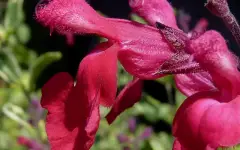 SalviaSalvia greggii ssp., cvs. & hybridslow water, Central Valley1.07 gal/sq ft in July
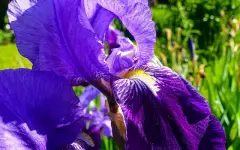 IrisesIris germanicalow water, Central Valley1.07 gal/sq ft in July
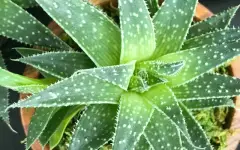 AloeAloe spp. & cvs.low water, Central Valley1.07 gal/sq ft in July
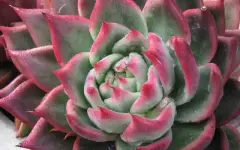 SucculentsEcheveria spp. & cvs.low water, Central Valley1.07 gal/sq ft in July
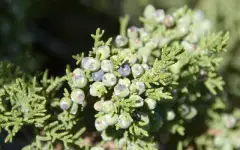 JunipersJuniperus spp. & cvs.low water, Central Valley1.07 gal/sq ft in July
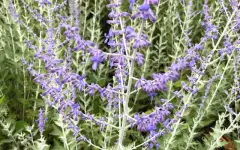 Russian SagePerovskia spp. & cvs.low water, Central Valley1.07 gal/sq ft in July
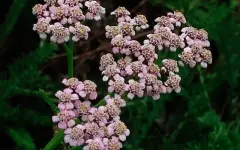 YarrowAchillea millefolium (non-native hybrids)low water, Central Valley1.07 gal/sq ft in July
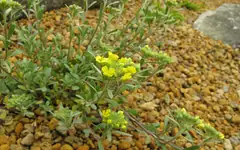 Mountain AlyssumAlyssum montanumlow water, Central Valley1.07 gal/sq ft in July
Turn this into minutes on your water days
Every city page has a calculator that takes elephant's food, your sprinkler type and the month, and gives the minutes per water day for that supplier's schedule. Or put it in a zone of the personal watering plan and get all twelve months printed.
Questions people ask
How often should I water elephant's food in summer?
In July, established elephant's food in loam needs a deep watering about every 20 days in the Central Valley, about once a month or less on the south coast and about every 22 days in the South Inland zone. Sandy soil holds less water, so waterings come closer together. Clay stretches them. Check the soil before each watering and skip one after a soaking rain.
How much water does elephant's food need per day?
In July in the Central Valley, established elephant's food needs about 0.4 gallons a day for a plant 4 feet across and about 1.7 gallons a day for a plant 8 feet across. Give it in deep waterings spread days apart rather than a little every day, so the whole root zone gets wet.
Does watering for elephant's food change across California?
Yes. WUCOLS rates elephant's food separately for each of the six California climate zones: low water in the North-Central Coastal zone, low water in the Central Valley zone, very low water in the South Coastal zone, low water in the South Inland zone, low water in the High and Intermediate Desert zone, moderate water in the Low Desert zone. The monthly table above shows how the same rating translates into different gallon amounts as reference evapotranspiration changes.
Can elephant's food be a hedge?
Yes, it makes a good drought tolerant foundation plant or hedge. It can be kept almost any size with pruning. Water it as little as an unpruned plant.
Why won't my elephant's food bloom?
It flowers only after unusually dry winters. Irrigated plants rarely bloom. That is normal.
How cold can elephant's food get?
Cold to about 25 degrees F does no harm, while temperatures below 20 degrees F damage stems. Protect it on cold nights. Keep the soil dry in winter.
Can elephant's food grow in shade?
Yes, it grows in sun or shade. Shade slows drying, so water even less.
Are there trailing forms?
Yes, mat-forming, trailing and variegated forms are available. They are great in pots and over walls. They need the same lean watering.
More plant watering guides
Sources
- WUCOLS IV plant water use classification for Portulacaria afra ssp. & cvs., the University of California survey California agencies use for landscape plan reviewRead August 23, 2026 on wucols.ucdavis.edu
- Model Water Efficient Landscape Ordinance, adopted text and appendices, effective 2025-01-02 · monthly reference evapotranspiration per city, Appendix CRead August 23, 2026 on water.ca.gov/-/media/DWR-Website/Web-Pages/Programs/Water-Use-And-Efficiency/MWELO-Rulemaking/Final-MWELO-Text-and-Appendices_20250103.pdf
- UC Statewide IPM Program, irrigation scheduling using evapotranspirationRead September 30, 2026 on ipm.ucanr.edu/PMG/GARDEN/ENVIRON/evap.html
- Shaw and Pittenger, Landscape Irrigation System Evaluation and Management, UC Cooperative Extension, 2009Read September 30, 2026 on ucanr.edu/sites/default/files/2013-02/160836.pdf
- Pittenger, Water Management in Gardens and Landscapes, UC Riverside, 2017Read September 30, 2026 on ucanr.edu/sites/default/files/2017-03/258022.pdf