How often to water Mexican palo verde in California
In July in the Central Valley, established Mexican palo verde in loam needs a deep soak only about once a month or less: about 55 gallons each time under a 10 foot canopy. Mexican palo verde is a fast, small tree with green bark, spiny branches and open, lacy foliage that casts dappled shade. Fragrant yellow flowers with a red-orange spot peak in late spring and early summer. Tiny leaflets drop in dry summers, leaving bare green stems that keep working. It is very drought tolerant once established.
How often to water Mexican palo verde, month by month
Type your city above and the days between waterings and the gallons appear here, worked out from your city's climate table. Or read the figures by climate zone further down.
How this is worked out: established roots fill the top 1.5 feet of soil, and you water again when that soil has dried halfway. Loam soil holds about 1.5 inches of water per foot. Water the whole area under the branches, and skip a watering after a good soaking rain.
How to tell it needs water
- A young tree's root zone dry 18 inches down in its first summers calls for one long soak
- Leaflets dropping in summer while branches stay green is the tree's normal response to dry soil, not a crisis
- Twigs turning yellow and brittle at the tips in a long drought can indicate the tree has drawn down too far
- White powdery patches on leaves where it is overwatered or near the coast suggest powdery mildew
- Rank, floppy growth in a frequently watered bed points to more water than it needs
How to water it
- Run a slow soaker in a wide circle out past the branch tips, keeping water off the trunk
- Wet a young tree's roots about 2 feet down, then allow the deeper soil to dry before repeating
- Plant in full sun in sandy, well-drained soil, including alkaline or saline ground
- Once established, water only in long dry spells and keep it out of frequently watered beds
- Move emitters outward in the first years so roots spread wide
Through the seasons
Water a young Mexican palo verde deeply through its first summer or two, then taper off. Established trees get by on rain and rare deep soaks, and they drop leaves in summer when grown dry. Flowers peak in late spring and early summer. It is hardy to about 18 degrees F, with young trees more easily damaged. Along the north-central coast and in the Central Valley, WUCOLS rates Mexican palo verde very low water. The south coast, South Inland and both deserts carry a low water rating for it.
In pots
Mexican palo verde is a tree for the ground and grows poorly confined. If you must hold a young one, use a deep, wide container of sandy mix. Probe the mix a hand's depth down in hot inland weather, and soak it only once that depth is dry. Let the water run out freely, then pour off the saucer. Winter calls for very little, just enough so the root ball never goes bone dry.
- A year
- 1.71 gal per sq ft
- Reference
- Sacramento climate table
- Counts
- Plant need, before sprinkler losses
Monthly water need by climate zone
Mexican Palo Verde: gallons per square foot per month, by WUCOLS climate zone
| Month | N. Coast | C. Valley | S. Coast | S. Inland | Hi Desert | Lo Desert |
|---|---|---|---|---|---|---|
| Jan | 0.04 | 0.04 | 0.31 | 0.31 | 0.3 | 0.31 |
| Feb | 0.05 | 0.07 | 0.32 | 0.35 | 0.37 | 0.37 |
| Mar | 0.09 | 0.11 | 0.46 | 0.52 | 0.58 | 0.61 |
| Apr | 0.12 | 0.15 | 0.56 | 0.64 | 0.76 | 0.78 |
| May | 0.15 | 0.21 | 0.64 | 0.78 | 0.95 | 0.98 |
| Jun | 0.16 | 0.25 | 0.69 | 0.92 | 1.14 | 1.12 |
| Jul | 0.16 | 0.27 | 0.79 | 1 | 1.22 | 1.14 |
| Aug | 0.15 | 0.24 | 0.74 | 0.93 | 1.12 | 1.04 |
| Sep | 0.12 | 0.18 | 0.6 | 0.74 | 0.86 | 0.83 |
| Oct | 0.09 | 0.12 | 0.46 | 0.53 | 0.58 | 0.6 |
| Nov | 0.05 | 0.06 | 0.33 | 0.36 | 0.37 | 0.38 |
| Dec | 0.03 | 0.03 | 0.26 | 0.27 | 0.26 | 0.27 |
| Year | 1.2 | 1.71 | 6.2 | 7.37 | 8.51 | 8.43 |
How this is worked out: the WUCOLS water rating for each zone times that zone’s climate for the month. A dash means WUCOLS does not rate the plant there. The figures are what the plant uses, before sprinkler losses.
Plants with the same water needs 16
Rated very low water in the Central Valley, like Mexican palo verde. Plants that drink alike can share one valve and one schedule.
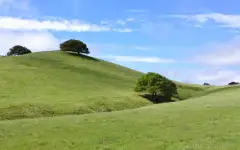 Oak TreesQuercus agrifoliavery low water, Central Valley0.27 gal/sq ft in July
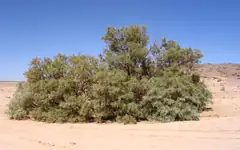 Salt CedarTamarix aphyllavery low water, Central Valley0.27 gal/sq ft in July
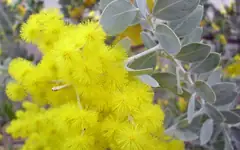 Pearl AcaciaAcacia podalyriifoliavery low water, Central Valley0.27 gal/sq ft in July
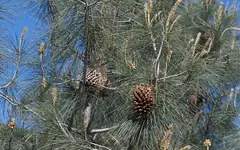 Foothill PinePinus sabinianavery low water, Central Valley0.27 gal/sq ft in July
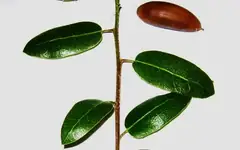 Interior Live OakQuercus wislizenivery low water, Central Valley0.27 gal/sq ft in July
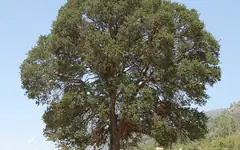 Blue OakQuercus douglasiivery low water, Central Valley0.27 gal/sq ft in July
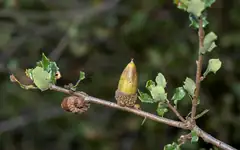 Nuttall's Scrub OakQuercus dumosavery low water, Central Valley0.27 gal/sq ft in July
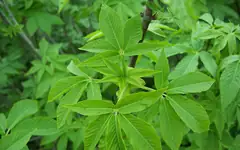 California BuckeyeAesculus californicavery low water, Central Valley0.27 gal/sq ft in July
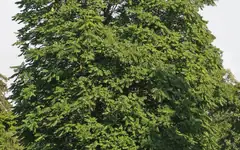 Tree of HeavenAilanthus altissimavery low water, Central Valley0.27 gal/sq ft in July
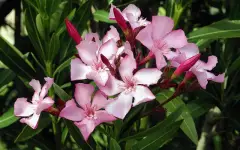 OleanderNerium oleander ssp. & cvs.very low water, Central Valley0.27 gal/sq ft in July
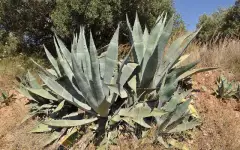 AgaveAgave americana (and thick-leaved relatives)very low water, Central Valley0.27 gal/sq ft in July
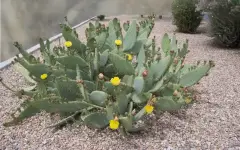 CactusOpuntia spp. & cvs. (CA natives and non-natives)very low water, Central Valley0.27 gal/sq ft in July
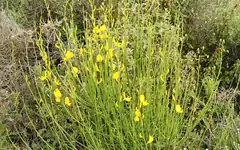 Spanish BroomSpartium junceumvery low water, Central Valley0.27 gal/sq ft in July
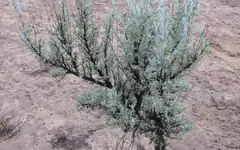 Big SagebrushArtemisia tridentatavery low water, Central Valley0.27 gal/sq ft in July
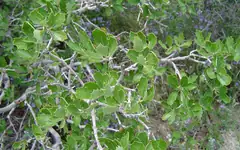 California Scrub OakQuercus berberidifoliavery low water, Central Valley0.27 gal/sq ft in July
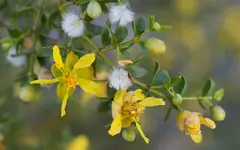 Creosote BushLarrea tridentata ssp. & cvs.very low water, Central Valley0.27 gal/sq ft in July
Turn this into minutes on your water days
Every city page has a calculator that takes Mexican palo verde, your sprinkler type and the month, and gives the minutes per water day for that supplier's schedule. Or put it in a zone of the personal watering plan and get all twelve months printed.
Questions people ask
How often should I water Mexican palo verde in summer?
In July, established Mexican palo verde in loam needs a deep watering about once a month or less in the Central Valley, about every 27 days on the south coast and about every 22 days in the South Inland zone. Sandy soil holds less water, so waterings come closer together. Clay stretches them. Check the soil before each watering and skip one after a soaking rain.
How much water does Mexican palo verde need per day?
In July in the Central Valley, established Mexican palo verde needs about 0.7 gallons a day under a 10 foot canopy and about 2.7 gallons a day under a 20 foot canopy. Give it in deep waterings spread days apart rather than a little every day, so the whole root zone gets wet.
Does watering for Mexican palo verde change across California?
Yes. WUCOLS rates Mexican palo verde separately for each of the six California climate zones: very low water in the North-Central Coastal zone, very low water in the Central Valley zone, low water in the South Coastal zone, low water in the South Inland zone, low water in the High and Intermediate Desert zone, low water in the Low Desert zone. The monthly table above shows how the same rating translates into different gallon amounts as reference evapotranspiration changes.
Why is my palo verde losing its leaves in summer?
The tiny leaflets drop when the soil is dry, leaving the green midribs and branches. This is normal for the species. An established tree does not need extra water to recover.
Is Mexican palo verde invasive?
It self-sows freely and has naturalized in low desert washes in California. It can form dense thickets. Pull seedlings and avoid planting it near desert washes.
Why does my palo verde have white powder on the leaves?
That is powdery mildew, seen along the coast or where the tree is overwatered. It fades in drier weather. Cut back irrigation rather than adding more.
Does Mexican palo verde have thorns?
Yes, small spines sit at the leaf joints along the green branches. Prune with gloves and keep it back from walkways. The thornless Desert Museum hybrid is a different plant.
Is palo verde messy?
Fruit drop can be messy, and tan seedpods follow the flowers. Fallen pods also sprout seedlings. Rake them up from beds and paving.
More plant watering guides
Sources
- WUCOLS IV plant water use classification for Parkinsonia aculeata, the University of California survey California agencies use for landscape plan reviewRead August 23, 2026 on wucols.ucdavis.edu
- Model Water Efficient Landscape Ordinance, adopted text and appendices, effective 2025-01-02 · monthly reference evapotranspiration per city, Appendix CRead August 23, 2026 on water.ca.gov/-/media/DWR-Website/Web-Pages/Programs/Water-Use-And-Efficiency/MWELO-Rulemaking/Final-MWELO-Text-and-Appendices_20250103.pdf
- UC Statewide IPM Program, irrigation scheduling using evapotranspirationRead September 30, 2026 on ipm.ucanr.edu/PMG/GARDEN/ENVIRON/evap.html
- Shaw and Pittenger, Landscape Irrigation System Evaluation and Management, UC Cooperative Extension, 2009Read September 30, 2026 on ucanr.edu/sites/default/files/2013-02/160836.pdf
- Pittenger, Water Management in Gardens and Landscapes, UC Riverside, 2017Read September 30, 2026 on ucanr.edu/sites/default/files/2017-03/258022.pdf