How often to water agave in California
In July in the Central Valley, established agave in loam needs a deep soak only about once a month or less: about 8.8 gallons each time for a plant 4 feet across. Agave stores water in its thick leaves and ranks among the least thirsty plants you can grow in California. Established plants live mostly on winter rain, with only occasional deep soaks in the warm months. Too much water kills far more agaves than drought ever does.
How often to water agave, month by month
Type your city above and the days between waterings and the gallons appear here, worked out from your city's climate table. Or read the figures by climate zone further down.
How this is worked out: established roots fill the top 1.5 feet of soil, and you water again when that soil has dried halfway. Loam soil holds about 1.5 inches of water per foot. Water the whole area the plant covers, and skip a watering after a good soaking rain.
How to tell it needs water
- Leaves that wrinkle, thin out, or fold inward along their length mean the plant has spent its stored water and will take a deep soak
- Soil dry 3 to 4 inches down plus a slightly dull, flat leaf color confirms an established plant is ready for water
- Yellowing leaves, a soft or mushy base, or leaves flopping outward point to overwatering and possible rot, not thirst
- The oldest bottom leaves drying out and dying back is normal aging on any agave, not a call for more water
How to water it
- Water the soil around the plant, never into the rosette, since water sitting in the crown invites rot
- Wet a wide circle out to the leaf tips and beyond, because agave roots run shallow and spread far past the rosette
- Soak deeply, then let the soil dry out completely before you consider watering again
- In clay soil, plant on a mound or slope and mulch with gravel or rock, never with moisture-holding bark
- If you are unsure, skip the watering; agave shrugs off drought but not soggy soil
Through the seasons
A newly planted agave needs occasional deep soaks through its first summer while its roots spread into the surrounding soil. After that the yearly pattern flips from most garden plants: winter rain across coastal and valley California covers the cool months completely, and your only job then is drainage, because cold, wet soil is when rot strikes. In the warm months a mature agave takes an occasional deep soak to stay plump and keep growing, but it will shrug off long stretches with nothing at all. Even in the deserts agave stays in the lowest water class, so the shift across the year is between very little and none.
In pots
A potted agave needs a cactus mix, a container with a real drainage hole, and restraint. Water only when the mix is dry all the way through, soak until water runs out the bottom, then leave it alone until it dries out again. Unglazed terracotta helps the mix dry faster and is more forgiving than plastic or glazed pots. In winter a container agave in California needs almost nothing, and cold, wet mix is the quickest way to rot one, so slide pots under an eave during long rainy spells.
- A year
- 1.71 gal per sq ft
- Reference
- Sacramento climate table
- Counts
- Plant need, before sprinkler losses
Monthly water need by climate zone
Agave: gallons per square foot per month, by WUCOLS climate zone
| Month | N. Coast | C. Valley | S. Coast | S. Inland | Hi Desert | Lo Desert |
|---|---|---|---|---|---|---|
| Jan | 0.04 | 0.04 | 0.08 | 0.08 | 0.07 | 0.08 |
| Feb | 0.05 | 0.07 | 0.08 | 0.09 | 0.09 | 0.09 |
| Mar | 0.09 | 0.11 | 0.11 | 0.13 | 0.15 | 0.15 |
| Apr | 0.12 | 0.15 | 0.14 | 0.16 | 0.19 | 0.2 |
| May | 0.15 | 0.21 | 0.16 | 0.2 | 0.24 | 0.24 |
| Jun | 0.16 | 0.25 | 0.17 | 0.23 | 0.29 | 0.28 |
| Jul | 0.16 | 0.27 | 0.2 | 0.25 | 0.3 | 0.29 |
| Aug | 0.15 | 0.24 | 0.19 | 0.23 | 0.28 | 0.26 |
| Sep | 0.12 | 0.18 | 0.15 | 0.19 | 0.21 | 0.21 |
| Oct | 0.09 | 0.12 | 0.11 | 0.13 | 0.15 | 0.15 |
| Nov | 0.05 | 0.06 | 0.08 | 0.09 | 0.09 | 0.1 |
| Dec | 0.03 | 0.03 | 0.07 | 0.07 | 0.07 | 0.07 |
| Year | 1.2 | 1.71 | 1.55 | 1.84 | 2.13 | 2.11 |
How this is worked out: the WUCOLS water rating for each zone times that zone’s climate for the month. A dash means WUCOLS does not rate the plant there. The figures are what the plant uses, before sprinkler losses.
Plants with the same water needs 16
Rated very low water in the Central Valley, like agave. Plants that drink alike can share one valve and one schedule.
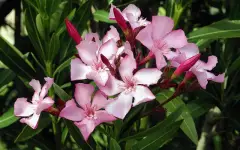 OleanderNerium oleander ssp. & cvs.very low water, Central Valley0.27 gal/sq ft in July
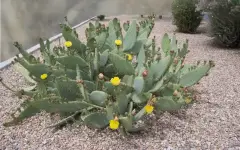 CactusOpuntia spp. & cvs. (CA natives and non-natives)very low water, Central Valley0.27 gal/sq ft in July
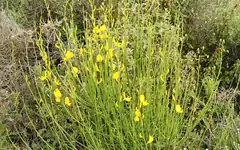 Spanish BroomSpartium junceumvery low water, Central Valley0.27 gal/sq ft in July
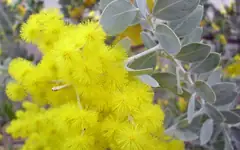 Pearl AcaciaAcacia podalyriifoliavery low water, Central Valley0.27 gal/sq ft in July
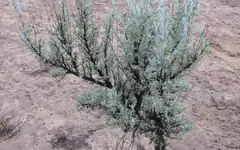 Big SagebrushArtemisia tridentatavery low water, Central Valley0.27 gal/sq ft in July
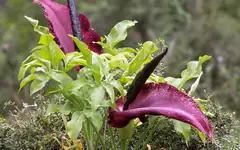 Voodoo LilyDracunculus vulgarisvery low water, Central Valley0.27 gal/sq ft in July
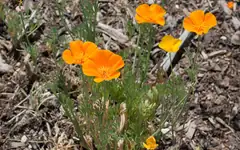 California PoppyEschscholzia californicavery low water, Central Valley0.27 gal/sq ft in July
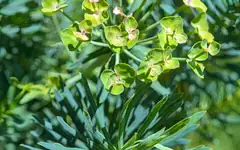 Cypress SpurgeEuphorbia cyparissiasvery low water, Central Valley0.27 gal/sq ft in July
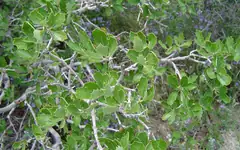 California Scrub OakQuercus berberidifoliavery low water, Central Valley0.27 gal/sq ft in July
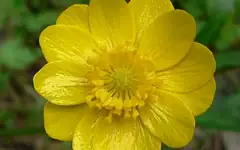 California ButtercupRanunculus californicusvery low water, Central Valley0.27 gal/sq ft in July
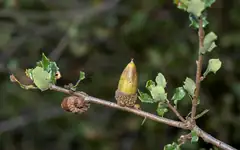 Nuttall's Scrub OakQuercus dumosavery low water, Central Valley0.27 gal/sq ft in July
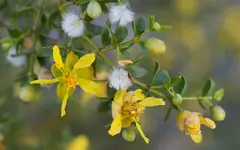 Creosote BushLarrea tridentata ssp. & cvs.very low water, Central Valley0.27 gal/sq ft in July
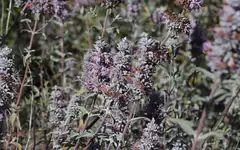 Purple SageSalvia leucophylla ssp. & cvs.very low water, Central Valley0.27 gal/sq ft in July
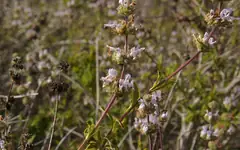 Black SageSalvia mellifera ssp. & cvs.very low water, Central Valley0.27 gal/sq ft in July
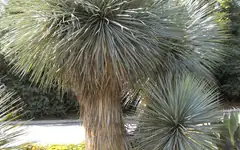 Beaked YuccaYucca rostrata ssp. & cvs.very low water, Central Valley0.27 gal/sq ft in July
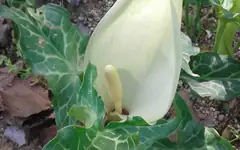 Italian ArumArum italicumvery low water, Central Valley0.27 gal/sq ft in July
Turn this into minutes on your water days
Every city page has a calculator that takes agave, your sprinkler type and the month, and gives the minutes per water day for that supplier's schedule. Or put it in a zone of the personal watering plan and get all twelve months printed.
Questions people ask
How often should I water agave in summer?
In July, established agave in loam needs a deep watering about once a month or less in the Central Valley, about once a month or less on the south coast and about once a month or less in the South Inland zone. Sandy soil holds less water, so waterings come closer together. Clay stretches them. Check the soil before each watering and skip one after a soaking rain.
How much water does agave need per day?
In July in the Central Valley, established agave needs about 0.1 gallons a day for a plant 4 feet across and about 0.4 gallons a day for a plant 8 feet across. Give it in deep waterings spread days apart rather than a little every day, so the whole root zone gets wet.
Does watering for agave change across California?
Yes. WUCOLS rates agave separately for each of the six California climate zones: very low water in the North-Central Coastal zone, very low water in the Central Valley zone, very low water in the South Coastal zone, very low water in the South Inland zone, very low water in the High and Intermediate Desert zone, very low water in the Low Desert zone. The monthly table above shows how the same rating translates into different gallon amounts as reference evapotranspiration changes.
Can you overwater an agave?
Easily, and it is the most common way agaves die in gardens. Constantly damp soil rots the roots and then the crown: leaves yellow, go soft, and flop outward, and the base may turn mushy and smell sour. A waterlogged, stressed agave is also a softer target for the agave snout weevil. When in doubt, do not water.
How often should I water a newly planted agave?
Water it in well at planting, then let the soil dry out fully before each following soak. Keep that rhythm through the first summer while the roots spread, checking that the soil is dry a few inches down before you water. By the second year most in-ground agaves in California need little beyond rain and an occasional warm-season drink.
Is drip irrigation good for agave?
It works if you run it rarely and place it right. Set an emitter or two a short distance from the base, outside the rosette, so water never collects in the crown. Many established agaves need no dedicated line at all; if yours shares a valve with thirstier plants, cap its emitters once it settles in.
Should I water agave in winter in California?
No. Winter rain in most of the state already gives an agave more than it wants, and cold, wet soil is when root and crown rot do their damage. Put your effort into drainage instead: plant on a mound in clay, and keep gravel rather than bark around the base.
Why are my agave's leaves turning yellow or soft?
Yellow, soft, or floppy leaves almost always mean too much water or poor drainage, not thirst. A thirsty agave looks wrinkled and lean, and it plumps back up after a deep soak. Make sure the soil dries fully between waterings and ease up before rot reaches the crown, because a rotted crown cannot be watered back to health.
My agave is sending up a huge flower stalk. Should I water it more?
No amount of water changes what happens next. Agave americana blooms once after many years, pours everything into that tall stalk, and the flowering rosette then dies on schedule. Keep your normal sparse routine and save the pups around the base; they are the plant's replacements and grow on with the same minimal water.
More plant watering guides
Sources
- WUCOLS IV plant water use classification for Agave americana (and thick-leaved relatives), the University of California survey California agencies use for landscape plan reviewRead August 23, 2026 on wucols.ucdavis.edu
- Model Water Efficient Landscape Ordinance, adopted text and appendices, effective 2025-01-02 · monthly reference evapotranspiration per city, Appendix CRead August 23, 2026 on water.ca.gov/-/media/DWR-Website/Web-Pages/Programs/Water-Use-And-Efficiency/MWELO-Rulemaking/Final-MWELO-Text-and-Appendices_20250103.pdf
- UC Statewide IPM Program, irrigation scheduling using evapotranspirationRead September 30, 2026 on ipm.ucanr.edu/PMG/GARDEN/ENVIRON/evap.html
- Shaw and Pittenger, Landscape Irrigation System Evaluation and Management, UC Cooperative Extension, 2009Read September 30, 2026 on ucanr.edu/sites/default/files/2013-02/160836.pdf
- Pittenger, Water Management in Gardens and Landscapes, UC Riverside, 2017Read September 30, 2026 on ucanr.edu/sites/default/files/2017-03/258022.pdf