How often to water strawflower in California
In July in the Central Valley, established strawflower in loam needs a deep watering about every 14 days: about 1.5 gallons each time for a plant 2 feet across, about 0.8 gallons a week. Strawflower is an Australian daisy grown as a short-lived perennial or an annual, usually 2 to 3 feet tall. Its yellow centers sit inside rings of stiff, glossy bracts in yellow, orange, red, pink or white that feel like paper. In the wild it grows in open grassland, and it does best in sun and well-drained, average to dry soil.
How often to water strawflower, month by month
Type your city above and the days between waterings and the gallons appear here, worked out from your city's climate table. Or read the figures by climate zone further down.
How this is worked out: established roots fill the top 1 foot of soil, and you water again when that soil has dried halfway. Loam soil holds about 1.5 inches of water per foot. Water the whole area the plant covers, and skip a watering after a good soaking rain.
How to tell it needs water
- Leaves wilting and buds stalling in summer heat while the soil is dry a couple of inches down mean it is time to water
- Gray-green, cobwebby leaves are natural for strawflower, so do not read the color as thirst
- Yellowing lower leaves and stem rot in soggy soil point to overwatering, since it needs good drainage
- Leaf spots that spread in damp weather can point to downy mildew, a disease it is prone to, not to thirst
- Tall stems leaning or toppling call for staking rather than more water
How to water it
- Water at the base of the plants, keeping the papery flowers and the leaves dry
- Soak the soil 6 to 8 inches deep, then let the top couple of inches dry before watering again
- Plant in full sun or light shade in average, well-drained soil
- Deadhead often to encourage side shoots, and cut plants back after flowering
- Keep drip emitters close to young plants, then widen the wetted zone as clumps fill out
Through the seasons
Water new plants regularly until they root and begin to branch. Established plants flower from late spring until frost and want deep, occasional water through the dry months, with the soil drying between soaks. Many are grown as annuals, and perennial plants are short-lived and may self-sow. WUCOLS rates strawflower low water on the north-central coast and in the Central Valley. On the south coast and in South Inland it rates moderate water. WUCOLS marks it as not suited to the high desert or the low desert.
In pots
Dwarf strawflowers about a foot tall do well in pots and window boxes. Use a free-draining mix and a container with drainage holes. During hot spells, test the mix daily, and when the first inch is dry, water it thoroughly until it runs out the base. Empty the saucer so the roots never sit wet. Deadhead often to keep new buds coming. Plants are short-lived, so replace them with fresh ones when they fade.
- A year
- 6.84 gal per sq ft
- Reference
- Sacramento climate table
- Counts
- Plant need, before sprinkler losses
Monthly water need by climate zone
Strawflower: gallons per square foot per month, by WUCOLS climate zone
| Month | N. Coast | C. Valley | S. Coast | S. Inland | Hi Desert | Lo Desert |
|---|---|---|---|---|---|---|
| Jan | 0.15 | 0.16 | 0.78 | 0.78 | – | – |
| Feb | 0.21 | 0.26 | 0.81 | 0.87 | – | – |
| Mar | 0.35 | 0.43 | 1.15 | 1.3 | – | – |
| Apr | 0.47 | 0.61 | 1.4 | 1.61 | – | – |
| May | 0.58 | 0.83 | 1.61 | 1.95 | – | – |
| Jun | 0.64 | 0.99 | 1.74 | 2.29 | – | – |
| Jul | 0.64 | 1.07 | 1.98 | 2.51 | – | – |
| Aug | 0.6 | 0.95 | 1.86 | 2.33 | – | – |
| Sep | 0.5 | 0.72 | 1.49 | 1.86 | – | – |
| Oct | 0.35 | 0.47 | 1.15 | 1.33 | – | – |
| Nov | 0.19 | 0.22 | 0.84 | 0.9 | – | – |
| Dec | 0.12 | 0.14 | 0.65 | 0.68 | – | – |
| Year | 4.8 | 6.84 | 15.5 | 18.41 | – | – |
How this is worked out: the WUCOLS water rating for each zone times that zone’s climate for the month. A dash means WUCOLS does not rate the plant there. The figures are what the plant uses, before sprinkler losses.
Plants with the same water needs 16
Rated low water in the Central Valley, like strawflower. Plants that drink alike can share one valve and one schedule.
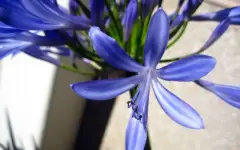 AgapanthusAgapanthus orientalislow water, Central Valley1.07 gal/sq ft in July
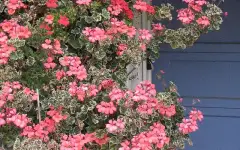 GeraniumsPelargonium x hortorum and cvs.low water, Central Valley1.07 gal/sq ft in July
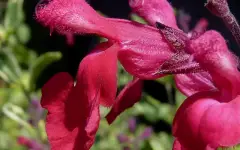 SalviaSalvia greggii ssp., cvs. & hybridslow water, Central Valley1.07 gal/sq ft in July
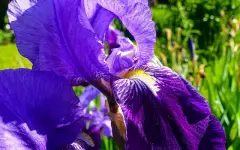 IrisesIris germanicalow water, Central Valley1.07 gal/sq ft in July
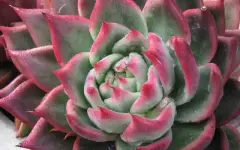 SucculentsEcheveria spp. & cvs.low water, Central Valley1.07 gal/sq ft in July
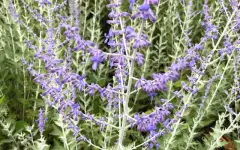 Russian SagePerovskia spp. & cvs.low water, Central Valley1.07 gal/sq ft in July
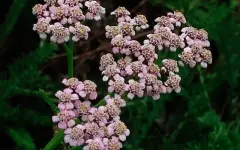 YarrowAchillea millefolium (non-native hybrids)low water, Central Valley1.07 gal/sq ft in July
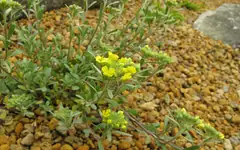 Mountain AlyssumAlyssum montanumlow water, Central Valley1.07 gal/sq ft in July
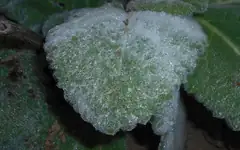 Silver SageSalvia argentealow water, Central Valley1.07 gal/sq ft in July
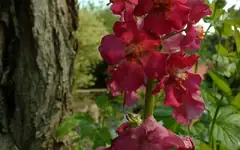 Purple MulleinVerbascum phoeniceumlow water, Central Valley1.07 gal/sq ft in July
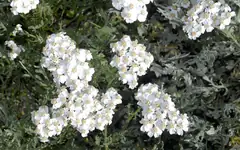 Silvery YarrowAchillea clavennaelow water, Central Valley1.07 gal/sq ft in July
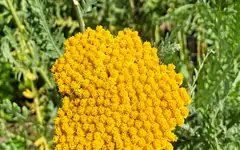 Fern Leaf YarrowAchillea filipendulinalow water, Central Valley1.07 gal/sq ft in July
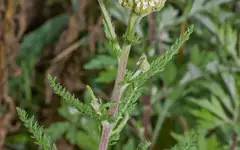 California Native YarrowAchillea millefolium (CA native cultivars)low water, Central Valley1.07 gal/sq ft in July
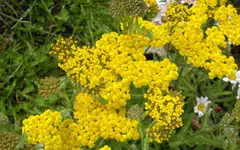 Woolly YarrowAchillea tomentosalow water, Central Valley1.07 gal/sq ft in July
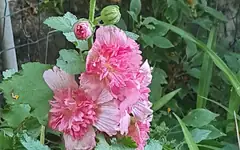 Perennial HollyhockAlcea rosea cvs.low water, Central Valley1.07 gal/sq ft in July
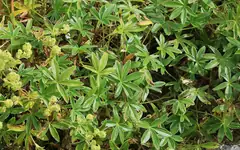 Mountain Lady's MantleAlchemilla alpinalow water, Central Valley1.07 gal/sq ft in July
Turn this into minutes on your water days
Every city page has a calculator that takes strawflower, your sprinkler type and the month, and gives the minutes per water day for that supplier's schedule. Or put it in a zone of the personal watering plan and get all twelve months printed.
Questions people ask
How often should I water strawflower in summer?
In July, established strawflower in loam needs a deep watering about every 14 days in the Central Valley, about every 7 days on the south coast and about every 6 days in the South Inland zone. Sandy soil holds less water, so waterings come closer together. Clay stretches them. Check the soil before each watering and skip one after a soaking rain.
How much water does strawflower need per day?
In July in the Central Valley, established strawflower needs about 0.1 gallons a day for a plant 2 feet across and about 0.4 gallons a day for a plant 4 feet across. Give it in deep waterings spread days apart rather than a little every day, so the whole root zone gets wet.
Does watering for strawflower change across California?
Yes. WUCOLS rates strawflower separately for each of the six California climate zones: low water in the North-Central Coastal zone, low water in the Central Valley zone, moderate water in the South Coastal zone, moderate water in the South Inland zone, not suited to this region in the High and Intermediate Desert zone, not suited to this region in the Low Desert zone. The monthly table above shows how the same rating translates into different gallon amounts as reference evapotranspiration changes.
Can I dry strawflowers?
Yes. The papery bracts keep their shape and color when dried, which is why strawflower is grown for dried arrangements. Fresh cut stems also last a long time in a vase.
Is strawflower an annual or a perennial?
It is a short-lived tender perennial, but many gardeners grow it as an annual. Plants may self-sow, though most cultivars do not come true from seed.
Why should I deadhead strawflower?
Removing spent flowers pushes the plant to make side shoots, which carry more blooms. A light pruning each year also encourages branching.
Is strawflower the same as Helichrysum?
Yes. It was once listed as Helichrysum bracteatum, is now named Xerochrysum bracteatum, and may also be sold as Bracteantha. All three names refer to the same paper daisy.
Does strawflower need staking?
Taller cultivars, which can reach 5 feet, may need stakes to stay upright. Dwarf types around a foot tall suit containers and rock gardens instead.
Is strawflower deer resistant?
Yes, deer tend to leave it alone. It has no known insect problems, though downy mildew can appear.
More plant watering guides
Sources
- WUCOLS IV plant water use classification for Helichrysum bracteatum, the University of California survey California agencies use for landscape plan reviewRead August 23, 2026 on wucols.ucdavis.edu
- Model Water Efficient Landscape Ordinance, adopted text and appendices, effective 2025-01-02 · monthly reference evapotranspiration per city, Appendix CRead August 23, 2026 on water.ca.gov/-/media/DWR-Website/Web-Pages/Programs/Water-Use-And-Efficiency/MWELO-Rulemaking/Final-MWELO-Text-and-Appendices_20250103.pdf
- UC Statewide IPM Program, irrigation scheduling using evapotranspirationRead September 30, 2026 on ipm.ucanr.edu/PMG/GARDEN/ENVIRON/evap.html
- Shaw and Pittenger, Landscape Irrigation System Evaluation and Management, UC Cooperative Extension, 2009Read September 30, 2026 on ucanr.edu/sites/default/files/2013-02/160836.pdf
- Pittenger, Water Management in Gardens and Landscapes, UC Riverside, 2017Read September 30, 2026 on ucanr.edu/sites/default/files/2017-03/258022.pdf