How often to water totara in California
In July in the Central Valley, established totara in loam needs a deep watering about every 8 days: about 55 gallons each time under a 10 foot canopy, about 47 gallons a week. Totara is a long-lived evergreen conifer from New Zealand with stiff, leathery, yew-like leaves. It is conical when young, then spreads, usually reaching 25 to 30 feet in gardens. Its reddish-brown bark peels in flakes as the trunk thickens. It wants sun, a sheltered spot and fertile, moist but well-drained soil, with regular water.
How often to water totara, month by month
Type your city above and the days between waterings and the gallons appear here, worked out from your city's climate table. Or read the figures by climate zone further down.
How this is worked out: established roots fill the top 1.5 feet of soil, and you water again when that soil has dried halfway. Loam soil holds about 1.5 inches of water per foot. Water the whole area under the branches, and skip a watering after a good soaking rain.
How to tell it needs water
- Soil dry 3 inches down beneath the canopy in summer means a young totara is ready for a deep soak
- New growth stalling or browning at the tips in a long hot, dry spell suggests the roots have gone too dry
- Yellowing foliage over soil that stays soggy points to poor drainage, since totara needs moist but well-drained ground
- Bark peeling off in flakes on an older trunk is normal for totara, not a sign of drought
How to water it
- Water slowly under the canopy with drip or a soaker, wetting the soil 12 to 18 inches deep
- Let the top few inches dry between soakings, and never let water stand around the trunk
- Plant in fertile, humus-rich soil that drains well, in full sun and out of strong wind
- Mulch the root zone with leaf mold or compost to keep the soil moist and rich
- Move the drip ring outward as the crown spreads, since mature trees can be as wide as they are tall
Through the seasons
Keep a new totara evenly moist through its first two summers while roots spread. Established trees want regular deep watering through the dry months. It stays evergreen, and female trees may carry pinkish-red fruit in fall. Winter rain usually handles its needs on the coast and in the Central Valley. WUCOLS rates totara moderate water on the north-central coast, in the Central Valley, on the south coast and in South Inland. WUCOLS has not evaluated it for the high desert or the low desert.
In pots
A young totara can live in a large container for several years before planting out. Use a rich, well-drained mix and a pot with drainage holes. During summer, probe the mix with a finger every couple of days, and once it feels dry 2 inches deep, water slowly until it drains. Empty the saucer afterward. Keep the pot in sun but out of strong wind. In winter, water only when the mix begins to dry.
- A year
- 17.11 gal per sq ft
- Reference
- Sacramento climate table
- Counts
- Plant need, before sprinkler losses
Monthly water need by climate zone
Totara: gallons per square foot per month, by WUCOLS climate zone
| Month | N. Coast | C. Valley | S. Coast | S. Inland | Hi Desert | Lo Desert |
|---|---|---|---|---|---|---|
| Jan | 0.37 | 0.4 | 0.78 | 0.78 | – | – |
| Feb | 0.53 | 0.65 | 0.81 | 0.87 | – | – |
| Mar | 0.87 | 1.09 | 1.15 | 1.3 | – | – |
| Apr | 1.18 | 1.52 | 1.4 | 1.61 | – | – |
| May | 1.46 | 2.08 | 1.61 | 1.95 | – | – |
| Jun | 1.61 | 2.48 | 1.74 | 2.29 | – | – |
| Jul | 1.61 | 2.67 | 1.98 | 2.51 | – | – |
| Aug | 1.49 | 2.39 | 1.86 | 2.33 | – | – |
| Sep | 1.24 | 1.8 | 1.49 | 1.86 | – | – |
| Oct | 0.87 | 1.18 | 1.15 | 1.33 | – | – |
| Nov | 0.47 | 0.56 | 0.84 | 0.9 | – | – |
| Dec | 0.31 | 0.34 | 0.65 | 0.68 | – | – |
| Year | 12 | 17.11 | 15.5 | 18.41 | – | – |
How this is worked out: the WUCOLS water rating for each zone times that zone’s climate for the month. A dash means WUCOLS does not rate the plant there. The figures are what the plant uses, before sprinkler losses.
Plants with the same water needs 16
Rated moderate water in the Central Valley, like totara. Plants that drink alike can share one valve and one schedule.
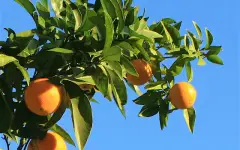 Citrus TreesCitrus spp.moderate water, Central Valley2.67 gal/sq ft in July
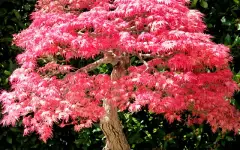 Japanese MapleAcer palmatummoderate water, Central Valley2.67 gal/sq ft in July
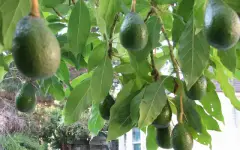 Avocado TreesPersea americanamoderate water, Central Valley2.67 gal/sq ft in July
 Magnolia TreesMagnolia grandiflora ssp. & cvs.moderate water, Central Valley2.67 gal/sq ft in July
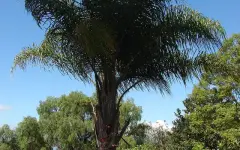 Palm TreesSyagrus romanzoffiana (Arecastrum romanzoffianum)moderate water, Central Valley2.67 gal/sq ft in July
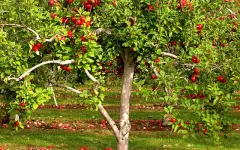 Apple TreesMalus spp. (edible) e.g, 'Anna' (low chill variety for low desert)moderate water, Central Valley2.67 gal/sq ft in July
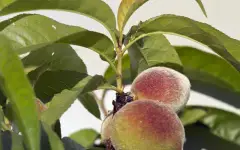 Peach TreesPrunus spp. ediblemoderate water, Central Valley2.67 gal/sq ft in July
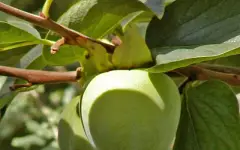 Persimmon TreesDiospyros kakimoderate water, Central Valley2.67 gal/sq ft in July
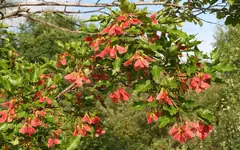 Amur MapleAcer ginnalamoderate water, Central Valley2.67 gal/sq ft in July
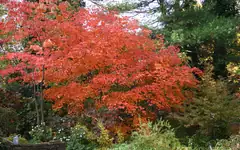 Fernleaf MapleAcer japonicummoderate water, Central Valley2.67 gal/sq ft in July
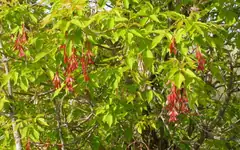 Box ElderAcer negundomoderate water, Central Valley2.67 gal/sq ft in July
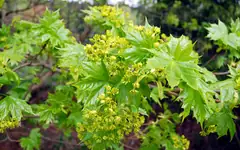 Norway MapleAcer platanoidesmoderate water, Central Valley2.67 gal/sq ft in July
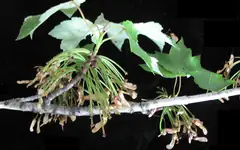 Red MapleAcer rubrummoderate water, Central Valley2.67 gal/sq ft in July
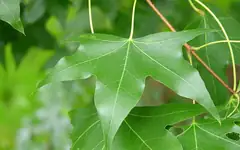 Chinese MapleAcer truncatummoderate water, Central Valley2.67 gal/sq ft in July
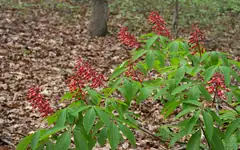 Red BuckeyeAesculus paviamoderate water, Central Valley2.67 gal/sq ft in July
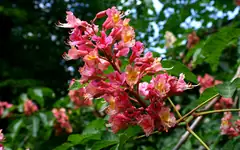 Red HorsechestnutAesculus x carneamoderate water, Central Valley2.67 gal/sq ft in July
Similar plants that need less water 16
Rated lower than totara in the Central Valley. Worth a look for a new bed or a lawn replacement.
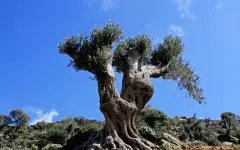 Olive TreesOlea europaea ssp. & cvs.low water, Central Valley1.07 gal/sq ft in July
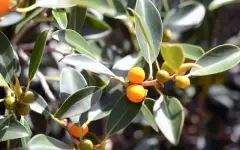 Fig TreesFicus carica ssp. & cvs.low water, Central Valley1.07 gal/sq ft in July
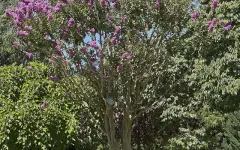 Crape MyrtleLagerstroemia spp., hybrids & cvs.low water, Central Valley1.07 gal/sq ft in July
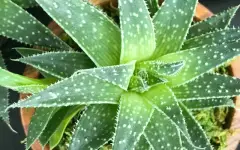 AloeAloe spp. & cvs.low water, Central Valley1.07 gal/sq ft in July
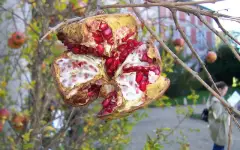 Pomegranate TreesPunica granatumlow water, Central Valley1.07 gal/sq ft in July
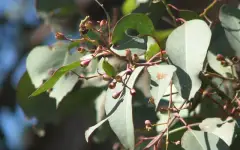 EucalyptusEucalyptus polyanthemoslow water, Central Valley1.07 gal/sq ft in July
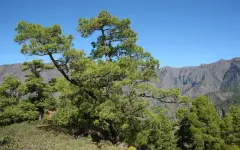 Pine TreesPinus canariensislow water, Central Valley1.07 gal/sq ft in July
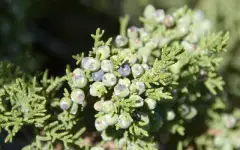 JunipersJuniperus spp. & cvs.low water, Central Valley1.07 gal/sq ft in July
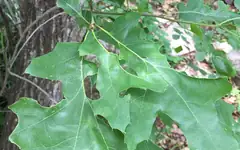 Texas Red OakQuercus buckleyilow water, Central Valley1.07 gal/sq ft in July
 Portuguese OakQuercus faginealow water, Central Valley1.07 gal/sq ft in July
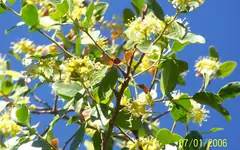 Soapbark TreeQuillaja saponarialow water, Central Valley1.07 gal/sq ft in July
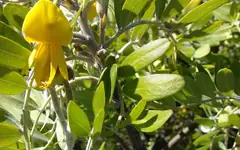 Necklace TreeSophora affinislow water, Central Valley1.07 gal/sq ft in July
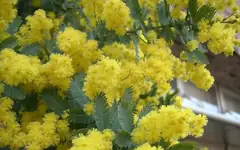 Bailey AcaciaAcacia baileyanalow water, Central Valley1.07 gal/sq ft in July
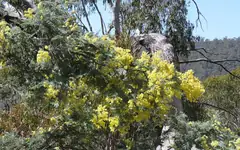 Silver WattleAcacia dealbatalow water, Central Valley1.07 gal/sq ft in July
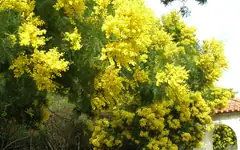 Green WattleAcacia decurrenslow water, Central Valley1.07 gal/sq ft in July
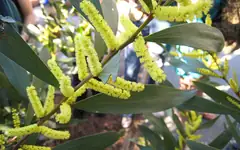 Sydney Golden WattleAcacia longifolialow water, Central Valley1.07 gal/sq ft in July
Turn this into minutes on your water days
Every city page has a calculator that takes totara, your sprinkler type and the month, and gives the minutes per water day for that supplier's schedule. Or put it in a zone of the personal watering plan and get all twelve months printed.
Questions people ask
How often should I water totara in summer?
In July, established totara in loam needs a deep watering about every 8 days in the Central Valley, about every 11 days on the south coast and about every 9 days in the South Inland zone. Sandy soil holds less water, so waterings come closer together. Clay stretches them. Check the soil before each watering and skip one after a soaking rain.
How much water does totara need per day?
In July in the Central Valley, established totara needs about 6.8 gallons a day under a 10 foot canopy and about 27 gallons a day under a 20 foot canopy. Give it in deep waterings spread days apart rather than a little every day, so the whole root zone gets wet.
Does watering for totara change across California?
Yes. WUCOLS rates totara separately for each of the six California climate zones: moderate water in the North-Central Coastal zone, moderate water in the Central Valley zone, moderate water in the South Coastal zone, moderate water in the South Inland zone, not evaluated in the High and Intermediate Desert zone, not evaluated in the Low Desert zone. The monthly table above shows how the same rating translates into different gallon amounts as reference evapotranspiration changes.
How big does a totara get?
In its native New Zealand it can reach 100 feet, but in most gardens it grows 25 to 30 feet tall and about as wide. It is long-lived, so plan for its full size.
Why does my totara have red berries?
Totara trees are male or female, and only females bear fleshy, pinkish-red fruits in fall. Those fruits form only where male and female trees grow near each other.
Is totara bark supposed to peel?
Yes. As the trunk thickens with age, the reddish-brown bark becomes furrowed and comes away in flakes. It is part of the tree's character, not damage.
How cold can totara take?
It is hardy to at least 15 degrees. It still does best in a sunny, sheltered spot.
Does totara need pruning?
Very little. Remove only dead or damaged branches, and let it keep its natural shape, conical at first and spreading later.
Is totara wood rot resistant?
Yes. Its hard, straight-grained wood resists rot and has long been used in New Zealand for fence posts, building supports and Maori carvings.
More plant watering guides
Sources
- WUCOLS IV plant water use classification for Podocarpus totara, the University of California survey California agencies use for landscape plan reviewRead August 23, 2026 on wucols.ucdavis.edu
- Model Water Efficient Landscape Ordinance, adopted text and appendices, effective 2025-01-02 · monthly reference evapotranspiration per city, Appendix CRead August 23, 2026 on water.ca.gov/-/media/DWR-Website/Web-Pages/Programs/Water-Use-And-Efficiency/MWELO-Rulemaking/Final-MWELO-Text-and-Appendices_20250103.pdf
- UC Statewide IPM Program, irrigation scheduling using evapotranspirationRead September 30, 2026 on ipm.ucanr.edu/PMG/GARDEN/ENVIRON/evap.html
- Shaw and Pittenger, Landscape Irrigation System Evaluation and Management, UC Cooperative Extension, 2009Read September 30, 2026 on ucanr.edu/sites/default/files/2013-02/160836.pdf
- Pittenger, Water Management in Gardens and Landscapes, UC Riverside, 2017Read September 30, 2026 on ucanr.edu/sites/default/files/2017-03/258022.pdf