How often to water Amur River grape in California
In July on the north-central coast, established Amur River grape in loam needs a deep watering about every 13 days: about 2.2 gallons each time for a plant 2 feet across, about 1.1 gallons a week. Amur River grape is a very hardy, vigorous deciduous vine that can climb far higher than most garden structures. Its large, rounded to shallowly lobed leaves turn bright red and purple in fall. Small greenish flowers give way to dark purple to black fruit on female plants. It wants full sun and well-drained soil, with water during dry spells.
How often to water Amur River grape, month by month
Type your city above and the days between waterings and the gallons appear here, worked out from your city's climate table. Or read the figures by climate zone further down.
How this is worked out: established roots fill the top 1.5 feet of soil, and you water again when that soil has dried halfway. Loam soil holds about 1.5 inches of water per foot. Water the whole area the plant covers, and skip a watering after a good soaking rain.
How to tell it needs water
- Dry soil 6 inches down at the base of the trunk tells you Amur River grape needs a deep drink
- Leaves wilting by midday through a dry summer spell can indicate the roots are short of water
- White powdery patches on the leaves point to powdery mildew, which water at the roots will not cure
- Gray fuzzy mold on fruit clusters after damp weather points to gray mold, not thirst
- Yellowing leaves while the soil stays soggy can signal poor drainage around the roots
How to water it
- Water Amur River grape at the root zone with drip or a soaker, keeping the leaves and fruit dry
- Soak the soil 18 inches deep and let the top several inches dry before watering again
- Plant in full sun in well-drained, humus-rich soil that is neutral to slightly alkaline
- Mulch the base with compost or wood chips, keeping it a few inches off the trunk
- Extend drip lines along the trellis or fence as the vine spreads and its roots range outward
Through the seasons
Give a new Amur River grape steady, deep watering through its first summer while roots spread. Established vines still need water in dry spells, since rain stops in late spring across most of California. Leaves emerge on reddish stems in spring, small green flowers follow, and fruit ripens to blue-black in early and mid-fall. Leaves color red and purple before dropping, and the bare vine needs little water in winter. On the north-central coast, winter rain usually covers the dormant months. WUCOLS rates Amur River grape moderate water on the north-central coast. WUCOLS has not evaluated it for the Central Valley, the south coast, South Inland, the high desert or the low desert.
In pots
Amur River grape is too vigorous for a pot over the long run, but a young vine can spend a season in a large container. Use a deep pot with drainage holes and a humus-rich mix. During hot spells, test the top 2 inches every few days and water when it feels dry. Let the excess drain, then empty the saucer. Once the leaves fall, the bare vine needs little, so water only to keep the mix from drying out completely.
- A year
- no figure
- Reference
- Sacramento climate table
- Counts
- Plant need, before sprinkler losses
WUCOLS lists Amur River Grape as not evaluated for the Central Valley zone, so no monthly figure is computed here.
Monthly water need by climate zone
Amur River Grape: gallons per square foot per month, by WUCOLS climate zone
| Month | N. Coast | C. Valley | S. Coast | S. Inland | Hi Desert | Lo Desert |
|---|---|---|---|---|---|---|
| Jan | 0.37 | – | – | – | – | – |
| Feb | 0.53 | – | – | – | – | – |
| Mar | 0.87 | – | – | – | – | – |
| Apr | 1.18 | – | – | – | – | – |
| May | 1.46 | – | – | – | – | – |
| Jun | 1.61 | – | – | – | – | – |
| Jul | 1.61 | – | – | – | – | – |
| Aug | 1.49 | – | – | – | – | – |
| Sep | 1.24 | – | – | – | – | – |
| Oct | 0.87 | – | – | – | – | – |
| Nov | 0.47 | – | – | – | – | – |
| Dec | 0.31 | – | – | – | – | – |
| Year | 12 | – | – | – | – | – |
How this is worked out: the WUCOLS water rating for each zone times that zone’s climate for the month. A dash means WUCOLS does not rate the plant there. The figures are what the plant uses, before sprinkler losses.
Plants with the same water needs 10
Rated not evaluated in the Central Valley, like Amur River grape. Plants that drink alike can share one valve and one schedule.
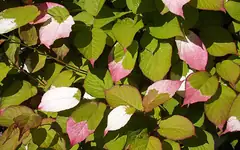 Variegated KiwiActinidia kolomiktanot rated, Central Valleyno Central Valley rating
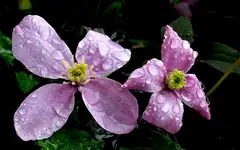 Anemone ClematisClematis montananot rated, Central Valleyno Central Valley rating
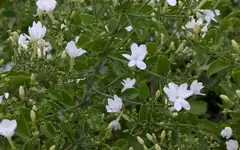 Privet-Leaved JasmineJasminum leratiinot rated, Central Valleyno Central Valley rating
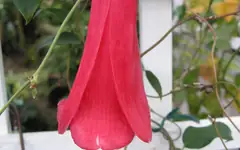 Chilean BellflowerLapageria roseanot rated, Central Valleyno Central Valley rating
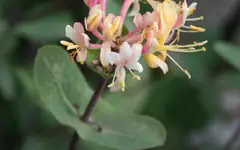 Etruscan HoneysuckleLonicera etruscanot rated, Central Valleyno Central Valley rating
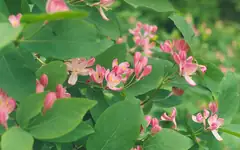 Tatarian HoneysuckleLonicera tataricanot rated, Central Valleyno Central Valley rating
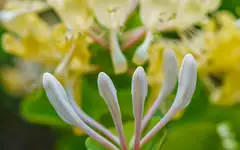 Golden Flame HoneysuckleLonicera x heckrottinot rated, Central Valleyno Central Valley rating
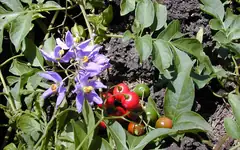 Brazilian NightshadeSolanum seaforthianumnot rated, Central Valleyno Central Valley rating
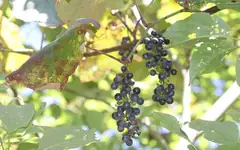 Crimson Glory VineVitis coignetiaenot rated, Central Valleyno Central Valley rating
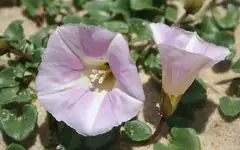 Beach Morning GloryCalystegia soldanellanot rated, Central Valleyno Central Valley rating
Turn this into minutes on your water days
Every city page has a calculator that takes Amur River grape, your sprinkler type and the month, and gives the minutes per water day for that supplier's schedule. Or put it in a zone of the personal watering plan and get all twelve months printed.
Questions people ask
How much water does Amur River grape need per day?
In July on the north-central coast, established Amur River grape needs about 0.2 gallons a day for a plant 2 feet across and about 0.7 gallons a day for a plant 4 feet across. Give it in deep waterings spread days apart rather than a little every day, so the whole root zone gets wet.
Does watering for Amur River grape change across California?
Yes. WUCOLS rates Amur River grape separately for each of the six California climate zones: moderate water in the North-Central Coastal zone, not evaluated in the Central Valley zone, not evaluated in the South Coastal zone, not evaluated in the South Inland zone, not evaluated in the High and Intermediate Desert zone, not evaluated in the Low Desert zone. The monthly table above shows how the same rating translates into different gallon amounts as reference evapotranspiration changes.
Is Amur River grape fruit edible?
Yes. The dark fruit is used for jellies, jams and wine. Only female plants bear it, so a male vine stays fruitless however you water it.
How big does Amur River grape get?
It can climb 50 feet or more in ideal conditions, though that size is rare in gardens. Give it a strong arbor or fence and prune to keep it in bounds.
When should I prune Amur River grape?
Prune the main framework in midwinter while it is dormant. A summer trim can restrict growth if it outgrows its space. Keep watering as before after a summer trim, since the roots still carry the vine.
Why does my Amur River grape have white powder on the leaves?
That is likely powdery mildew, a common disease on grapes. Good air flow and sun help, and watering at the base keeps foliage dry. More water at the roots does not cure it.
Can you overwater Amur River grape?
Yes. It needs well-drained soil, and roots sitting in wet ground can decline. Let the upper soil dry between deep soakings.
Does Amur River grape have good fall color?
Yes. Its leaves turn crimson and purple before they drop. Cut back on water once the leaves fall, since the bare vine uses little.
More plant watering guides
Sources
- WUCOLS IV plant water use classification for Vitis amurensis, the University of California survey California agencies use for landscape plan reviewRead August 23, 2026 on wucols.ucdavis.edu
- Model Water Efficient Landscape Ordinance, adopted text and appendices, effective 2025-01-02 · monthly reference evapotranspiration per city, Appendix CRead August 23, 2026 on water.ca.gov/-/media/DWR-Website/Web-Pages/Programs/Water-Use-And-Efficiency/MWELO-Rulemaking/Final-MWELO-Text-and-Appendices_20250103.pdf
- UC Statewide IPM Program, irrigation scheduling using evapotranspirationRead September 30, 2026 on ipm.ucanr.edu/PMG/GARDEN/ENVIRON/evap.html
- Shaw and Pittenger, Landscape Irrigation System Evaluation and Management, UC Cooperative Extension, 2009Read September 30, 2026 on ucanr.edu/sites/default/files/2013-02/160836.pdf
- Pittenger, Water Management in Gardens and Landscapes, UC Riverside, 2017Read September 30, 2026 on ucanr.edu/sites/default/files/2017-03/258022.pdf