How often to water Tatarian honeysuckle in California
In July on the north-central coast, established Tatarian honeysuckle in loam needs a deep watering about every 13 days: about 2.2 gallons each time for a plant 2 feet across, about 1.1 gallons a week. Tatarian honeysuckle is a dense, deciduous shrub, 8 to 12 feet tall, with tangles of leggy branches. Sweetly fragrant pink, red or white trumpet flowers open in late spring, followed by paired orange to red berries that birds spread widely. It tolerates sun or shade and many soils, and it is considered invasive in several states.
How often to water Tatarian honeysuckle, month by month
Type your city above and the days between waterings and the gallons appear here, worked out from your city's climate table. Or read the figures by climate zone further down.
How this is worked out: established roots fill the top 1.5 feet of soil, and you water again when that soil has dried halfway. Loam soil holds about 1.5 inches of water per foot. Water the whole area the plant covers, and skip a watering after a good soaking rain.
How to tell it needs water
- Soil dry 4 inches down under the shrub means Tatarian honeysuckle is ready for water
- Leaves curling and dropping early in a long, dry summer can point to drought stress
- Clusters of stunted, bunched shoots point to witches' broom from aphids, not thirst
- A white powdery coating on the leaves is powdery mildew, a fungal problem that extra watering does not solve
- Yellowing leaves in soil that stays soggy suggest the roots are too wet
How to water it
- Water Tatarian honeysuckle at the base with drip, keeping the leaves dry
- Soak the soil about a foot deep, then let the upper few inches dry before watering again
- Plant in moist, fertile, loamy soil in sun or part shade, well away from wild land
- Mulch the root area, and pull seedlings that sprout in the mulch
- Prune to keep the shrub in bounds, since a smaller plant needs a smaller watered area
Through the seasons
Give a new Tatarian honeysuckle regular water during its first summer as the roots take hold. Mature shrubs prefer moist, fertile soil but handle occasional dry spells. Flowers open in late spring, berries ripen soon after, and the leaves drop in fall. Because birds spread the seed into wild areas, many gardeners choose a non-invasive shrub instead. On the north-central coast, its WUCOLS rating is moderate water. The other five zones, the Central Valley, the south coast, South Inland, the high desert and the low desert, have not been evaluated.
In pots
A large container keeps Tatarian honeysuckle contained, though birds can still spread its berries. Use a pot with drainage holes and a fertile, loamy mix. In summer, check 2 inches down every few days and water when dry. Empty the saucer after watering. Clip off spent flowers before berries form if you want to limit seedlings. In winter the bare shrub needs only occasional water.
- A year
- no figure
- Reference
- Sacramento climate table
- Counts
- Plant need, before sprinkler losses
WUCOLS lists Tatarian Honeysuckle as not evaluated for the Central Valley zone, so no monthly figure is computed here.
Monthly water need by climate zone
Tatarian Honeysuckle: gallons per square foot per month, by WUCOLS climate zone
| Month | N. Coast | C. Valley | S. Coast | S. Inland | Hi Desert | Lo Desert |
|---|---|---|---|---|---|---|
| Jan | 0.37 | – | – | – | – | – |
| Feb | 0.53 | – | – | – | – | – |
| Mar | 0.87 | – | – | – | – | – |
| Apr | 1.18 | – | – | – | – | – |
| May | 1.46 | – | – | – | – | – |
| Jun | 1.61 | – | – | – | – | – |
| Jul | 1.61 | – | – | – | – | – |
| Aug | 1.49 | – | – | – | – | – |
| Sep | 1.24 | – | – | – | – | – |
| Oct | 0.87 | – | – | – | – | – |
| Nov | 0.47 | – | – | – | – | – |
| Dec | 0.31 | – | – | – | – | – |
| Year | 12 | – | – | – | – | – |
How this is worked out: the WUCOLS water rating for each zone times that zone’s climate for the month. A dash means WUCOLS does not rate the plant there. The figures are what the plant uses, before sprinkler losses.
Plants with the same water needs 10
Rated not evaluated in the Central Valley, like Tatarian honeysuckle. Plants that drink alike can share one valve and one schedule.
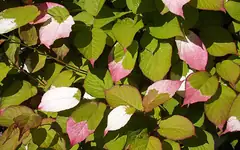 Variegated KiwiActinidia kolomiktanot rated, Central Valleyno Central Valley rating
 Anemone ClematisClematis montananot rated, Central Valleyno Central Valley rating
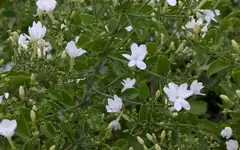 Privet-Leaved JasmineJasminum leratiinot rated, Central Valleyno Central Valley rating
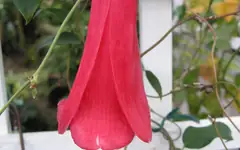 Chilean BellflowerLapageria roseanot rated, Central Valleyno Central Valley rating
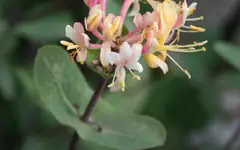 Etruscan HoneysuckleLonicera etruscanot rated, Central Valleyno Central Valley rating
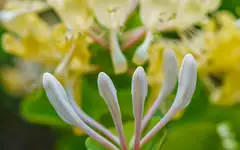 Golden Flame HoneysuckleLonicera x heckrottinot rated, Central Valleyno Central Valley rating
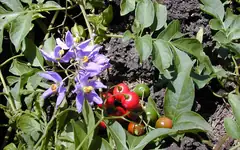 Brazilian NightshadeSolanum seaforthianumnot rated, Central Valleyno Central Valley rating
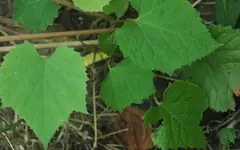 Amur River GrapeVitis amurensisnot rated, Central Valleyno Central Valley rating
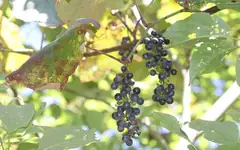 Crimson Glory VineVitis coignetiaenot rated, Central Valleyno Central Valley rating
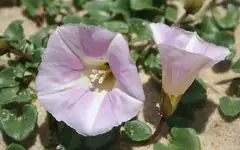 Beach Morning GloryCalystegia soldanellanot rated, Central Valleyno Central Valley rating
Turn this into minutes on your water days
Every city page has a calculator that takes Tatarian honeysuckle, your sprinkler type and the month, and gives the minutes per water day for that supplier's schedule. Or put it in a zone of the personal watering plan and get all twelve months printed.
Questions people ask
How much water does Tatarian honeysuckle need per day?
In July on the north-central coast, established Tatarian honeysuckle needs about 0.2 gallons a day for a plant 2 feet across and about 0.7 gallons a day for a plant 4 feet across. Give it in deep waterings spread days apart rather than a little every day, so the whole root zone gets wet.
Does watering for Tatarian honeysuckle change across California?
Yes. WUCOLS rates Tatarian honeysuckle separately for each of the six California climate zones: moderate water in the North-Central Coastal zone, not evaluated in the Central Valley zone, not evaluated in the South Coastal zone, not evaluated in the South Inland zone, not evaluated in the High and Intermediate Desert zone, not evaluated in the Low Desert zone. The monthly table above shows how the same rating translates into different gallon amounts as reference evapotranspiration changes.
Is Tatarian honeysuckle invasive?
Yes. It self-seeds aggressively, birds spread the berries, and it forms dense thickets that crowd out native plants. Many experts advise against planting it.
What are the bunched, twiggy growths on my honeysuckle?
Those are witches' brooms caused by an aphid. Prune out affected shoots. The problem is not caused by watering.
Is Tatarian honeysuckle a vine?
No. Despite the honeysuckle name, it is an upright, bushy shrub, not a climbing vine. Water it like a shrub, at the base and across its root zone.
Why do honeysuckle seedlings keep appearing?
Birds eat the orange to red berries and drop the seeds far and wide. Pull seedlings while small, and clip spent flowers before berries form.
Can you overwater Tatarian honeysuckle?
Yes. It prefers moist soil that drains, not ground that stays soggy. Let the upper few inches dry between soakings.
More plant watering guides
Sources
- WUCOLS IV plant water use classification for Lonicera tatarica, the University of California survey California agencies use for landscape plan reviewRead August 23, 2026 on wucols.ucdavis.edu
- Model Water Efficient Landscape Ordinance, adopted text and appendices, effective 2025-01-02 · monthly reference evapotranspiration per city, Appendix CRead August 23, 2026 on water.ca.gov/-/media/DWR-Website/Web-Pages/Programs/Water-Use-And-Efficiency/MWELO-Rulemaking/Final-MWELO-Text-and-Appendices_20250103.pdf
- UC Statewide IPM Program, irrigation scheduling using evapotranspirationRead September 30, 2026 on ipm.ucanr.edu/PMG/GARDEN/ENVIRON/evap.html
- Shaw and Pittenger, Landscape Irrigation System Evaluation and Management, UC Cooperative Extension, 2009Read September 30, 2026 on ucanr.edu/sites/default/files/2013-02/160836.pdf
- Pittenger, Water Management in Gardens and Landscapes, UC Riverside, 2017Read September 30, 2026 on ucanr.edu/sites/default/files/2017-03/258022.pdf