How often to water African milk tree in California
In July on the north-central coast, established African milk tree needs about 0.5 gallons a week for a plant 2 feet across. African milk tree is a branching, cactus-like succulent from central Africa. Its upright, three-sided green stems carry short paired spines and small teardrop leaves, and it can reach 6 to 12 feet in a candelabra shape. It needs well-drained soil and sparing water, and its milky sap is poisonous and irritating.
How often to water African milk tree, month by month
Type your city above and the days between waterings and the gallons appear here, worked out from your city's climate table. Or read the figures by climate zone further down.
How this is worked out: the plant’s WUCOLS rating times your city’s climate for the month, over the area the plant covers. Skip a watering after a good soaking rain.
How to tell it needs water
- Soil dry 2 inches down beside the stems signals an African milk tree in the ground can take a soak
- Stems looking thin, wrinkled or soft-sided after a long dry spell can indicate thirst
- Stems browning and scarring where they sit against wet ground point to rot
- Mushy, discolored stem bases over damp soil point to rot from overwatering
How to water it
- Water at the base with a slow hose, keeping stems dry
- Soak several inches down, then let the soil dry before watering again
- Plant in sandy or loamy, fast-draining soil in partial sun
- Keep it out of beds that are watered often
- Give it bright light outdoors, with partial sun rather than harsh exposure
Through the seasons
Water a new plant lightly until roots grow into the soil, then water sparingly. It is evergreen and grows slowly, mostly in warm weather. Cold is its main risk, and wet, cold soil makes rot more likely. In the ground, it suits only the mildest frost-free gardens. WUCOLS rates African milk tree very low water on the south coast. It rates low water on the north-central coast, in South Inland and in the low desert. WUCOLS has not evaluated it for the Central Valley or the high desert.
In pots
African milk tree is most often grown in a pot of cactus or succulent mix. Water when the mix is dry 1 to 2 inches down, letting excess drain out. Water sparingly, since overwatering is the most common cause of trouble. Never leave water in the saucer. Bring pots indoors or under cover before nights drop below about 45 degrees F. Wear gloves when handling it.
- A year
- no figure
- Reference
- Sacramento climate table
- Counts
- Plant need, before sprinkler losses
WUCOLS lists African Milk Tree as not evaluated for the Central Valley zone, so no monthly figure is computed here.
Monthly water need by climate zone
African Milk Tree: gallons per square foot per month, by WUCOLS climate zone
| Month | N. Coast | C. Valley | S. Coast | S. Inland | Hi Desert | Lo Desert |
|---|---|---|---|---|---|---|
| Jan | 0.15 | – | 0.08 | 0.31 | – | 0.31 |
| Feb | 0.21 | – | 0.08 | 0.35 | – | 0.37 |
| Mar | 0.35 | – | 0.11 | 0.52 | – | 0.61 |
| Apr | 0.47 | – | 0.14 | 0.64 | – | 0.78 |
| May | 0.58 | – | 0.16 | 0.78 | – | 0.98 |
| Jun | 0.64 | – | 0.17 | 0.92 | – | 1.12 |
| Jul | 0.64 | – | 0.2 | 1 | – | 1.14 |
| Aug | 0.6 | – | 0.19 | 0.93 | – | 1.04 |
| Sep | 0.5 | – | 0.15 | 0.74 | – | 0.83 |
| Oct | 0.35 | – | 0.11 | 0.53 | – | 0.6 |
| Nov | 0.19 | – | 0.08 | 0.36 | – | 0.38 |
| Dec | 0.12 | – | 0.07 | 0.27 | – | 0.27 |
| Year | 4.8 | – | 1.55 | 7.37 | – | 8.43 |
How this is worked out: the WUCOLS water rating for each zone times that zone’s climate for the month. A dash means WUCOLS does not rate the plant there. The figures are what the plant uses, before sprinkler losses.
Plants with the same water needs 13
Rated not evaluated in the Central Valley, like African milk tree. Plants that drink alike can share one valve and one schedule.
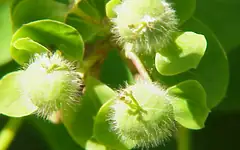 Purple SpurgeEuphorbia dulcisnot rated, Central Valleyno Central Valley rating
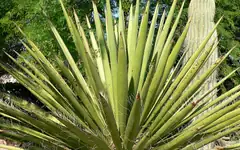 Giant White YuccaYucca faxoniananot rated, Central Valleyno Central Valley rating
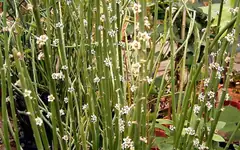 CandelillaEuphorbia antisyphiliticanot rated, Central Valleyno Central Valley rating
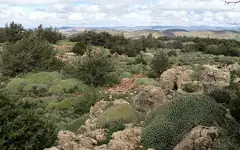 Moroccan MoundEuphorbia resiniferanot rated, Central Valleyno Central Valley rating
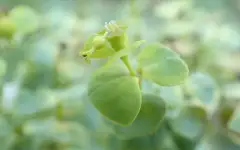 Seguier's SpurgeEuphorbia seguieriana niciciananot rated, Central Valleyno Central Valley rating
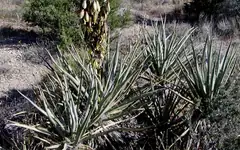 Banana YuccaYucca baccatanot rated, Central Valleyno Central Valley rating
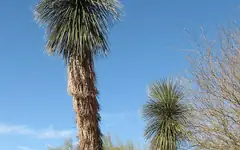 Soaptree YuccaYucca elatanot rated, Central Valleyno Central Valley rating
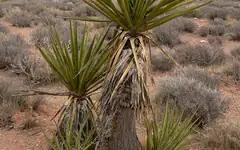 Mojave YuccaYucca schidigera (Yucca californica, Yucca mohavensis)not rated, Central Valleyno Central Valley rating
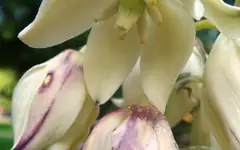 Spanish BayonetYucca aloifolianot rated, Central Valleyno Central Valley rating
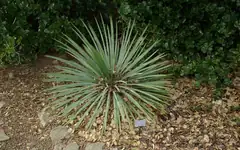 Soapweed YuccaYucca glaucanot rated, Central Valleyno Central Valley rating
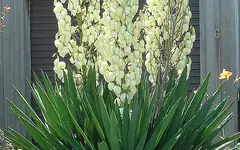 Mountain YuccaYucca schottiinot rated, Central Valleyno Central Valley rating
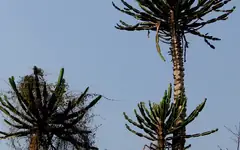 Euphorbia candelabrumEuphorbia candelabrumnot rated, Central Valleyno Central Valley rating
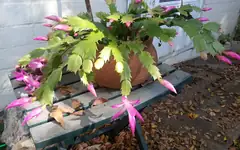 Thanksgiving CactusSchlumbergera (Zygocactus) truncata (truncates)not rated, Central Valleyno Central Valley rating
Turn this into minutes on your water days
Every city page has a calculator that takes African milk tree, your sprinkler type and the month, and gives the minutes per water day for that supplier's schedule. Or put it in a zone of the personal watering plan and get all twelve months printed.
Questions people ask
How much should I water African milk tree in summer?
In July, established African milk tree needs about 0.1 gallons on the south coast and 0.7 gallons in the South Inland zone each week, for a plant 2 feet across. Water deeply and let the top of the soil dry before the next watering. Skip a watering after a soaking rain.
How much water does African milk tree need per day?
In July on the north-central coast, established African milk tree needs about 0.1 gallons a day for a plant 2 feet across and about 0.3 gallons a day for a plant 4 feet across. Give it in deep waterings spread days apart rather than a little every day, so the whole root zone gets wet.
Does watering for African milk tree change across California?
Yes. WUCOLS rates African milk tree separately for each of the six California climate zones: low water in the North-Central Coastal zone, not evaluated in the Central Valley zone, very low water in the South Coastal zone, low water in the South Inland zone, not evaluated in the High and Intermediate Desert zone, low water in the Low Desert zone. The monthly table above shows how the same rating translates into different gallon amounts as reference evapotranspiration changes.
Is African milk tree sap dangerous?
Yes, the milky sap is poisonous and can irritate skin and eyes. Wear gloves and eye protection when pruning. Keep it away from children and pets.
Is African milk tree a cactus?
No, it is a succulent in the spurge family that looks like a cactus. The milky sap is one way to tell. Its spines grow in pairs along the ridges.
How cold can African milk tree get?
It prefers warm temperatures, and outdoor plants should move inside before the cold arrives. Frost damages the stems. Keep it dry in cold weather.
Does African milk tree flower?
It rarely blooms in cultivation. In the wild it has small green or yellow flowers. Grow it for its form.
How do I propagate African milk tree?
Take stem cuttings or use air layering. Let cuttings dry before planting in gritty mix. Water lightly until they root.
More plant watering guides
Sources
- WUCOLS IV plant water use classification for Euphorbia trigona, the University of California survey California agencies use for landscape plan reviewRead August 23, 2026 on wucols.ucdavis.edu
- Model Water Efficient Landscape Ordinance, adopted text and appendices, effective 2025-01-02 · monthly reference evapotranspiration per city, Appendix CRead August 23, 2026 on water.ca.gov/-/media/DWR-Website/Web-Pages/Programs/Water-Use-And-Efficiency/MWELO-Rulemaking/Final-MWELO-Text-and-Appendices_20250103.pdf
- UC Statewide IPM Program, irrigation scheduling using evapotranspirationRead September 30, 2026 on ipm.ucanr.edu/PMG/GARDEN/ENVIRON/evap.html
- Shaw and Pittenger, Landscape Irrigation System Evaluation and Management, UC Cooperative Extension, 2009Read September 30, 2026 on ucanr.edu/sites/default/files/2013-02/160836.pdf
- Pittenger, Water Management in Gardens and Landscapes, UC Riverside, 2017Read September 30, 2026 on ucanr.edu/sites/default/files/2017-03/258022.pdf