How often to water common reed in California
In July on the north-central coast, established common reed needs about 1.1 gallons a week for a plant 2 feet across. Common reed is a tall, rhizome-spreading grass with feathery plumes above arching, blue-green leaves. It thrives in steadily damp ground and sends roots wherever they meet moisture. Left unconfined, those rhizomes travel fast, so containment matters as much as watering.
How often to water common reed, month by month
Type your city above and the days between waterings and the gallons appear here, worked out from your city's climate table. Or read the figures by climate zone further down.
How this is worked out: the plant’s WUCOLS rating times your city’s climate for the month, over the area the plant covers. Skip a watering after a good soaking rain.
How to tell it needs water
- Soil dry several inches down at the clump edge signals common reed needs a deep soak during its growing season
- Water deeper than three feet exceeds the standing-water tolerance documented for common reed
- Wet ground escaping beyond a planting barrier lets rhizomes root and travel into open soil nearby
- Brown, collapsed stems in winter are normal dieback and do not by themselves indicate a watering problem
How to water it
- Install a deep buried root barrier before planting to keep rhizomes from spreading past the bed
- Apply water directly over the root zone with a drip line or soaker hose, keeping soil within the barrier consistently damp
- Mulch around new canes to slow surface drying while the clump establishes its root system
- Skip overhead sprinklers that wet ground outside the barrier, since stem nodes root wherever they touch moist soil
- Widen the wetted area only within the contained bed as the clump fills its allotted space
Through the seasons
New rhizome divisions need steady moisture through their first summer while roots establish in the bed. Once established, the clump dies back to brown stems each winter and sends up fresh canes from its rhizomes in spring. Site irrigation mainly serves the active growing season from spring through fall. Winter rain covers the cool months on the north-central coast, where WUCOLS rates common reed moderate water, matching the south coast rating. WUCOLS has not evaluated it for the Central Valley, South Inland, the high desert or the low desert, so treat those settings with extra caution around containment.
In pots
Common reed can be grown in a large, heavy container to keep its rhizomes from spreading, since a barrier alone will not stop them from escaping garden soil. Check the mix a few inches down often through California summer heat, and keep it consistently damp rather than letting it dry. This species tolerates standing water, so the saucer can stay full during the growing season without harming roots. In winter, let the dormant rhizomes sit cooler and only slightly moist.
- A year
- no figure
- Reference
- Sacramento climate table
- Counts
- Plant need, before sprinkler losses
WUCOLS lists Common Reed as not evaluated for the Central Valley zone, so no monthly figure is computed here.
Monthly water need by climate zone
Common Reed: gallons per square foot per month, by WUCOLS climate zone
| Month | N. Coast | C. Valley | S. Coast | S. Inland | Hi Desert | Lo Desert |
|---|---|---|---|---|---|---|
| Jan | 0.37 | – | 0.78 | – | – | – |
| Feb | 0.53 | – | 0.81 | – | – | – |
| Mar | 0.87 | – | 1.15 | – | – | – |
| Apr | 1.18 | – | 1.4 | – | – | – |
| May | 1.46 | – | 1.61 | – | – | – |
| Jun | 1.61 | – | 1.74 | – | – | – |
| Jul | 1.61 | – | 1.98 | – | – | – |
| Aug | 1.49 | – | 1.86 | – | – | – |
| Sep | 1.24 | – | 1.49 | – | – | – |
| Oct | 0.87 | – | 1.15 | – | – | – |
| Nov | 0.47 | – | 0.84 | – | – | – |
| Dec | 0.31 | – | 0.65 | – | – | – |
| Year | 12 | – | 15.5 | – | – | – |
How this is worked out: the WUCOLS water rating for each zone times that zone’s climate for the month. A dash means WUCOLS does not rate the plant there. The figures are what the plant uses, before sprinkler losses.
Plants with the same water needs 16
Rated not evaluated in the Central Valley, like common reed. Plants that drink alike can share one valve and one schedule.
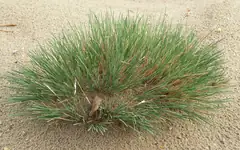 Clublawn GrassCorynephorus canescensnot rated, Central Valleyno Central Valley rating
 Blue Hair GrassKoeleria glaucanot rated, Central Valleyno Central Valley rating
 Golden Wood MilletMilium effusumnot rated, Central Valleyno Central Valley rating
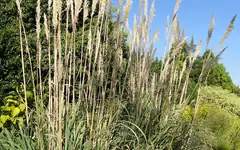 Plume GrassSaccharum ravennae (Erianthus ravennae)not rated, Central Valleyno Central Valley rating
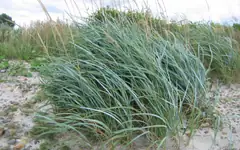 Sand RyegrassLeymus arenariusnot rated, Central Valleyno Central Valley rating
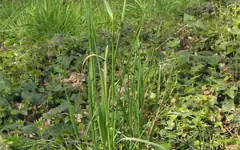 Golden Meadow FoxtailAlopecurus pratensis 'Aureus'not rated, Central Valleyno Central Valley rating
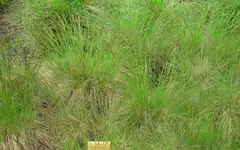 Tufted FescueFestuca amethystinanot rated, Central Valleyno Central Valley rating
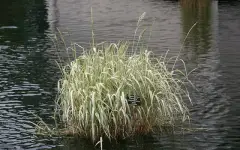 Variegated Water GrassGlyceria maxima 'Variegata'not rated, Central Valleyno Central Valley rating
 Mountain MapleAcer glabrumnot rated, Central Valleyno Central Valley rating
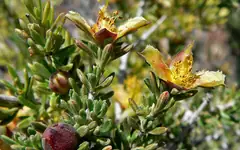 BlackbrushColeogyne ramosissimanot rated, Central Valleyno Central Valley rating
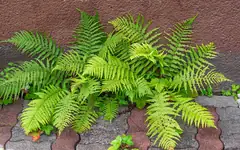 Male FernDryopteris filix-masnot rated, Central Valleyno Central Valley rating
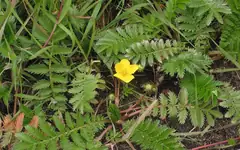 SilverweedPotentilla anserinanot rated, Central Valleyno Central Valley rating
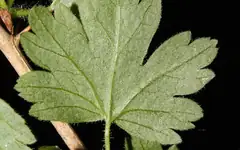 Spreading GooseberryRibes divaricatumnot rated, Central Valleyno Central Valley rating
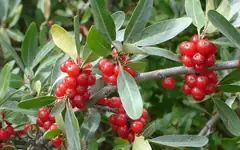 Silver BuffaloberryShepherdia argenteanot rated, Central Valleyno Central Valley rating
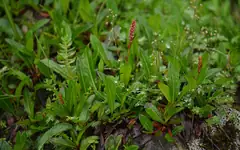 Alpine Meadow RueThalictrum alpinumnot rated, Central Valleyno Central Valley rating
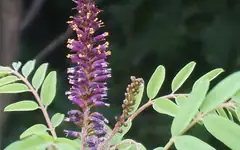 False Indigo BushAmorpha fruticosanot rated, Central Valleyno Central Valley rating
Turn this into minutes on your water days
Every city page has a calculator that takes common reed, your sprinkler type and the month, and gives the minutes per water day for that supplier's schedule. Or put it in a zone of the personal watering plan and get all twelve months printed.
Questions people ask
How much water does common reed need per day?
In July on the north-central coast, established common reed needs about 0.2 gallons a day for a plant 2 feet across and about 0.7 gallons a day for a plant 4 feet across. Give it in deep waterings spread days apart rather than a little every day, so the whole root zone gets wet.
Does watering for common reed change across California?
Yes. WUCOLS rates common reed separately for each of the six California climate zones: moderate water in the North-Central Coastal zone, not evaluated in the Central Valley zone, moderate water in the South Coastal zone, not evaluated in the South Inland zone, not evaluated in the High and Intermediate Desert zone, not evaluated in the Low Desert zone. The monthly table above shows how the same rating translates into different gallon amounts as reference evapotranspiration changes.
Can I grow common reed without it taking over my yard?
Set a deep buried barrier around the planting before adding water, since its rhizomes travel readily through moist soil. Inspect the barrier periodically for cracks or gaps. Confined this way, the clump stays productive without colonizing nearby beds.
Is common reed the same plant found in California wetlands?
California has both native and non-native lineages of this grass, and the non-native form is far more invasive. Nursery stock is not always labeled by lineage, so treat any planting as one that needs active containment.
Why did my common reed look dead over winter?
Top growth normally turns brown and dies back to the rhizomes over winter. Fresh canes rise again once the soil warms in spring. Leave the dead stems standing through winter rather than assuming the plant failed.
Does common reed need boggy soil to survive?
It thrives in constantly wet ground in the wild, but a garden clump inside a barrier can be kept at a more moderate, consistent moisture level. Avoid letting the root zone dry out fully between soakings.
Can I plant common reed near a pond edge?
A pond edge suits its wetland habit, but rhizomes will travel into the surrounding bank without a barrier. Sink a barrier well below the waterline before planting. Check the planting periodically for canes emerging outside the intended area.
Should I cut common reed back in fall?
Many gardeners leave the dry stems and plumes standing through winter for structure, then cut them back before new canes emerge in spring. Cutting earlier removes winter interest without changing root hardiness.
More plant watering guides
Sources
- WUCOLS IV plant water use classification for Phragmites australis, the University of California survey California agencies use for landscape plan reviewRead August 23, 2026 on wucols.ucdavis.edu
- Model Water Efficient Landscape Ordinance, adopted text and appendices, effective 2025-01-02 · monthly reference evapotranspiration per city, Appendix CRead August 23, 2026 on water.ca.gov/-/media/DWR-Website/Web-Pages/Programs/Water-Use-And-Efficiency/MWELO-Rulemaking/Final-MWELO-Text-and-Appendices_20250103.pdf
- UC Statewide IPM Program, irrigation scheduling using evapotranspirationRead September 30, 2026 on ipm.ucanr.edu/PMG/GARDEN/ENVIRON/evap.html
- Shaw and Pittenger, Landscape Irrigation System Evaluation and Management, UC Cooperative Extension, 2009Read September 30, 2026 on ucanr.edu/sites/default/files/2013-02/160836.pdf
- Pittenger, Water Management in Gardens and Landscapes, UC Riverside, 2017Read September 30, 2026 on ucanr.edu/sites/default/files/2017-03/258022.pdf