How often to water sand ryegrass in California
In July on the north-central coast, established sand ryegrass needs about 0.5 gallons a week for a plant 2 feet across. Sand ryegrass, also called lyme grass, is a coastal dune grass with arching, pale blue-gray leaves. Stiff flower spikes stand through summer, aging from blue-gray to buff. It spreads by long rhizomes without limit, which makes it useful for binding sand and hard to contain in a small garden. It wants full sun and well-drained soil.
How often to water sand ryegrass, month by month
Type your city above and the days between waterings and the gallons appear here, worked out from your city's climate table. Or read the figures by climate zone further down.
How this is worked out: the plant’s WUCOLS rating times your city’s climate for the month, over the area the plant covers. Skip a watering after a good soaking rain.
How to tell it needs water
- Soil dry 4 inches down in the planting means sand ryegrass is ready for a soak
- Blue-gray leaves rolling tight and browning at the tips in summer heat can show the roots are dry
- Old leaves browning in autumn are normal and can be trimmed away
- Yellowing, collapsing clumps in soil that stays wet point to poor drainage
- New shoots appearing far from the original clump show its rhizomes spreading, not a watering problem
How to water it
- Water sand ryegrass at the base of the clumps with drip or a soaker
- Soak the soil about 8 inches deep, then let it dry several inches down before watering again
- Plant in full sun in sandy or other well-drained soil, ideally on a slope or bank
- Contain the rhizomes with a deep root barrier, or plant it where its spread is welcome
- Expand irrigation only as far as you want the planting to go
Through the seasons
Water new sand ryegrass regularly through its first summer while rhizomes spread. Established plantings handle dry periods on the north-central coast, while warmer inland gardens need steadier soil checks. The leaves are evergreen to semi-evergreen, and flower spikes stand through summer. Cut back dead growth in autumn. Coastal winter rain usually covers the cool months. WUCOLS rates sand ryegrass low water on the north-central coast and moderate water on the south coast and in South Inland. WUCOLS has not evaluated it for the Central Valley, the high desert or the low desert.
In pots
A large container is the easiest way to enjoy sand ryegrass without its spreading rhizomes. Use a pot with drainage holes and a sandy, fast-draining mix. In summer, check 2 inches down every few days and water when that layer is dry. Let it drain fully and empty the saucer. Trim out dead leaves in fall, and through winter water only once the mix has dried.
- A year
- no figure
- Reference
- Sacramento climate table
- Counts
- Plant need, before sprinkler losses
WUCOLS lists Sand Ryegrass as not evaluated for the Central Valley zone, so no monthly figure is computed here.
Monthly water need by climate zone
Sand Ryegrass: gallons per square foot per month, by WUCOLS climate zone
| Month | N. Coast | C. Valley | S. Coast | S. Inland | Hi Desert | Lo Desert |
|---|---|---|---|---|---|---|
| Jan | 0.15 | – | 0.78 | 0.78 | – | – |
| Feb | 0.21 | – | 0.81 | 0.87 | – | – |
| Mar | 0.35 | – | 1.15 | 1.3 | – | – |
| Apr | 0.47 | – | 1.4 | 1.61 | – | – |
| May | 0.58 | – | 1.61 | 1.95 | – | – |
| Jun | 0.64 | – | 1.74 | 2.29 | – | – |
| Jul | 0.64 | – | 1.98 | 2.51 | – | – |
| Aug | 0.6 | – | 1.86 | 2.33 | – | – |
| Sep | 0.5 | – | 1.49 | 1.86 | – | – |
| Oct | 0.35 | – | 1.15 | 1.33 | – | – |
| Nov | 0.19 | – | 0.84 | 0.9 | – | – |
| Dec | 0.12 | – | 0.65 | 0.68 | – | – |
| Year | 4.8 | – | 15.5 | 18.41 | – | – |
How this is worked out: the WUCOLS water rating for each zone times that zone’s climate for the month. A dash means WUCOLS does not rate the plant there. The figures are what the plant uses, before sprinkler losses.
Plants with the same water needs 8
Rated not evaluated in the Central Valley, like sand ryegrass. Plants that drink alike can share one valve and one schedule.
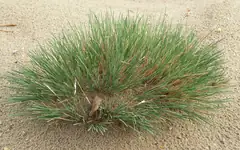 Clublawn GrassCorynephorus canescensnot rated, Central Valleyno Central Valley rating
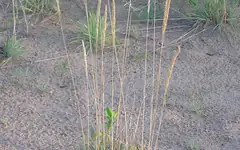 Blue Hair GrassKoeleria glaucanot rated, Central Valleyno Central Valley rating
 Golden Wood MilletMilium effusumnot rated, Central Valleyno Central Valley rating
 Common ReedPhragmites australisnot rated, Central Valleyno Central Valley rating
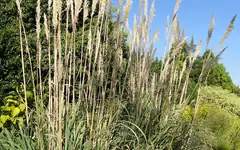 Plume GrassSaccharum ravennae (Erianthus ravennae)not rated, Central Valleyno Central Valley rating
 Golden Meadow FoxtailAlopecurus pratensis 'Aureus'not rated, Central Valleyno Central Valley rating
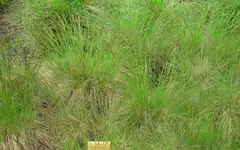 Tufted FescueFestuca amethystinanot rated, Central Valleyno Central Valley rating
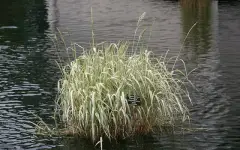 Variegated Water GrassGlyceria maxima 'Variegata'not rated, Central Valleyno Central Valley rating
Turn this into minutes on your water days
Every city page has a calculator that takes sand ryegrass, your sprinkler type and the month, and gives the minutes per water day for that supplier's schedule. Or put it in a zone of the personal watering plan and get all twelve months printed.
Questions people ask
How much should I water sand ryegrass in summer?
In July, established sand ryegrass needs about 1.4 gallons on the south coast and 1.8 gallons in the South Inland zone each week, for a plant 2 feet across. Water deeply and let the top of the soil dry before the next watering. Skip a watering after a soaking rain.
How much water does sand ryegrass need per day?
In July on the north-central coast, established sand ryegrass needs about 0.1 gallons a day for a plant 2 feet across and about 0.3 gallons a day for a plant 4 feet across. Give it in deep waterings spread days apart rather than a little every day, so the whole root zone gets wet.
Does watering for sand ryegrass change across California?
Yes. WUCOLS rates sand ryegrass separately for each of the six California climate zones: low water in the North-Central Coastal zone, not evaluated in the Central Valley zone, moderate water in the South Coastal zone, moderate water in the South Inland zone, not evaluated in the High and Intermediate Desert zone, not evaluated in the Low Desert zone. The monthly table above shows how the same rating translates into different gallon amounts as reference evapotranspiration changes.
Is sand ryegrass invasive?
Its rhizomes spread indefinitely, so it is hard to contain in a small garden. Use it on banks, slopes or dunes where spread is welcome. Pull runners promptly at the edges.
Can sand ryegrass hold a slope?
Yes. Its long rhizomes bind sand and soil, which is why it is planted to stabilize dunes and banks. Water new plantings until they root in.
Should I cut back sand ryegrass?
Trim away dead leaves and old flower stems in autumn to tidy the planting. The blue-gray foliage stays through much of the year.
Does sand ryegrass need full sun?
Yes, it grows best in full sun. A sunny, open site also dries the soil faster, so check moisture through summer.
Can you overwater sand ryegrass?
Yes. It needs well-drained soil, and clumps sitting in wet ground can rot. Let the soil dry several inches down between soakings.
More plant watering guides
Sources
- WUCOLS IV plant water use classification for Leymus arenarius, the University of California survey California agencies use for landscape plan reviewRead August 23, 2026 on wucols.ucdavis.edu
- Model Water Efficient Landscape Ordinance, adopted text and appendices, effective 2025-01-02 · monthly reference evapotranspiration per city, Appendix CRead August 23, 2026 on water.ca.gov/-/media/DWR-Website/Web-Pages/Programs/Water-Use-And-Efficiency/MWELO-Rulemaking/Final-MWELO-Text-and-Appendices_20250103.pdf
- UC Statewide IPM Program, irrigation scheduling using evapotranspirationRead September 30, 2026 on ipm.ucanr.edu/PMG/GARDEN/ENVIRON/evap.html
- Shaw and Pittenger, Landscape Irrigation System Evaluation and Management, UC Cooperative Extension, 2009Read September 30, 2026 on ucanr.edu/sites/default/files/2013-02/160836.pdf
- Pittenger, Water Management in Gardens and Landscapes, UC Riverside, 2017Read September 30, 2026 on ucanr.edu/sites/default/files/2017-03/258022.pdf