How often to water hops in California
In July in the Central Valley, established hops in loam need a deep watering about every 8 days: about 2.2 gallons each time for a plant 2 feet across, about 1.9 gallons a week. Hops are fast perennial climbers that die to the ground each winter and regrow from the roots in spring. The rough bines can climb 18 to 25 feet in a season. Plants grown for cones want steady moisture while they grow, moist but never continually wet. Needs swing by region, from low water on the north-central coast to high water in South Inland.
How often to water hops, month by month
Type your city above and the days between waterings and the gallons appear here, worked out from your city's climate table. Or read the figures by climate zone further down.
How this is worked out: established roots fill the top 1.5 feet of soil, and you water again when that soil has dried halfway. Loam soil holds about 1.5 inches of water per foot. Water the whole area the plant covers, and skip a watering after a good soaking rain.
How to tell it needs water
- Soil dry a few inches down at the crown during summer growth means hops are ready for a deep soak
- Leaves wilting high on the bines in afternoon heat, with dry soil at the crown, point to a root zone that has run dry
- Ground that stays soggy around the crown for days means too much water, since hops want moist but not continually wet soil
- White powdery patches on the leaves point to powdery mildew, which overhead watering encourages
- Crinkled leaves with sticky honeydew or black sooty mold point to aphids rather than a watering problem
How to water it
- Water hops at the base with drip line, and never run sprinklers over the leaves
- Soak the root zone deeply, then let the soil dry slightly before the next soak
- Plant in well-drained sandy or silt loam, in full sun with good air movement around the bines
- Cover the planting with compost and mulch to hold moisture through the long growing season
- Give a first-year plant the steadiest watering of its life, since that year builds the roots
Through the seasons
Shoots emerge in spring and race up their supports through summer. Cones ripen from mid-August into September, and the bines die back in fall. The dormant crown survives winter underground. A first-year plant needs the most careful watering while its roots develop. WUCOLS rates hops low water on the north-central coast. They rate moderate water in the Central Valley. They rate high water in South Inland, where summer soil checks matter most. WUCOLS marks hops as not suited to the south coast. WUCOLS has not evaluated them for the high desert or the low desert. Winter rain covers the dormant months on the north-central coast and in the Central Valley.
In pots
Hops can grow in a large, deep container if a tall support stands beside it. A pot holds far less moisture than open ground for such a fast climber, so watch it closely. Check the mix 2 inches down daily once the bines are racing up their strings in summer heat. Water until it runs from the drainage holes, then empty the saucer. Moist but not soggy is the target. Once the stems have withered for winter, give the resting roots only a drink when the mix is dry.
- A year
- 17.11 gal per sq ft
- Reference
- Sacramento climate table
- Counts
- Plant need, before sprinkler losses
Monthly water need by climate zone
Hops: gallons per square foot per month, by WUCOLS climate zone
| Month | N. Coast | C. Valley | S. Coast | S. Inland | Hi Desert | Lo Desert |
|---|---|---|---|---|---|---|
| Jan | 0.15 | 0.4 | – | 1.24 | – | – |
| Feb | 0.21 | 0.65 | – | 1.39 | – | – |
| Mar | 0.35 | 1.09 | – | 2.08 | – | – |
| Apr | 0.47 | 1.52 | – | 2.58 | – | – |
| May | 0.58 | 2.08 | – | 3.12 | – | – |
| Jun | 0.64 | 2.48 | – | 3.67 | – | – |
| Jul | 0.64 | 2.67 | – | 4.02 | – | – |
| Aug | 0.6 | 2.39 | – | 3.72 | – | – |
| Sep | 0.5 | 1.8 | – | 2.98 | – | – |
| Oct | 0.35 | 1.18 | – | 2.13 | – | – |
| Nov | 0.19 | 0.56 | – | 1.44 | – | – |
| Dec | 0.12 | 0.34 | – | 1.09 | – | – |
| Year | 4.8 | 17.11 | – | 29.46 | – | – |
How this is worked out: the WUCOLS water rating for each zone times that zone’s climate for the month. A dash means WUCOLS does not rate the plant there. The figures are what the plant uses, before sprinkler losses.
Plants with the same water needs 16
Rated moderate water in the Central Valley, like hops. Plants that drink alike can share one valve and one schedule.
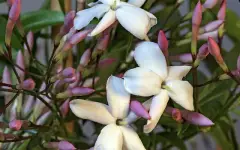 JasmineJasminum polyanthummoderate water, Central Valley2.67 gal/sq ft in July
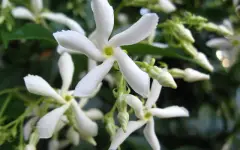 Star JasmineTrachelospermum jasminoides and cvs.moderate water, Central Valley2.67 gal/sq ft in July
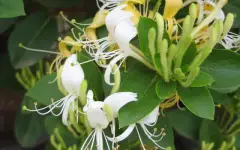 HoneysuckleLonicera japonicamoderate water, Central Valley2.67 gal/sq ft in July
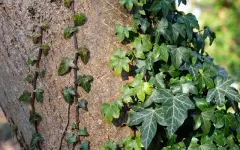 IvyHedera helixmoderate water, Central Valley2.67 gal/sq ft in July
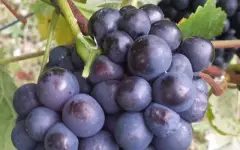 GrapevinesVitis vinifera ssp. & cvs.moderate water, Central Valley2.67 gal/sq ft in July
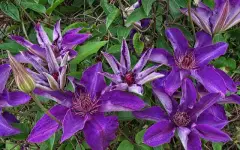 ClematisClematis & ssp., hybrids & cvs.moderate water, Central Valley2.67 gal/sq ft in July
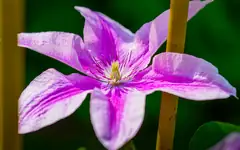 Evergreen ClematisClematis armandiimoderate water, Central Valley2.67 gal/sq ft in July
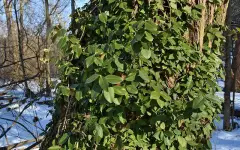 Winter CreeperEuonymus fortunei radicansmoderate water, Central Valley2.67 gal/sq ft in July
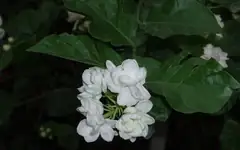 Arabian JasmineJasminum sambacmoderate water, Central Valley2.67 gal/sq ft in July
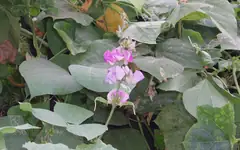 Hyacinth BeanLablab purpureus (Dolichos lablab)moderate water, Central Valley2.67 gal/sq ft in July
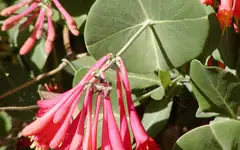 Trumpet HoneysuckleLonicera sempervirensmoderate water, Central Valley2.67 gal/sq ft in July
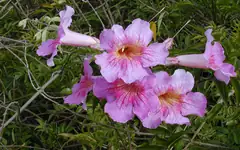 Pink Trumpet VinePodranea ricasolianamoderate water, Central Valley2.67 gal/sq ft in July
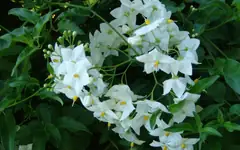 Potato VineSolanum laxum (jasminoides)moderate water, Central Valley2.67 gal/sq ft in July
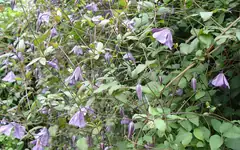 Italian ClematisClematis viticellamoderate water, Central Valley2.67 gal/sq ft in July
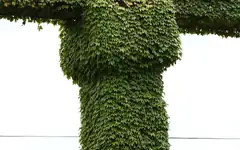 Boston IvyParthenocissus tricuspidatamoderate water, Central Valley2.67 gal/sq ft in July
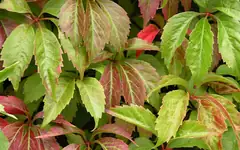 Virginia CreeperParthenocissus quinquefolia ssp. & cvs.moderate water, Central Valley2.67 gal/sq ft in July
Similar plants that need less water 9
Rated lower than hops in the Central Valley. Worth a look for a new bed or a lawn replacement.
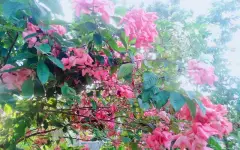 BougainvilleaBougainvillea & spp. & cvs.low water, Central Valley1.07 gal/sq ft in July
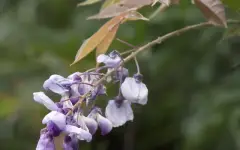 WisteriaWisteria spp. & cvs.low water, Central Valley1.07 gal/sq ft in July
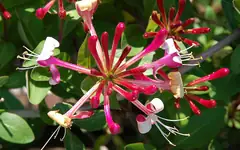 Flowering WoodbineLonicera periclymenumlow water, Central Valley1.07 gal/sq ft in July
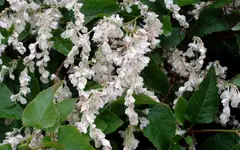 FleeceflowerFallopia baldschuanica (Polygonum aubertii)low water, Central Valley1.07 gal/sq ft in July
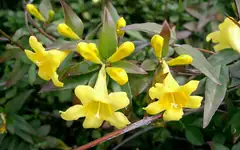 Carolina JessamineGelsemium sempervirenslow water, Central Valley1.07 gal/sq ft in July
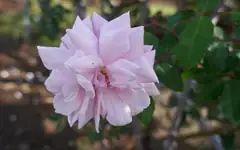 Cecile Brunner RoseRosa 'Cecile Brunner'low water, Central Valley1.07 gal/sq ft in July
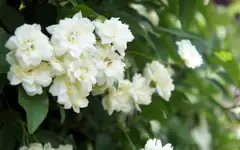 Lady Banks RoseRosa banksiaelow water, Central Valley1.07 gal/sq ft in July
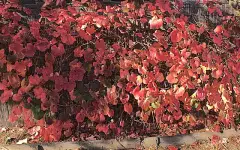 Roger's Red GrapeVitis 'Roger's Red'low water, Central Valley1.07 gal/sq ft in July
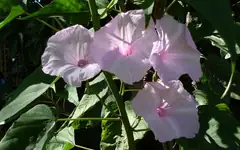 Blue Dawn Morning GloryIpomoea acuminatalow water, Central Valley1.07 gal/sq ft in July
Turn this into minutes on your water days
Every city page has a calculator that takes hops, your sprinkler type and the month, and gives the minutes per water day for that supplier's schedule. Or put it in a zone of the personal watering plan and get all twelve months printed.
Questions people ask
How often should I water hops in summer?
In July, established hops in loam need a deep watering about every 8 days in the Central Valley and about every 5 days in the South Inland zone. Sandy soil holds less water, so waterings come closer together. Clay stretches them. Check the soil before each watering and skip one after a soaking rain.
How much water do hops need per day?
In July in the Central Valley, established hops need about 0.3 gallons a day for a plant 2 feet across and about 1.1 gallons a day for a plant 4 feet across. Give it in deep waterings spread days apart rather than a little every day, so the whole root zone gets wet.
Does watering for hops change across California?
Yes. WUCOLS rates hops separately for each of the six California climate zones: low water in the North-Central Coastal zone, moderate water in the Central Valley zone, not suited to this region in the South Coastal zone, high water in the South Inland zone, not evaluated in the High and Intermediate Desert zone, not evaluated in the Low Desert zone. The monthly table above shows how the same rating translates into different gallon amounts as reference evapotranspiration changes.
Are hops poisonous to dogs?
Yes. Hop flowers and leaves are listed as poisonous to dogs, with signs such as panting, high body temperature and seizures, and poisoning can be fatal. Keep fresh and dried cones away from pets.
Do I need a male hop plant?
No. Only female plants make the cones used in brewing, and they form cones without a male nearby. Seed needs both sexes, but brewers want the cones.
Why do hops make my skin itch?
The bines climb with stiff hooked hairs, and contact can irritate skin or cause a rash in some people. Wear gloves and long sleeves when you train or harvest them.
When are hops ready to harvest?
Cones are usually ready from mid-August through September. Ripe cones feel dry, papery and springy, with golden yellow lupulin inside. Soft cones that stay compressed when squeezed need more time.
Should I cut hops back in winter?
Yes, once the bines have died back. Leave first-year bines in place until they die off in winter, then cut the dead stems down. The roots stay alive and send up new shoots in spring.
Which hops suit foggy coastal gardens?
UC Master Gardeners name Fuggle, Cascade and Nugget as better suited to fog and wind. Cascade also resists powdery mildew. Give any variety full sun and good air movement.
More plant watering guides
Sources
- WUCOLS IV plant water use classification for Humulus lupulus, the University of California survey California agencies use for landscape plan reviewRead August 23, 2026 on wucols.ucdavis.edu
- Model Water Efficient Landscape Ordinance, adopted text and appendices, effective 2025-01-02 · monthly reference evapotranspiration per city, Appendix CRead August 23, 2026 on water.ca.gov/-/media/DWR-Website/Web-Pages/Programs/Water-Use-And-Efficiency/MWELO-Rulemaking/Final-MWELO-Text-and-Appendices_20250103.pdf
- UC Statewide IPM Program, irrigation scheduling using evapotranspirationRead September 30, 2026 on ipm.ucanr.edu/PMG/GARDEN/ENVIRON/evap.html
- Shaw and Pittenger, Landscape Irrigation System Evaluation and Management, UC Cooperative Extension, 2009Read September 30, 2026 on ucanr.edu/sites/default/files/2013-02/160836.pdf
- Pittenger, Water Management in Gardens and Landscapes, UC Riverside, 2017Read September 30, 2026 on ucanr.edu/sites/default/files/2017-03/258022.pdf