How often to water Italian arum in California
In July in the Central Valley, established Italian arum in loam needs a deep soak only about once a month or less: about 1.5 gallons each time for a plant 2 feet across. Italian arum grows from spreading tubers and sends up glossy, arrow-shaped leaves with pale veins in fall, keeping them through winter. Creamy white spathes open in spring, then the leaves wither and spikes of orange-red berries stand through summer. It grows on winter rain and needs almost no summer water.
How often to water Italian arum, month by month
Type your city above and the days between waterings and the gallons appear here, worked out from your city's climate table. Or read the figures by climate zone further down.
How this is worked out: established roots fill the top 1 foot of soil, and you water again when that soil has dried halfway. Loam soil holds about 1.5 inches of water per foot. Water the whole area the plant covers, and skip a watering after a good soaking rain.
How to tell it needs water
- Leaves wilting in a dry winter spell, with soil dry 2 inches down, signal that a growing clump needs a soak
- Leaves yellowing and collapsing in late spring after flowering mark the start of summer dormancy, not thirst
- Bare ground with standing berry spikes in summer is normal for this dormant plant and needs no water
- A clump spreading fast into nearby beds under regular irrigation suggests it is getting water it does not need
How to water it
- Water only while the leaves are up, from fall through spring, and only when winter rain falls short
- Soak the soil about 6 inches deep around the clump, then let it dry before the next soak
- Turn off irrigation to the bed once the leaves wither in late spring
- Plant it in part shade in soil rich in organic matter, well away from creeks and wild land where it can escape
- Keep drip lines from extending past the clump so spreading tubers find no extra water
Through the seasons
Italian arum grows on winter rain. New tubers need moist soil through their first fall and winter while roots form. Leaves appear in early fall, flowers follow in April and May, and the foliage withers by early summer, leaving only berry spikes. Dormant tubers need no summer water. Winter rain covers the cool months on the coast and in the Central Valley, so water only in a dry spell. WUCOLS rates Italian arum very low water on the north-central coast, in the Central Valley, on the south coast and in South Inland. WUCOLS has not evaluated it for the high desert or the low desert.
In pots
A container is the safest way to grow Italian arum, since it keeps the spreading tubers in check. Check the mix an inch or two down from fall through spring, and water when it dries. Let water run from the drainage holes, then empty the saucer. Once the leaves die back in late spring, let the pot sit nearly dry through the summer heat. Cut off the berry spikes before they ripen so seeds do not escape the pot.
- A year
- 1.71 gal per sq ft
- Reference
- Sacramento climate table
- Counts
- Plant need, before sprinkler losses
Monthly water need by climate zone
Italian Arum: gallons per square foot per month, by WUCOLS climate zone
| Month | N. Coast | C. Valley | S. Coast | S. Inland | Hi Desert | Lo Desert |
|---|---|---|---|---|---|---|
| Jan | 0.04 | 0.04 | 0.08 | 0.08 | – | – |
| Feb | 0.05 | 0.07 | 0.08 | 0.09 | – | – |
| Mar | 0.09 | 0.11 | 0.11 | 0.13 | – | – |
| Apr | 0.12 | 0.15 | 0.14 | 0.16 | – | – |
| May | 0.15 | 0.21 | 0.16 | 0.2 | – | – |
| Jun | 0.16 | 0.25 | 0.17 | 0.23 | – | – |
| Jul | 0.16 | 0.27 | 0.2 | 0.25 | – | – |
| Aug | 0.15 | 0.24 | 0.19 | 0.23 | – | – |
| Sep | 0.12 | 0.18 | 0.15 | 0.19 | – | – |
| Oct | 0.09 | 0.12 | 0.11 | 0.13 | – | – |
| Nov | 0.05 | 0.06 | 0.08 | 0.09 | – | – |
| Dec | 0.03 | 0.03 | 0.07 | 0.07 | – | – |
| Year | 1.2 | 1.71 | 1.55 | 1.84 | – | – |
How this is worked out: the WUCOLS water rating for each zone times that zone’s climate for the month. A dash means WUCOLS does not rate the plant there. The figures are what the plant uses, before sprinkler losses.
Plants with the same water needs 6
Rated very low water in the Central Valley, like Italian arum. Plants that drink alike can share one valve and one schedule.
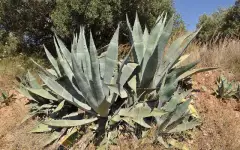 AgaveAgave americana (and thick-leaved relatives)very low water, Central Valley0.27 gal/sq ft in July
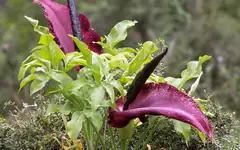 Voodoo LilyDracunculus vulgarisvery low water, Central Valley0.27 gal/sq ft in July
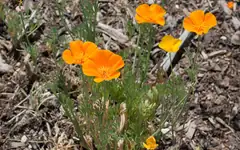 California PoppyEschscholzia californicavery low water, Central Valley0.27 gal/sq ft in July
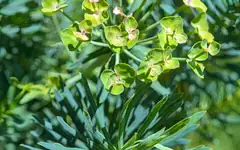 Cypress SpurgeEuphorbia cyparissiasvery low water, Central Valley0.27 gal/sq ft in July
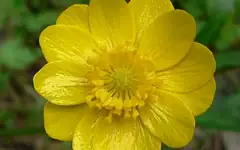 California ButtercupRanunculus californicusvery low water, Central Valley0.27 gal/sq ft in July
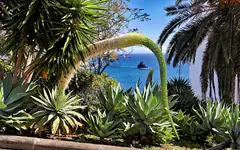 Fox Tail AgaveAgave attenuata (and thin-leaved relatives)very low water, Central Valley0.27 gal/sq ft in July
Turn this into minutes on your water days
Every city page has a calculator that takes Italian arum, your sprinkler type and the month, and gives the minutes per water day for that supplier's schedule. Or put it in a zone of the personal watering plan and get all twelve months printed.
Questions people ask
How often should I water Italian arum in summer?
In July, established Italian arum in loam needs a deep watering about once a month or less in the Central Valley, about once a month or less on the south coast and about once a month or less in the South Inland zone. Sandy soil holds less water, so waterings come closer together. Clay stretches them. Check the soil before each watering and skip one after a soaking rain.
How much water does Italian arum need per day?
In July in the Central Valley, established Italian arum needs about 0.0 gallons a day for a plant 2 feet across and about 0.1 gallons a day for a plant 4 feet across. Give it in deep waterings spread days apart rather than a little every day, so the whole root zone gets wet.
Does watering for Italian arum change across California?
Yes. WUCOLS rates Italian arum separately for each of the six California climate zones: very low water in the North-Central Coastal zone, very low water in the Central Valley zone, very low water in the South Coastal zone, very low water in the South Inland zone, not evaluated in the High and Intermediate Desert zone, not evaluated in the Low Desert zone. The monthly table above shows how the same rating translates into different gallon amounts as reference evapotranspiration changes.
Is Italian arum invasive in California?
It can be. It spreads by tubers and seed and is very hard to remove. California invasive plant experts list it on a watch list and discourage planting it. Grow it in a container, or choose another plant near creeks and wild land.
Is Italian arum poisonous?
Yes. All parts are poisonous if eaten, and the sap can irritate skin. Wear gloves when dividing or pulling it, and keep the bright berries away from children and pets.
Why does my Italian arum disappear in summer?
It goes dormant after flowering, and the leaves wither by early summer. Only the stalks of orange-red berries remain. New leaves return in fall, so the bare spot needs no water.
How do I get rid of Italian arum?
Dig out the whole clump, including deep tubers and small offsets, and bag every piece for the trash rather than the compost. Remove berry spikes before they ripen. Expect to dig again, since missed tubers resprout and herbicides do little.
Can Italian arum grow in wet soil?
Yes. It tolerates wet soil and prefers moist, humus-rich ground like its native woodland and streamside homes. That same tolerance lets it escape into creeks and wetlands, so keep it well away from them.
More plant watering guides
Sources
- WUCOLS IV plant water use classification for Arum italicum, the University of California survey California agencies use for landscape plan reviewRead August 23, 2026 on wucols.ucdavis.edu
- Model Water Efficient Landscape Ordinance, adopted text and appendices, effective 2025-01-02 · monthly reference evapotranspiration per city, Appendix CRead August 23, 2026 on water.ca.gov/-/media/DWR-Website/Web-Pages/Programs/Water-Use-And-Efficiency/MWELO-Rulemaking/Final-MWELO-Text-and-Appendices_20250103.pdf
- UC Statewide IPM Program, irrigation scheduling using evapotranspirationRead September 30, 2026 on ipm.ucanr.edu/PMG/GARDEN/ENVIRON/evap.html
- Shaw and Pittenger, Landscape Irrigation System Evaluation and Management, UC Cooperative Extension, 2009Read September 30, 2026 on ucanr.edu/sites/default/files/2013-02/160836.pdf
- Pittenger, Water Management in Gardens and Landscapes, UC Riverside, 2017Read September 30, 2026 on ucanr.edu/sites/default/files/2017-03/258022.pdf