How often to water cypress spurge in California
In July in the Central Valley, established cypress spurge in loam needs a deep soak only about once a month or less: about 1.5 gallons each time for a plant 2 feet across. Cypress spurge is a foot-tall perennial native to Europe and parts of Asia. Its soft, needle-like leaves make each stem look like a tiny conifer. Chartreuse bracts crowd the stem tips in spring and early summer. It thrives in dry, poor, well-drained soil in full sun, and it spreads hard by roots and seed, faster still in rich, moist ground.
How often to water cypress spurge, month by month
Type your city above and the days between waterings and the gallons appear here, worked out from your city's climate table. Or read the figures by climate zone further down.
How this is worked out: established roots fill the top 1 foot of soil, and you water again when that soil has dried halfway. Loam soil holds about 1.5 inches of water per foot. Water the whole area the plant covers, and skip a watering after a good soaking rain.
How to tell it needs water
- On a new planting, soil dry several inches down during its first warm season means a deep watering is due
- Runners racing into nearby beds signal soil kept too rich and moist, which speeds its spread
- Bracts turning from chartreuse to reddish after bloom are normal aging, not drought stress
- Seedlings popping up in gravel and paving come from its own seed, not from extra water
- A rash after weeding points to the milky sap, which irritates skin
How to water it
- Water new plants only until they root in, soaking about 6 inches deep
- Once established, let rain carry it, with a rare deep soak in a long dry spell
- Plant in dry, well-drained ground, even poor, rocky or sandy soil, in full sun
- Confine the roots with deep edging or a sunken container, since rhizomes and roots run sideways
- Keep irrigation tight to the planting, since moist, rich soil fuels its spread
Through the seasons
Water new plants until they root in. Chartreuse bracts brighten the stems from about April to June, then age toward red. Established plants get by on winter rain on the coast and in the Central Valley and need little or no summer water. Extra water and rich soil only push it to spread faster. WUCOLS rates cypress spurge low water on the north-central coast. It rates very low water in the Central Valley and on the south coast. WUCOLS has not evaluated it for South Inland, the high desert or the low desert.
In pots
Cypress spurge is easiest to manage in a container, which stops its running roots. Use a gritty, well-drained mix and a pot with drainage holes. In summer heat, check the mix every few days and water once the top 2 inches are dry. Let water drain, then empty the saucer. Keep the pot away from open ground, since it self-sows. In winter, water only if the mix dries out completely. Wear gloves when trimming it.
- A year
- 1.71 gal per sq ft
- Reference
- Sacramento climate table
- Counts
- Plant need, before sprinkler losses
Monthly water need by climate zone
Cypress Spurge: gallons per square foot per month, by WUCOLS climate zone
| Month | N. Coast | C. Valley | S. Coast | S. Inland | Hi Desert | Lo Desert |
|---|---|---|---|---|---|---|
| Jan | 0.15 | 0.04 | 0.08 | – | – | – |
| Feb | 0.21 | 0.07 | 0.08 | – | – | – |
| Mar | 0.35 | 0.11 | 0.11 | – | – | – |
| Apr | 0.47 | 0.15 | 0.14 | – | – | – |
| May | 0.58 | 0.21 | 0.16 | – | – | – |
| Jun | 0.64 | 0.25 | 0.17 | – | – | – |
| Jul | 0.64 | 0.27 | 0.2 | – | – | – |
| Aug | 0.6 | 0.24 | 0.19 | – | – | – |
| Sep | 0.5 | 0.18 | 0.15 | – | – | – |
| Oct | 0.35 | 0.12 | 0.11 | – | – | – |
| Nov | 0.19 | 0.06 | 0.08 | – | – | – |
| Dec | 0.12 | 0.03 | 0.07 | – | – | – |
| Year | 4.8 | 1.71 | 1.55 | – | – | – |
How this is worked out: the WUCOLS water rating for each zone times that zone’s climate for the month. A dash means WUCOLS does not rate the plant there. The figures are what the plant uses, before sprinkler losses.
Plants with the same water needs 16
Rated very low water in the Central Valley, like cypress spurge. Plants that drink alike can share one valve and one schedule.
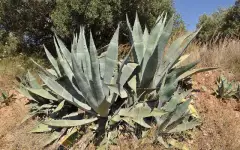 AgaveAgave americana (and thick-leaved relatives)very low water, Central Valley0.27 gal/sq ft in July
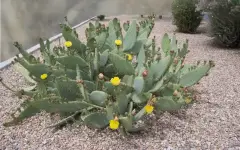 CactusOpuntia spp. & cvs. (CA natives and non-natives)very low water, Central Valley0.27 gal/sq ft in July
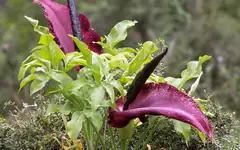 Voodoo LilyDracunculus vulgarisvery low water, Central Valley0.27 gal/sq ft in July
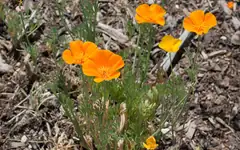 California PoppyEschscholzia californicavery low water, Central Valley0.27 gal/sq ft in July
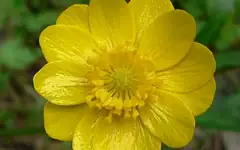 California ButtercupRanunculus californicusvery low water, Central Valley0.27 gal/sq ft in July
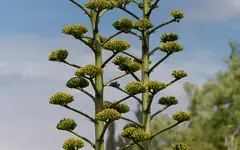 Variegated Century PlantAgave americana var. marginatavery low water, Central Valley0.27 gal/sq ft in July
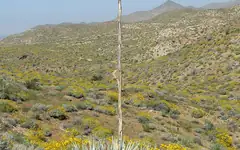 Desert AgaveAgave desertivery low water, Central Valley0.27 gal/sq ft in July
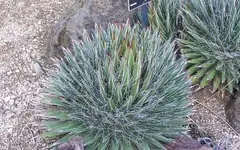 Thread Leaf AgaveAgave filiferavery low water, Central Valley0.27 gal/sq ft in July
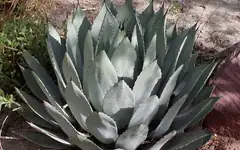 Palmer AgaveAgave palmerivery low water, Central Valley0.27 gal/sq ft in July
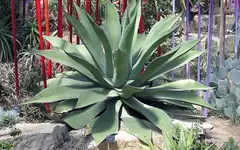 Butterfly AgaveAgave potatorumvery low water, Central Valley0.27 gal/sq ft in July
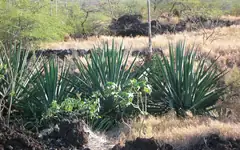 SisalAgave sisalanavery low water, Central Valley0.27 gal/sq ft in July
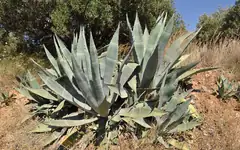 Century PlantAgave spp. & cvs.very low water, Central Valley0.27 gal/sq ft in July
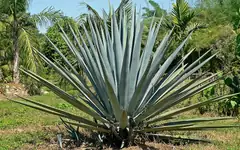 Blue AgaveAgave tequilana & ssp. & cvs.very low water, Central Valley0.27 gal/sq ft in July
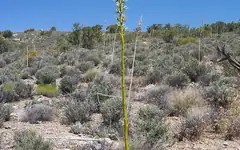 Utah AgaveAgave utahensisvery low water, Central Valley0.27 gal/sq ft in July
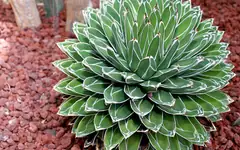 Queen Victoria AgaveAgave victoriae-reginaevery low water, Central Valley0.27 gal/sq ft in July
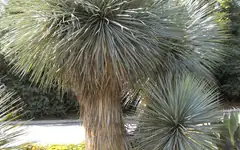 Beaked YuccaYucca rostrata ssp. & cvs.very low water, Central Valley0.27 gal/sq ft in July
Turn this into minutes on your water days
Every city page has a calculator that takes cypress spurge, your sprinkler type and the month, and gives the minutes per water day for that supplier's schedule. Or put it in a zone of the personal watering plan and get all twelve months printed.
Questions people ask
How often should I water cypress spurge in summer?
In July, established cypress spurge in loam needs a deep watering about once a month or less in the Central Valley and about once a month or less on the south coast. Sandy soil holds less water, so waterings come closer together. Clay stretches them. Check the soil before each watering and skip one after a soaking rain.
How much water does cypress spurge need per day?
In July in the Central Valley, established cypress spurge needs about 0.0 gallons a day for a plant 2 feet across and about 0.1 gallons a day for a plant 4 feet across. Give it in deep waterings spread days apart rather than a little every day, so the whole root zone gets wet.
Does watering for cypress spurge change across California?
Yes. WUCOLS rates cypress spurge separately for each of the six California climate zones: low water in the North-Central Coastal zone, very low water in the Central Valley zone, very low water in the South Coastal zone, not evaluated in the South Inland zone, not evaluated in the High and Intermediate Desert zone, not evaluated in the Low Desert zone. The monthly table above shows how the same rating translates into different gallon amounts as reference evapotranspiration changes.
Is cypress spurge invasive?
It can be. It spreads by rhizomes, roots and seed into large colonies, and it is listed as a noxious or invasive weed in several states. Removing it by hand is very difficult, so consider a native groundcover instead.
Is cypress spurge poisonous?
Yes. Its milky sap irritates skin and can damage eyes, and all parts are toxic if eaten. It is a problem for children, pets, horses and cattle. Wear gloves and eye protection when handling it.
How do I keep cypress spurge from spreading?
Grow it in a container or behind deep edging, and keep the soil lean and on the dry side. Rich, moist soil makes it far more aggressive. Pull seedlings as soon as they appear.
Can you overwater cypress spurge?
Yes. It grows best in dry, well-drained soil, and regular water mainly helps it run into places you do not want it. Established plants rarely need irrigation.
Does cypress spurge need full sun?
Yes. It does best in full sun and often grows on dry banks and hillsides where little else survives. It tolerates poor, rocky and sandy soils.
More plant watering guides
Sources
- WUCOLS IV plant water use classification for Euphorbia cyparissias, the University of California survey California agencies use for landscape plan reviewRead August 23, 2026 on wucols.ucdavis.edu
- Model Water Efficient Landscape Ordinance, adopted text and appendices, effective 2025-01-02 · monthly reference evapotranspiration per city, Appendix CRead August 23, 2026 on water.ca.gov/-/media/DWR-Website/Web-Pages/Programs/Water-Use-And-Efficiency/MWELO-Rulemaking/Final-MWELO-Text-and-Appendices_20250103.pdf
- UC Statewide IPM Program, irrigation scheduling using evapotranspirationRead September 30, 2026 on ipm.ucanr.edu/PMG/GARDEN/ENVIRON/evap.html
- Shaw and Pittenger, Landscape Irrigation System Evaluation and Management, UC Cooperative Extension, 2009Read September 30, 2026 on ucanr.edu/sites/default/files/2013-02/160836.pdf
- Pittenger, Water Management in Gardens and Landscapes, UC Riverside, 2017Read September 30, 2026 on ucanr.edu/sites/default/files/2017-03/258022.pdf