How often to water toyon in California
In July in the Central Valley, established toyon in loam needs a deep soak only about once a month or less: about 8.8 gallons each time for a plant 4 feet across. Toyon is an evergreen California native in the rose family, a large shrub that can become a multi-stemmed small tree with age. Clusters of white flowers open in summer, and bright red berries follow in winter. Once established it gets by on very little water. Near the coast, still air and summer water cause it more trouble than a dry summer does.
How often to water toyon, month by month
Type your city above and the days between waterings and the gallons appear here, worked out from your city's climate table. Or read the figures by climate zone further down.
How this is worked out: established roots fill the top 1.5 feet of soil, and you water again when that soil has dried halfway. Loam soil holds about 1.5 inches of water per foot. Water the whole area the plant covers, and skip a watering after a good soaking rain.
How to tell it needs water
- Soil dry 4 inches down at the edge of a young toyon's root ball in its first summers means it is time to soak
- Leaves drooping on a young plant during summer heat, with dry soil below, point to thirst
- Leaf fungus or bacterial spotting on a coastal toyon points to poor air flow and too much summer water, not to drought
- Soil that stays wet for days around the base of the stems points to poor drainage, so hold off on the next soak
- Leaves and new shoots eaten below about four feet point to deer, which favor watered toyons in lean years
How to water it
- Water a young toyon slowly over its root ball and a band beyond it, then widen the band as the canopy spreads
- Soak until water reaches about 18 inches down, then let the soil dry deeply before the next soak
- Near the coast, stop summer water after the first year and keep air moving around the branches
- Inland, where it accepts more water and shade, still let the soil dry between soaks and keep water off the leaves
- Plant in sand, clay or serpentine soil, avoiding low spots where water stands after rain
Through the seasons
Water a new toyon through its first summers, until its roots spread well into native soil. After that it is drought tolerant, and near the coast it needs no summer water at all. It stays evergreen, flowers in summer and carries red berries through winter, when birds feed on them. Winter rain covers the cool months on the north-central coast, on the south coast and in the Central Valley. WUCOLS rates toyon very low water in the Central Valley and on the south coast. It rates low water on the north-central coast and in South Inland. WUCOLS has not evaluated it for the high desert or the low desert.
In pots
Toyon grows fast and becomes a large shrub, so a container suits it only while it is young. Check a nursery can 2 inches down every few days in summer, and daily during inland heat waves. Water until it drains from the holes, then empty the saucer so the roots do not sit wet. Keep the pot in sun or part shade with air moving around the leaves. In winter, cool weather and rain slow drying, so let the mix dry between soakings.
- A year
- 1.71 gal per sq ft
- Reference
- Sacramento climate table
- Counts
- Plant need, before sprinkler losses
Monthly water need by climate zone
Toyon: gallons per square foot per month, by WUCOLS climate zone
| Month | N. Coast | C. Valley | S. Coast | S. Inland | Hi Desert | Lo Desert |
|---|---|---|---|---|---|---|
| Jan | 0.15 | 0.04 | 0.08 | 0.31 | – | – |
| Feb | 0.21 | 0.07 | 0.08 | 0.35 | – | – |
| Mar | 0.35 | 0.11 | 0.11 | 0.52 | – | – |
| Apr | 0.47 | 0.15 | 0.14 | 0.64 | – | – |
| May | 0.58 | 0.21 | 0.16 | 0.78 | – | – |
| Jun | 0.64 | 0.25 | 0.17 | 0.92 | – | – |
| Jul | 0.64 | 0.27 | 0.2 | 1 | – | – |
| Aug | 0.6 | 0.24 | 0.19 | 0.93 | – | – |
| Sep | 0.5 | 0.18 | 0.15 | 0.74 | – | – |
| Oct | 0.35 | 0.12 | 0.11 | 0.53 | – | – |
| Nov | 0.19 | 0.06 | 0.08 | 0.36 | – | – |
| Dec | 0.12 | 0.03 | 0.07 | 0.27 | – | – |
| Year | 4.8 | 1.71 | 1.55 | 7.37 | – | – |
How this is worked out: the WUCOLS water rating for each zone times that zone’s climate for the month. A dash means WUCOLS does not rate the plant there. The figures are what the plant uses, before sprinkler losses.
Plants with the same water needs 16
Rated very low water in the Central Valley, like toyon. Plants that drink alike can share one valve and one schedule.
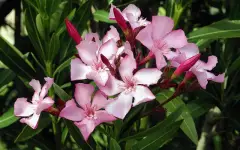 OleanderNerium oleander ssp. & cvs.very low water, Central Valley0.27 gal/sq ft in July
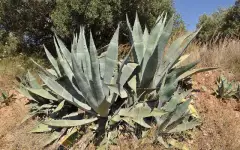 AgaveAgave americana (and thick-leaved relatives)very low water, Central Valley0.27 gal/sq ft in July
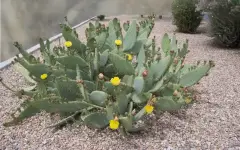 CactusOpuntia spp. & cvs. (CA natives and non-natives)very low water, Central Valley0.27 gal/sq ft in July
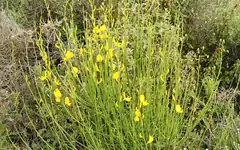 Spanish BroomSpartium junceumvery low water, Central Valley0.27 gal/sq ft in July
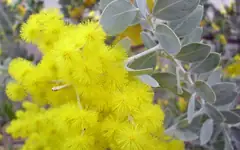 Pearl AcaciaAcacia podalyriifoliavery low water, Central Valley0.27 gal/sq ft in July
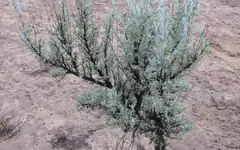 Big SagebrushArtemisia tridentatavery low water, Central Valley0.27 gal/sq ft in July
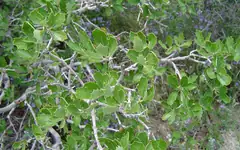 California Scrub OakQuercus berberidifoliavery low water, Central Valley0.27 gal/sq ft in July
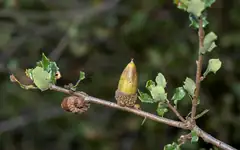 Nuttall's Scrub OakQuercus dumosavery low water, Central Valley0.27 gal/sq ft in July
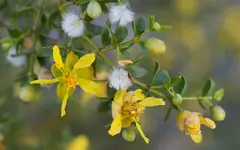 Creosote BushLarrea tridentata ssp. & cvs.very low water, Central Valley0.27 gal/sq ft in July
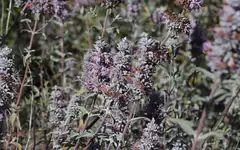 Purple SageSalvia leucophylla ssp. & cvs.very low water, Central Valley0.27 gal/sq ft in July
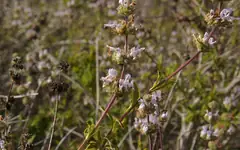 Black SageSalvia mellifera ssp. & cvs.very low water, Central Valley0.27 gal/sq ft in July
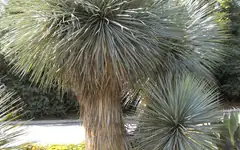 Beaked YuccaYucca rostrata ssp. & cvs.very low water, Central Valley0.27 gal/sq ft in July
 Fox Tail AgaveAgave attenuata (and thin-leaved relatives)very low water, Central Valley0.27 gal/sq ft in July
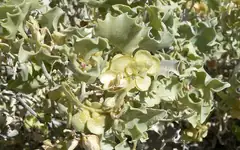 SaltbushAtriplex (CA native species) & ssp. & cvs.very low water, Central Valley0.27 gal/sq ft in July
 Oak TreesQuercus agrifoliavery low water, Central Valley0.27 gal/sq ft in July
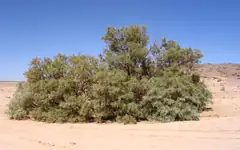 Salt CedarTamarix aphyllavery low water, Central Valley0.27 gal/sq ft in July
Turn this into minutes on your water days
Every city page has a calculator that takes toyon, your sprinkler type and the month, and gives the minutes per water day for that supplier's schedule. Or put it in a zone of the personal watering plan and get all twelve months printed.
Questions people ask
How often should I water toyon in summer?
In July, established toyon in loam needs a deep watering about once a month or less in the Central Valley, about once a month or less on the south coast and about every 22 days in the South Inland zone. Sandy soil holds less water, so waterings come closer together. Clay stretches them. Check the soil before each watering and skip one after a soaking rain.
How much water does toyon need per day?
In July in the Central Valley, established toyon needs about 0.1 gallons a day for a plant 4 feet across and about 0.4 gallons a day for a plant 8 feet across. Give it in deep waterings spread days apart rather than a little every day, so the whole root zone gets wet.
Does watering for toyon change across California?
Yes. WUCOLS rates toyon separately for each of the six California climate zones: low water in the North-Central Coastal zone, very low water in the Central Valley zone, very low water in the South Coastal zone, low water in the South Inland zone, not evaluated in the High and Intermediate Desert zone, not evaluated in the Low Desert zone. The monthly table above shows how the same rating translates into different gallon amounts as reference evapotranspiration changes.
Are toyon berries edible?
Not raw. The berries contain small amounts of cyanogenic glycosides, which cooking, or drying and crushing, breaks down. Indigenous people have used the berries for cider and a granular sugar. Most of the crop goes to birds such as robins, mockingbirds and cedar waxwings.
When does toyon have red berries?
White flowers open in summer, and the berries turn scarlet in winter, which earned it the name Christmas berry. The cultivar 'Davis Gold' carries bright yellow fruit instead. Coyotes and bears eat and spread the berries as well.
Can I cut toyon back hard?
Now and then. A leggy toyon can be cut to the ground and will regrow from the base. Doing that every year or every few years can kill it or leave it prone to disease. For regular shaping, take a little at a time, and save heavy cuts for August or September.
How fast does toyon grow?
In a well chosen spot it can grow quickly, up to about 10 feet in three years. An old, healthy plant can reach 15 to 20 feet as a multi-stemmed small tree. Give it room when you plant it.
Does toyon grow in shade?
Yes. It grows in sun or part shade, and in the southern, drier part of its range it tends to do better with part shade. Along the coast, full sun and open air help keep leaf diseases down.
Will deer eat toyon?
Deer eat the new growth and the leaves below about four feet, more so in lean years and on watered plants. Protect a young toyon for its first three or four years. Once it is established and tall, browsing hurts it much less.
More plant watering guides
Sources
- WUCOLS IV plant water use classification for Heteromeles arbutifolia ssp. & cvs., the University of California survey California agencies use for landscape plan reviewRead August 23, 2026 on wucols.ucdavis.edu
- Model Water Efficient Landscape Ordinance, adopted text and appendices, effective 2025-01-02 · monthly reference evapotranspiration per city, Appendix CRead August 23, 2026 on water.ca.gov/-/media/DWR-Website/Web-Pages/Programs/Water-Use-And-Efficiency/MWELO-Rulemaking/Final-MWELO-Text-and-Appendices_20250103.pdf
- UC Statewide IPM Program, irrigation scheduling using evapotranspirationRead September 30, 2026 on ipm.ucanr.edu/PMG/GARDEN/ENVIRON/evap.html
- Shaw and Pittenger, Landscape Irrigation System Evaluation and Management, UC Cooperative Extension, 2009Read September 30, 2026 on ucanr.edu/sites/default/files/2013-02/160836.pdf
- Pittenger, Water Management in Gardens and Landscapes, UC Riverside, 2017Read September 30, 2026 on ucanr.edu/sites/default/files/2017-03/258022.pdf