How often to water black sage in California
In July in the Central Valley, established black sage in loam needs a deep soak only about once a month or less: about 8.8 gallons each time for a plant 4 feet across. Black sage is a long lived, evergreen California native shrub with aromatic, wrinkled, dark green leaves. White to pale blue flowers open from spring into early summer and draw hummingbirds and butterflies. It grows wild on dry, sunny slopes near the coast, and an established plant gets by on very little summer water.
How often to water black sage, month by month
Type your city above and the days between waterings and the gallons appear here, worked out from your city's climate table. Or read the figures by climate zone further down.
How this is worked out: established roots fill the top 1.5 feet of soil, and you water again when that soil has dried halfway. Loam soil holds about 1.5 inches of water per foot. Water the whole area the plant covers, and skip a watering after a good soaking rain.
How to tell it needs water
- Soil dry 4 to 6 inches down at the edge of a young black sage's root ball means it is ready for a deep soak
- Wilted shoot tips on a first-year plant in summer heat, with dry soil below, call for a slow soak
- An established plant that keeps its dark green, fragrant leaves through a dry summer is coping, so dry topsoil alone is no reason to water
- Leaves turning dull green, yellow or purplish over soil that stays wet point to root and crown rot rather than thirst
- Wilting that does not recover after watering, with darkened bark at the base, is a rot sign, so stop watering and let the soil dry
How to water it
- Water a new black sage over its root ball and the soil just beyond it, then widen the wet area as the shrub spreads
- Soak slowly until water reaches about 12 inches down, then let the soil dry well down before the next soak
- Set drip emitters a few inches out from the stems so water never pools against the woody base
- Plant in full sun or light shade, in sand, clay or rocky soil, and avoid low spots where water stands after rain
- Keep it apart from lawns and beds that get regular summer water, and group it with other dry-summer natives
Through the seasons
Water a new black sage through its first summer, until its roots reach well past the planting hole. After that it needs little help. It keeps its leaves all year and flowers from spring into early summer. In the wild it lives on winter rain, with coastal fog filling some of the gap. WUCOLS rates black sage low water on the north-central coast and in South Inland. It rates very low water in the Central Valley and on the south coast. On the coast and in the Central Valley, winter rain covers the cool months. WUCOLS has not evaluated it for the high desert or the low desert.
In pots
Black sage grows 3 to 6 feet tall and wider still, so it suits only a large container, and only for a few years. Use a gritty, fast draining mix in a pot with open drainage holes. Check the mix 2 inches down every few days in summer heat. Water until it runs from the holes, then empty the saucer so the roots never sit wet. A low creeping form fits a wide, shallow pot better than the upright shrub. Winter rain often keeps an open pot moist, so feel the mix before you water.
- A year
- 1.71 gal per sq ft
- Reference
- Sacramento climate table
- Counts
- Plant need, before sprinkler losses
Monthly water need by climate zone
Black Sage: gallons per square foot per month, by WUCOLS climate zone
| Month | N. Coast | C. Valley | S. Coast | S. Inland | Hi Desert | Lo Desert |
|---|---|---|---|---|---|---|
| Jan | 0.15 | 0.04 | 0.08 | 0.31 | – | – |
| Feb | 0.21 | 0.07 | 0.08 | 0.35 | – | – |
| Mar | 0.35 | 0.11 | 0.11 | 0.52 | – | – |
| Apr | 0.47 | 0.15 | 0.14 | 0.64 | – | – |
| May | 0.58 | 0.21 | 0.16 | 0.78 | – | – |
| Jun | 0.64 | 0.25 | 0.17 | 0.92 | – | – |
| Jul | 0.64 | 0.27 | 0.2 | 1 | – | – |
| Aug | 0.6 | 0.24 | 0.19 | 0.93 | – | – |
| Sep | 0.5 | 0.18 | 0.15 | 0.74 | – | – |
| Oct | 0.35 | 0.12 | 0.11 | 0.53 | – | – |
| Nov | 0.19 | 0.06 | 0.08 | 0.36 | – | – |
| Dec | 0.12 | 0.03 | 0.07 | 0.27 | – | – |
| Year | 4.8 | 1.71 | 1.55 | 7.37 | – | – |
How this is worked out: the WUCOLS water rating for each zone times that zone’s climate for the month. A dash means WUCOLS does not rate the plant there. The figures are what the plant uses, before sprinkler losses.
Plants with the same water needs 16
Rated very low water in the Central Valley, like black sage. Plants that drink alike can share one valve and one schedule.
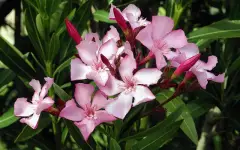 OleanderNerium oleander ssp. & cvs.very low water, Central Valley0.27 gal/sq ft in July
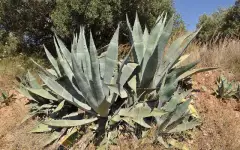 AgaveAgave americana (and thick-leaved relatives)very low water, Central Valley0.27 gal/sq ft in July
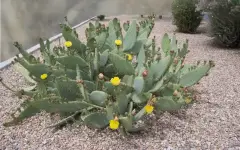 CactusOpuntia spp. & cvs. (CA natives and non-natives)very low water, Central Valley0.27 gal/sq ft in July
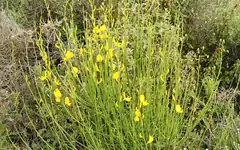 Spanish BroomSpartium junceumvery low water, Central Valley0.27 gal/sq ft in July
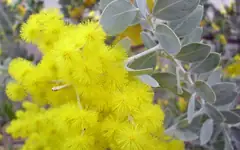 Pearl AcaciaAcacia podalyriifoliavery low water, Central Valley0.27 gal/sq ft in July
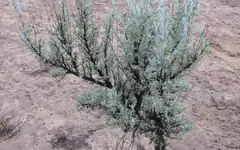 Big SagebrushArtemisia tridentatavery low water, Central Valley0.27 gal/sq ft in July
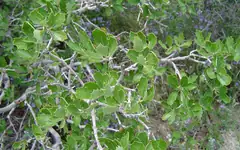 California Scrub OakQuercus berberidifoliavery low water, Central Valley0.27 gal/sq ft in July
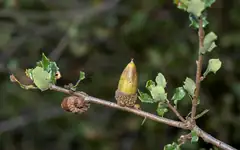 Nuttall's Scrub OakQuercus dumosavery low water, Central Valley0.27 gal/sq ft in July
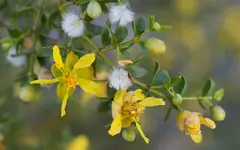 Creosote BushLarrea tridentata ssp. & cvs.very low water, Central Valley0.27 gal/sq ft in July
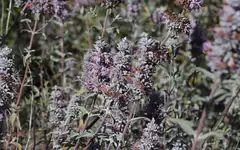 Purple SageSalvia leucophylla ssp. & cvs.very low water, Central Valley0.27 gal/sq ft in July
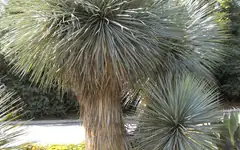 Beaked YuccaYucca rostrata ssp. & cvs.very low water, Central Valley0.27 gal/sq ft in July
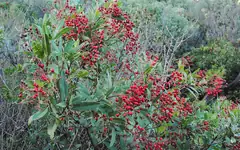 ToyonHeteromeles arbutifolia ssp. & cvs.very low water, Central Valley0.27 gal/sq ft in July
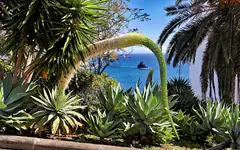 Fox Tail AgaveAgave attenuata (and thin-leaved relatives)very low water, Central Valley0.27 gal/sq ft in July
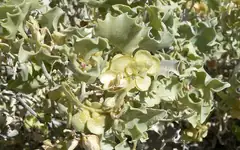 SaltbushAtriplex (CA native species) & ssp. & cvs.very low water, Central Valley0.27 gal/sq ft in July
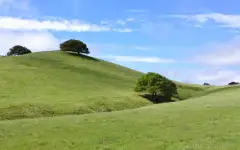 Oak TreesQuercus agrifoliavery low water, Central Valley0.27 gal/sq ft in July
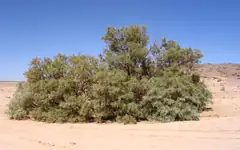 Salt CedarTamarix aphyllavery low water, Central Valley0.27 gal/sq ft in July
Turn this into minutes on your water days
Every city page has a calculator that takes black sage, your sprinkler type and the month, and gives the minutes per water day for that supplier's schedule. Or put it in a zone of the personal watering plan and get all twelve months printed.
Questions people ask
How often should I water black sage in summer?
In July, established black sage in loam needs a deep watering about once a month or less in the Central Valley, about once a month or less on the south coast and about every 22 days in the South Inland zone. Sandy soil holds less water, so waterings come closer together. Clay stretches them. Check the soil before each watering and skip one after a soaking rain.
How much water does black sage need per day?
In July in the Central Valley, established black sage needs about 0.1 gallons a day for a plant 4 feet across and about 0.4 gallons a day for a plant 8 feet across. Give it in deep waterings spread days apart rather than a little every day, so the whole root zone gets wet.
Does watering for black sage change across California?
Yes. WUCOLS rates black sage separately for each of the six California climate zones: low water in the North-Central Coastal zone, very low water in the Central Valley zone, very low water in the South Coastal zone, low water in the South Inland zone, not evaluated in the High and Intermediate Desert zone, not evaluated in the Low Desert zone. The monthly table above shows how the same rating translates into different gallon amounts as reference evapotranspiration changes.
Is black sage good for hummingbirds?
Yes. Hummingbirds, butterflies and small native flies visit the flowers. Quail and other small birds eat the seeds, so leave some spent flower stalks standing into summer.
How big does black sage get?
The upright shrub reaches 3 to 6 feet tall and spreads 6 to 8 feet wide. Creeping forms stay much lower, often about a foot tall and several feet across in coastal gardens. Give either one room, and move the watered area outward as it spreads.
Does black sage grow in clay soil?
Yes. It grows wild in sand, adobe clay and serpentine soils. In clay, the soil stays wet longer, so check deeper before watering and keep runoff from pooling at the base.
How long does black sage live?
Black sage is a long lived, stable shrub, and native sages can live 30 years or more. Soil kept wet around the base through summer shortens that life. Root and crown rot strike many California native shrubs in soggy ground.
Is black sage frost hardy?
The upright shrub is listed for USDA zones 7 to 10. The low creeping forms are more sensitive to frost than the species. In a cold inland garden, give a creeping form a warm spot near a wall or slope.
Can black sage grow in shade?
It does best in full sun and tolerates some shade. In the wild it grows on sunny, dry slopes in chaparral and coastal sage scrub. Some wild plants even grow under redwoods near Santa Cruz.
More plant watering guides
Sources
- WUCOLS IV plant water use classification for Salvia mellifera ssp. & cvs., the University of California survey California agencies use for landscape plan reviewRead August 23, 2026 on wucols.ucdavis.edu
- Model Water Efficient Landscape Ordinance, adopted text and appendices, effective 2025-01-02 · monthly reference evapotranspiration per city, Appendix CRead August 23, 2026 on water.ca.gov/-/media/DWR-Website/Web-Pages/Programs/Water-Use-And-Efficiency/MWELO-Rulemaking/Final-MWELO-Text-and-Appendices_20250103.pdf
- UC Statewide IPM Program, irrigation scheduling using evapotranspirationRead September 30, 2026 on ipm.ucanr.edu/PMG/GARDEN/ENVIRON/evap.html
- Shaw and Pittenger, Landscape Irrigation System Evaluation and Management, UC Cooperative Extension, 2009Read September 30, 2026 on ucanr.edu/sites/default/files/2013-02/160836.pdf
- Pittenger, Water Management in Gardens and Landscapes, UC Riverside, 2017Read September 30, 2026 on ucanr.edu/sites/default/files/2017-03/258022.pdf