How often to water blood grass in California
In July in the Central Valley, established blood grass needs about 1.9 gallons a week for a plant 2 feet across. Blood grass forms clumps of upright, narrow blades with green bases and deep red upper portions. This deciduous ornamental spreads through underground rhizomes and grows in sun or partial shade. Give it moist, well-drained soil, and watch for all-green growth that could be a return to aggressive cogongrass.
How often to water blood grass, month by month
Type your city above and the days between waterings and the gallons appear here, worked out from your city's climate table. Or read the figures by climate zone further down.
How this is worked out: the plant’s WUCOLS rating times your city’s climate for the month, over the area the plant covers. Skip a watering after a good soaking rain.
How to tell it needs water
- Soil dry two inches down at the edge of an established clump signals it needs a soak
- Check the root zone when blades curl, but investigate solid green shoots as possible reversion rather than treating them with extra water
- Inspect a sparse new clump's soil before adding water, including whether moisture remains around its original roots
- Collapsing blades over persistently wet soil are a reason to stop watering and investigate drainage
- Rotting runners just under the surface warrant a check of nearby drainage
How to water it
- Water the clump at soil level with drip or a slow hose rather than overhead sprinkling
- Soak a few inches deep, then let the top layer dry before the next watering
- Use loose, well-drained soil and avoid low spots where water pools around the runners
- Spread a thin mulch layer around the clump, keeping it off the emerging blades
- Widen the watered area outward each season as underground runners extend the clump
Through the seasons
Keep a new blood grass clump supplied with moisture while it establishes in well-drained soil. An older clump still needs checks during dry weather; red blade color is not a watering gauge. Its foliage dies back seasonally, so reassess moisture as growth slows in fall. Winter rain can cover much of the need in coastal and valley gardens. WUCOLS rates it moderate water in the Central Valley, south coast and South Inland. It is not suited to the north-central coast or low desert and has not been evaluated for the high desert.
In pots
Check an existing potted blood grass for green reversions as well as roots escaping its drainage holes. A pot is not a guarantee against escape. Feel the top inch of mix during California summer heat, then water when it is drying and let excess drain freely. Empty any saucer before returning the pot to its place. Spring is the time to divide a crowded clump. As the deciduous blades die back, keep checking the mix instead of continuing the summer watering routine.
- A year
- 17.11 gal per sq ft
- Reference
- Sacramento climate table
- Counts
- Plant need, before sprinkler losses
Monthly water need by climate zone
Blood Grass: gallons per square foot per month, by WUCOLS climate zone
| Month | N. Coast | C. Valley | S. Coast | S. Inland | Hi Desert | Lo Desert |
|---|---|---|---|---|---|---|
| Jan | – | 0.4 | 0.78 | 0.78 | – | – |
| Feb | – | 0.65 | 0.81 | 0.87 | – | – |
| Mar | – | 1.09 | 1.15 | 1.3 | – | – |
| Apr | – | 1.52 | 1.4 | 1.61 | – | – |
| May | – | 2.08 | 1.61 | 1.95 | – | – |
| Jun | – | 2.48 | 1.74 | 2.29 | – | – |
| Jul | – | 2.67 | 1.98 | 2.51 | – | – |
| Aug | – | 2.39 | 1.86 | 2.33 | – | – |
| Sep | – | 1.8 | 1.49 | 1.86 | – | – |
| Oct | – | 1.18 | 1.15 | 1.33 | – | – |
| Nov | – | 0.56 | 0.84 | 0.9 | – | – |
| Dec | – | 0.34 | 0.65 | 0.68 | – | – |
| Year | – | 17.11 | 15.5 | 18.41 | – | – |
How this is worked out: the WUCOLS water rating for each zone times that zone’s climate for the month. A dash means WUCOLS does not rate the plant there. The figures are what the plant uses, before sprinkler losses.
Plants with the same water needs 7
Rated moderate water in the Central Valley, like blood grass. Plants that drink alike can share one valve and one schedule.
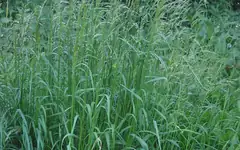 Tall Oat GrassArrhenatherum elatiusmoderate water, Central Valley2.67 gal/sq ft in July
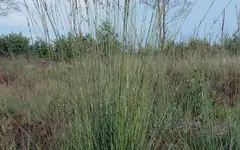 Purple Moor GrassMolinia caeruleamoderate water, Central Valley2.67 gal/sq ft in July
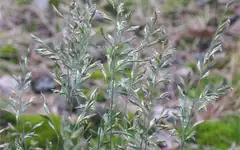 Sheep FescueFestuca ovina and cvs.moderate water, Central Valley2.67 gal/sq ft in July
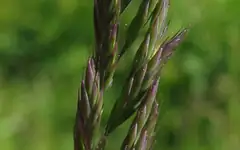 Creeping Red FescueFestuca rubra ssp. & cvs.moderate water, Central Valley2.67 gal/sq ft in July
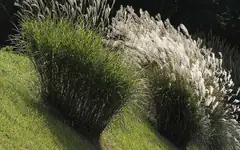 Eulalia GrassMiscanthus sinensis ssp. & cvsmoderate water, Central Valley2.67 gal/sq ft in July
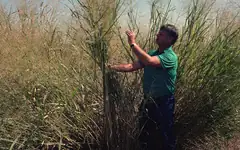 Switch GrassPanicum virgatum ssp. & cvs.moderate water, Central Valley2.67 gal/sq ft in July
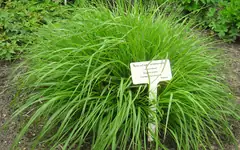 Black PennisetumPennisetum alopecuroides ssp. & cvs.moderate water, Central Valley2.67 gal/sq ft in July
Similar plants that need less water 7
Rated lower than blood grass in the Central Valley. Worth a look for a new bed or a lawn replacement.
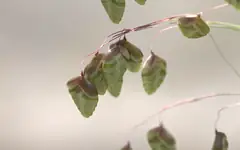 Quaking GrassBriza medialow water, Central Valley1.07 gal/sq ft in July
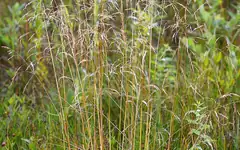 Tufted HairgrassDeschampsia cespitosa and cvs.low water, Central Valley1.07 gal/sq ft in July
 June GrassKoeleria macrantha (cristata)low water, Central Valley1.07 gal/sq ft in July
 False Esparto GrassLygeum spartumlow water, Central Valley1.07 gal/sq ft in July
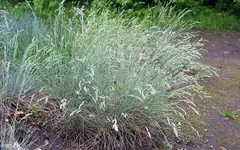 Blue FescueFestuca glauca ssp. & cvs.low water, Central Valley1.07 gal/sq ft in July
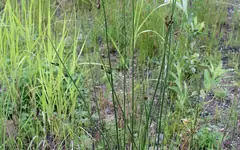 Baltic RushJuncus balticuslow water, Central Valley1.07 gal/sq ft in July
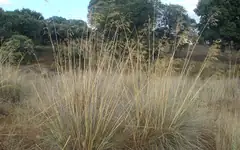 Giant Needle GrassStipa gigantealow water, Central Valley1.07 gal/sq ft in July
Turn this into minutes on your water days
Every city page has a calculator that takes blood grass, your sprinkler type and the month, and gives the minutes per water day for that supplier's schedule. Or put it in a zone of the personal watering plan and get all twelve months printed.
Questions people ask
How much should I water blood grass in summer?
In July, established blood grass needs about 1.9 gallons in the Central Valley, 1.4 gallons on the south coast and 1.8 gallons in the South Inland zone each week, for a plant 2 feet across. Water deeply and let the top of the soil dry before the next watering. Skip a watering after a soaking rain.
How much water does blood grass need per day?
In July in the Central Valley, established blood grass needs about 0.3 gallons a day for a plant 2 feet across and about 1.1 gallons a day for a plant 4 feet across. Give it in deep waterings spread days apart rather than a little every day, so the whole root zone gets wet.
Does watering for blood grass change across California?
Yes. WUCOLS rates blood grass separately for each of the six California climate zones: not suited to this region in the North-Central Coastal zone, moderate water in the Central Valley zone, moderate water in the South Coastal zone, moderate water in the South Inland zone, not evaluated in the High and Intermediate Desert zone, not suited to this region in the Low Desert zone. The monthly table above shows how the same rating translates into different gallon amounts as reference evapotranspiration changes.
Is blood grass invasive in California?
The red ornamental can revert to aggressive green cogongrass, which is invasive in parts of the United States. NC State advises choosing another grass because of that risk. Watch existing plants for solid green shoots and investigate any spreading beyond their original clump.
Why is my blood grass turning green instead of red?
Solid green shoots can be reversions to the aggressive species. Do not assume that dividing the clump, adding water or moving it into brighter light will restore red foliage. Identify the green growth before deciding what to keep.
Should I cut blood grass back in winter?
Remove dead blades in spring before working around the new growth. The plant is deciduous, so seasonal loss of old foliage is expected.
Can blood grass handle part shade?
Blood grass grows in either full sun or partial shade. In both settings, provide soil that retains some moisture but drains well, and check the actual root zone before watering.
How fast does blood grass spread?
It expands through rhizomes, but its pace should not be assumed to remain slow. Green reversions can spread aggressively. The red form rarely produces seeds, so it should not be described as unable to reproduce that way.
More plant watering guides
Sources
- WUCOLS IV plant water use classification for Imperata cylindrica ssp. & cvs., the University of California survey California agencies use for landscape plan reviewRead August 23, 2026 on wucols.ucdavis.edu
- Model Water Efficient Landscape Ordinance, adopted text and appendices, effective 2025-01-02 · monthly reference evapotranspiration per city, Appendix CRead August 23, 2026 on water.ca.gov/-/media/DWR-Website/Web-Pages/Programs/Water-Use-And-Efficiency/MWELO-Rulemaking/Final-MWELO-Text-and-Appendices_20250103.pdf
- UC Statewide IPM Program, irrigation scheduling using evapotranspirationRead September 30, 2026 on ipm.ucanr.edu/PMG/GARDEN/ENVIRON/evap.html
- Shaw and Pittenger, Landscape Irrigation System Evaluation and Management, UC Cooperative Extension, 2009Read September 30, 2026 on ucanr.edu/sites/default/files/2013-02/160836.pdf
- Pittenger, Water Management in Gardens and Landscapes, UC Riverside, 2017Read September 30, 2026 on ucanr.edu/sites/default/files/2017-03/258022.pdf