How often to water creeping fig in California
In July in the Central Valley, established creeping fig in loam needs a deep watering about every 8 days: about 2.2 gallons each time for a plant 2 feet across, about 1.9 gallons a week. Creeping fig is a vigorous evergreen vine from eastern Asia that clings to walls with clusters of short roots and can cover them completely. Young stems carry small, heart-shaped leaves, while mature growth bears leathery leaves 2 to 4 inches long. It grows in cool sun to light shade, does less well on hot south or west walls and is hardy to about 20 degrees F.
How often to water creeping fig, month by month
Type your city above and the days between waterings and the gallons appear here, worked out from your city's climate table. Or read the figures by climate zone further down.
How this is worked out: established roots fill the top 1.5 feet of soil, and you water again when that soil has dried halfway. Loam soil holds about 1.5 inches of water per foot. Water the whole area the plant covers, and skip a watering after a good soaking rain.
How to tell it needs water
- Soil dry 2 inches down at the base in summer means the vine needs a deep watering
- Leaves scorching on a hot south- or west-facing wall point to heat stress from the site, not only thirst
- Yellowing leaves over soil that stays soggy point to poor drainage, since it wants moist but well-drained soil
- Large, leathery leaves and small figs on older stems are normal mature growth, not stress
- Sticky leaves or fine webbing point to scale, aphids or spider mites rather than a watering problem
How to water it
- Water at the base of the vine with drip, wetting the root zone about 8 inches deep
- Let the top couple of inches dry between waterings once the vine is established
- Plant in moist, well-drained soil rich in organic matter, in cool sun to light shade
- Trim it back from windows, roofs and wood trim before it outgrows its space
- Avoid hot south or west walls inland, where it struggles
Through the seasons
Water a new planting regularly until it begins to climb. It stays evergreen and grows most in the warm months, when it needs the most water, and it needs less from fall to late winter. Cold near 20 degrees F can damage it. Winter rain usually covers it on the coast and in the Central Valley. WUCOLS rates creeping fig moderate water on the north-central coast, in the Central Valley and in South Inland. It rates low water on the south coast. In the high desert and the low desert it also rates moderate water.
In pots
Creeping fig grows well in a container, trained up a small frame or spilling over the rim, and it is also a common houseplant. Use a soil-based potting mix and a pot with drainage holes. During the growing season, water when the top inch dries, letting excess drain and emptying the saucer. From fall to late winter, water less. Keep the pot in bright, indirect light or part shade, away from hot afternoon sun.
- A year
- 17.11 gal per sq ft
- Reference
- Sacramento climate table
- Counts
- Plant need, before sprinkler losses
Monthly water need by climate zone
Creeping Fig: gallons per square foot per month, by WUCOLS climate zone
| Month | N. Coast | C. Valley | S. Coast | S. Inland | Hi Desert | Lo Desert |
|---|---|---|---|---|---|---|
| Jan | 0.37 | 0.4 | 0.31 | 0.78 | 0.74 | 0.78 |
| Feb | 0.53 | 0.65 | 0.32 | 0.87 | 0.93 | 0.93 |
| Mar | 0.87 | 1.09 | 0.46 | 1.3 | 1.46 | 1.52 |
| Apr | 1.18 | 1.52 | 0.56 | 1.61 | 1.89 | 1.95 |
| May | 1.46 | 2.08 | 0.64 | 1.95 | 2.39 | 2.45 |
| Jun | 1.61 | 2.48 | 0.69 | 2.29 | 2.85 | 2.79 |
| Jul | 1.61 | 2.67 | 0.79 | 2.51 | 3.04 | 2.85 |
| Aug | 1.49 | 2.39 | 0.74 | 2.33 | 2.79 | 2.6 |
| Sep | 1.24 | 1.8 | 0.6 | 1.86 | 2.14 | 2.08 |
| Oct | 0.87 | 1.18 | 0.46 | 1.33 | 1.46 | 1.49 |
| Nov | 0.47 | 0.56 | 0.33 | 0.9 | 0.93 | 0.96 |
| Dec | 0.31 | 0.34 | 0.26 | 0.68 | 0.65 | 0.68 |
| Year | 12 | 17.11 | 6.2 | 18.41 | 21.27 | 21.08 |
How this is worked out: the WUCOLS water rating for each zone times that zone’s climate for the month. A dash means WUCOLS does not rate the plant there. The figures are what the plant uses, before sprinkler losses.
Plants with the same water needs 16
Rated moderate water in the Central Valley, like creeping fig. Plants that drink alike can share one valve and one schedule.
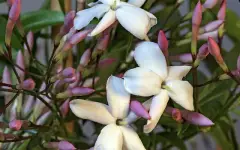 JasmineJasminum polyanthummoderate water, Central Valley2.67 gal/sq ft in July
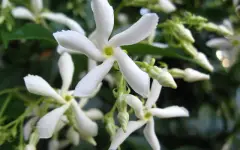 Star JasmineTrachelospermum jasminoides and cvs.moderate water, Central Valley2.67 gal/sq ft in July
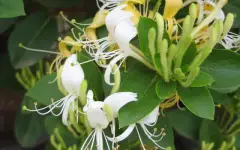 HoneysuckleLonicera japonicamoderate water, Central Valley2.67 gal/sq ft in July
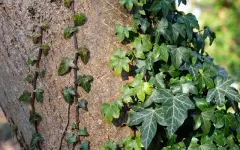 IvyHedera helixmoderate water, Central Valley2.67 gal/sq ft in July
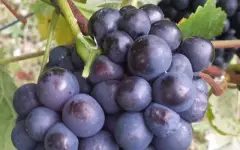 GrapevinesVitis vinifera ssp. & cvs.moderate water, Central Valley2.67 gal/sq ft in July
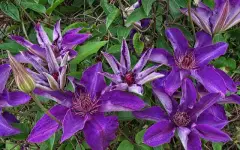 ClematisClematis & ssp., hybrids & cvs.moderate water, Central Valley2.67 gal/sq ft in July
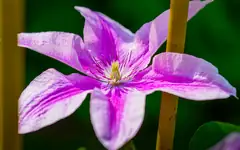 Evergreen ClematisClematis armandiimoderate water, Central Valley2.67 gal/sq ft in July
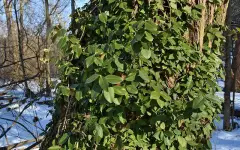 Winter CreeperEuonymus fortunei radicansmoderate water, Central Valley2.67 gal/sq ft in July
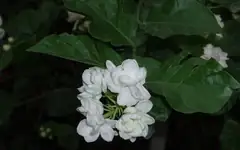 Arabian JasmineJasminum sambacmoderate water, Central Valley2.67 gal/sq ft in July
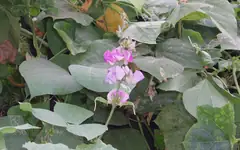 Hyacinth BeanLablab purpureus (Dolichos lablab)moderate water, Central Valley2.67 gal/sq ft in July
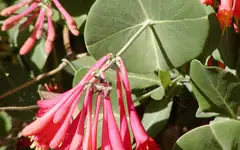 Trumpet HoneysuckleLonicera sempervirensmoderate water, Central Valley2.67 gal/sq ft in July
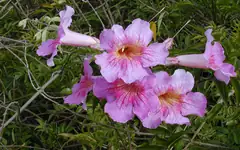 Pink Trumpet VinePodranea ricasolianamoderate water, Central Valley2.67 gal/sq ft in July
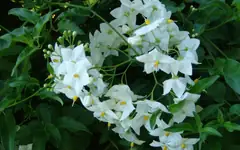 Potato VineSolanum laxum (jasminoides)moderate water, Central Valley2.67 gal/sq ft in July
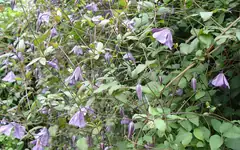 Italian ClematisClematis viticellamoderate water, Central Valley2.67 gal/sq ft in July
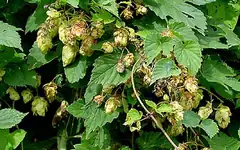 HopsHumulus lupulusmoderate water, Central Valley2.67 gal/sq ft in July
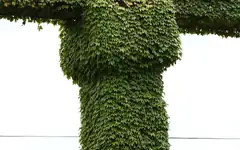 Boston IvyParthenocissus tricuspidatamoderate water, Central Valley2.67 gal/sq ft in July
Similar plants that need less water 9
Rated lower than creeping fig in the Central Valley. Worth a look for a new bed or a lawn replacement.
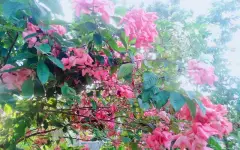 BougainvilleaBougainvillea & spp. & cvs.low water, Central Valley1.07 gal/sq ft in July
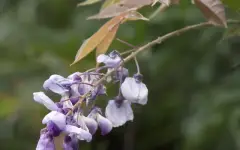 WisteriaWisteria spp. & cvs.low water, Central Valley1.07 gal/sq ft in July
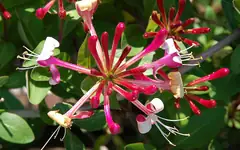 Flowering WoodbineLonicera periclymenumlow water, Central Valley1.07 gal/sq ft in July
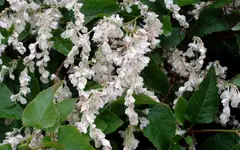 FleeceflowerFallopia baldschuanica (Polygonum aubertii)low water, Central Valley1.07 gal/sq ft in July
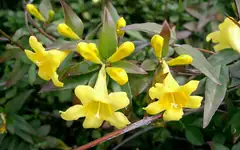 Carolina JessamineGelsemium sempervirenslow water, Central Valley1.07 gal/sq ft in July
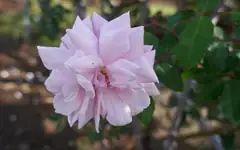 Cecile Brunner RoseRosa 'Cecile Brunner'low water, Central Valley1.07 gal/sq ft in July
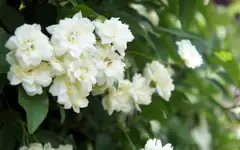 Lady Banks RoseRosa banksiaelow water, Central Valley1.07 gal/sq ft in July
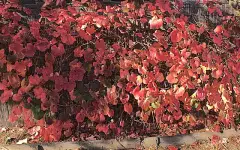 Roger's Red GrapeVitis 'Roger's Red'low water, Central Valley1.07 gal/sq ft in July
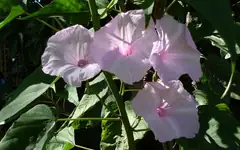 Blue Dawn Morning GloryIpomoea acuminatalow water, Central Valley1.07 gal/sq ft in July
Turn this into minutes on your water days
Every city page has a calculator that takes creeping fig, your sprinkler type and the month, and gives the minutes per water day for that supplier's schedule. Or put it in a zone of the personal watering plan and get all twelve months printed.
Questions people ask
How often should I water creeping fig in summer?
In July, established creeping fig in loam needs a deep watering about every 8 days in the Central Valley, about every 27 days on the south coast and about every 9 days in the South Inland zone. Sandy soil holds less water, so waterings come closer together. Clay stretches them. Check the soil before each watering and skip one after a soaking rain.
How much water does creeping fig need per day?
In July in the Central Valley, established creeping fig needs about 0.3 gallons a day for a plant 2 feet across and about 1.1 gallons a day for a plant 4 feet across. Give it in deep waterings spread days apart rather than a little every day, so the whole root zone gets wet.
Does watering for creeping fig change across California?
Yes. WUCOLS rates creeping fig separately for each of the six California climate zones: moderate water in the North-Central Coastal zone, moderate water in the Central Valley zone, low water in the South Coastal zone, moderate water in the South Inland zone, moderate water in the High and Intermediate Desert zone, moderate water in the Low Desert zone. The monthly table above shows how the same rating translates into different gallon amounts as reference evapotranspiration changes.
Will creeping fig damage my wall?
It cements itself to porous surfaces and can cover a wall solidly, which makes it hard to remove later. It can also become a nuisance as it outgrows its space. Trim it regularly and keep it off wood and painted surfaces.
Why does my creeping fig have big leaves now?
Older stems that have stopped climbing switch to a mature form with leathery leaves 2 to 4 inches long. This is normal and not a sign of a watering problem.
Can creeping fig grow in full sun?
Yes, in cool coastal sun. Inland, a hot wall facing south or west stresses it, so choose light shade there.
Are creeping fig fruits edible?
The small figs are rarely seen and are not worth eating. They form only on mature growth outdoors.
Can you overwater creeping fig?
Yes. It wants moist but well-drained soil, and soggy ground yellows the leaves. Established vines need only occasional deep watering in mild coastal gardens.
More plant watering guides
Sources
- WUCOLS IV plant water use classification for Ficus pumila (repens), the University of California survey California agencies use for landscape plan reviewRead August 23, 2026 on wucols.ucdavis.edu
- Model Water Efficient Landscape Ordinance, adopted text and appendices, effective 2025-01-02 · monthly reference evapotranspiration per city, Appendix CRead August 23, 2026 on water.ca.gov/-/media/DWR-Website/Web-Pages/Programs/Water-Use-And-Efficiency/MWELO-Rulemaking/Final-MWELO-Text-and-Appendices_20250103.pdf
- UC Statewide IPM Program, irrigation scheduling using evapotranspirationRead September 30, 2026 on ipm.ucanr.edu/PMG/GARDEN/ENVIRON/evap.html
- Shaw and Pittenger, Landscape Irrigation System Evaluation and Management, UC Cooperative Extension, 2009Read September 30, 2026 on ucanr.edu/sites/default/files/2013-02/160836.pdf
- Pittenger, Water Management in Gardens and Landscapes, UC Riverside, 2017Read September 30, 2026 on ucanr.edu/sites/default/files/2017-03/258022.pdf