How often to water blue agave in California
In July in the Central Valley, established blue agave needs about 0.2 gallons a week for a plant 2 feet across. Blue agave, the tequila agave, is a fast-growing succulent with a rosette about 5 feet across. Its narrow, blue-gray leaves end in sharp brown spines. It sends up pups at its base and on rhizomes several feet away. It needs full sun, fast drainage and very little water, and frost limits where it can grow.
How often to water blue agave, month by month
Type your city above and the days between waterings and the gallons appear here, worked out from your city's climate table. Or read the figures by climate zone further down.
How this is worked out: the plant’s WUCOLS rating times your city’s climate for the month, over the area the plant covers. Skip a watering after a good soaking rain.
How to tell it needs water
- Leaves thinning, wrinkling or curling inward in a long summer drought can show the rosette is drawing on stored water
- Leaves yellowing and softening near the base, or a mushy center, point to rot from too much water or slow drainage
- Brown, collapsed leaf tissue after a cold night is frost damage, not a sign of thirst
- Pups popping up several feet from the parent are normal spread from underground rhizomes
- A tall flower stalk means the rosette is nearing the end of its life, since most agaves bloom once
How to water it
- Plant in full sun in sandy or gravelly soil that drains fast, or on a raised mound
- Water a new planting deeply only when the soil is dry several inches down, then taper off as it roots in
- Once it is established, give an occasional deep soak only during long, hot dry spells
- Apply water to the soil around the rosette, never into the center of the leaves
- Leave open ground around it, since pups appear several feet out, and keep the watered area small
Through the seasons
A newly planted blue agave needs an occasional deep soak in its first summer while its roots spread. After that it needs very little water. It stays evergreen and grows fastest in warm weather. Rain usually covers the cool months on the coast and in the Central Valley, and wet winter soil is a rot risk. Frost below about 25 degrees can damage it, which limits it in colder inland gardens. WUCOLS rates blue agave very low water on the north-central coast, in the Central Valley and in South Inland. The high desert and the low desert share that very low water rating, while the south coast rates low water.
In pots
Blue agave grows quickly for a succulent, so give it a wide pot and a gritty cactus mix. Water deeply only when the mix is dry most of the way down, then let it drain completely and leave the saucer empty. In cool weather it needs very little water at all. A pot is easy to move under cover when frost threatens, which matters wherever winters drop below the mid 20s. Wear gloves when handling it, since the leaf tips are sharp.
- A year
- 1.71 gal per sq ft
- Reference
- Sacramento climate table
- Counts
- Plant need, before sprinkler losses
Monthly water need by climate zone
Blue Agave: gallons per square foot per month, by WUCOLS climate zone
| Month | N. Coast | C. Valley | S. Coast | S. Inland | Hi Desert | Lo Desert |
|---|---|---|---|---|---|---|
| Jan | 0.04 | 0.04 | 0.31 | 0.08 | 0.07 | 0.08 |
| Feb | 0.05 | 0.07 | 0.32 | 0.09 | 0.09 | 0.09 |
| Mar | 0.09 | 0.11 | 0.46 | 0.13 | 0.15 | 0.15 |
| Apr | 0.12 | 0.15 | 0.56 | 0.16 | 0.19 | 0.2 |
| May | 0.15 | 0.21 | 0.64 | 0.2 | 0.24 | 0.24 |
| Jun | 0.16 | 0.25 | 0.69 | 0.23 | 0.29 | 0.28 |
| Jul | 0.16 | 0.27 | 0.79 | 0.25 | 0.3 | 0.29 |
| Aug | 0.15 | 0.24 | 0.74 | 0.23 | 0.28 | 0.26 |
| Sep | 0.12 | 0.18 | 0.6 | 0.19 | 0.21 | 0.21 |
| Oct | 0.09 | 0.12 | 0.46 | 0.13 | 0.15 | 0.15 |
| Nov | 0.05 | 0.06 | 0.33 | 0.09 | 0.09 | 0.1 |
| Dec | 0.03 | 0.03 | 0.26 | 0.07 | 0.07 | 0.07 |
| Year | 1.2 | 1.71 | 6.2 | 1.84 | 2.13 | 2.11 |
How this is worked out: the WUCOLS water rating for each zone times that zone’s climate for the month. A dash means WUCOLS does not rate the plant there. The figures are what the plant uses, before sprinkler losses.
Plants with the same water needs 13
Rated very low water in the Central Valley, like blue agave. Plants that drink alike can share one valve and one schedule.
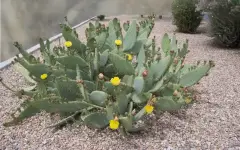 CactusOpuntia spp. & cvs. (CA natives and non-natives)very low water, Central Valley0.27 gal/sq ft in July
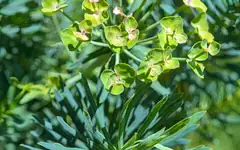 Cypress SpurgeEuphorbia cyparissiasvery low water, Central Valley0.27 gal/sq ft in July
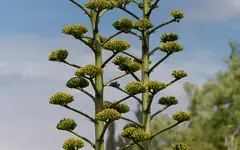 Variegated Century PlantAgave americana var. marginatavery low water, Central Valley0.27 gal/sq ft in July
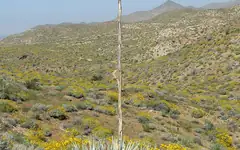 Desert AgaveAgave desertivery low water, Central Valley0.27 gal/sq ft in July
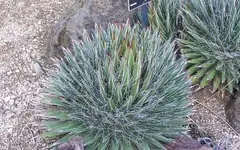 Thread Leaf AgaveAgave filiferavery low water, Central Valley0.27 gal/sq ft in July
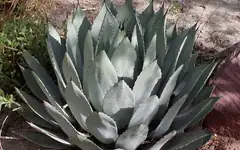 Palmer AgaveAgave palmerivery low water, Central Valley0.27 gal/sq ft in July
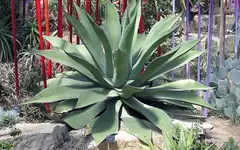 Butterfly AgaveAgave potatorumvery low water, Central Valley0.27 gal/sq ft in July
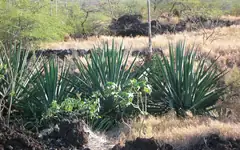 SisalAgave sisalanavery low water, Central Valley0.27 gal/sq ft in July
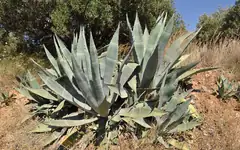 Century PlantAgave spp. & cvs.very low water, Central Valley0.27 gal/sq ft in July
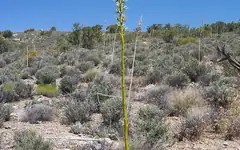 Utah AgaveAgave utahensisvery low water, Central Valley0.27 gal/sq ft in July
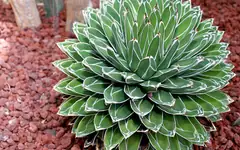 Queen Victoria AgaveAgave victoriae-reginaevery low water, Central Valley0.27 gal/sq ft in July
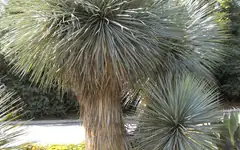 Beaked YuccaYucca rostrata ssp. & cvs.very low water, Central Valley0.27 gal/sq ft in July
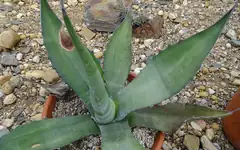 Parry's AgaveAgave parryivery low water, Central Valley0.27 gal/sq ft in July
Turn this into minutes on your water days
Every city page has a calculator that takes blue agave, your sprinkler type and the month, and gives the minutes per water day for that supplier's schedule. Or put it in a zone of the personal watering plan and get all twelve months printed.
Questions people ask
How much should I water blue agave in summer?
In July, established blue agave needs about 0.2 gallons in the Central Valley, 0.6 gallons on the south coast and 0.2 gallons in the South Inland zone each week, for a plant 2 feet across. Water deeply and let the top of the soil dry before the next watering. Skip a watering after a soaking rain.
How much water does blue agave need per day?
In July in the Central Valley, established blue agave needs about 0.0 gallons a day for a plant 2 feet across and about 0.1 gallons a day for a plant 4 feet across. Give it in deep waterings spread days apart rather than a little every day, so the whole root zone gets wet.
Does watering for blue agave change across California?
Yes. WUCOLS rates blue agave separately for each of the six California climate zones: very low water in the North-Central Coastal zone, very low water in the Central Valley zone, low water in the South Coastal zone, very low water in the South Inland zone, very low water in the High and Intermediate Desert zone, very low water in the Low Desert zone. The monthly table above shows how the same rating translates into different gallon amounts as reference evapotranspiration changes.
Does blue agave die after flowering?
Like most agaves, it blooms once at the end of its life, and the rosette dies after the flower stalk. Pups around the base carry on. Leave them in place or replant them.
How cold can blue agave handle?
It needs winters that stay above about 25 degrees F, and long spells near 27 degrees can also hurt it. That limits it mostly to Southern California coastal areas and the low desert. Elsewhere, grow it in a pot and shelter it in cold snaps.
How do I control blue agave pups?
It sends pups from the base and on rhizomes several feet away. Dig unwanted pups while they are small, wearing gloves and eye protection against the spines. Pups make easy new plants.
Is this the agave used for tequila?
Yes. Its blue form is the preferred crop for tequila in Mexico, where it has been grown since before the Spanish arrived. Garden plants need the same sun and sharp drainage as the farm crop.
Why is my blue agave rotting?
Rot usually follows too much water, poor drainage or water sitting in the rosette. Stop irrigating and let the soil dry. If the center has collapsed, replant healthy pups in gritty soil.
More plant watering guides
Sources
- WUCOLS IV plant water use classification for Agave tequilana & ssp. & cvs., the University of California survey California agencies use for landscape plan reviewRead August 23, 2026 on wucols.ucdavis.edu
- Model Water Efficient Landscape Ordinance, adopted text and appendices, effective 2025-01-02 · monthly reference evapotranspiration per city, Appendix CRead August 23, 2026 on water.ca.gov/-/media/DWR-Website/Web-Pages/Programs/Water-Use-And-Efficiency/MWELO-Rulemaking/Final-MWELO-Text-and-Appendices_20250103.pdf
- UC Statewide IPM Program, irrigation scheduling using evapotranspirationRead September 30, 2026 on ipm.ucanr.edu/PMG/GARDEN/ENVIRON/evap.html
- Shaw and Pittenger, Landscape Irrigation System Evaluation and Management, UC Cooperative Extension, 2009Read September 30, 2026 on ucanr.edu/sites/default/files/2013-02/160836.pdf
- Pittenger, Water Management in Gardens and Landscapes, UC Riverside, 2017Read September 30, 2026 on ucanr.edu/sites/default/files/2017-03/258022.pdf