How often to water sisal in California
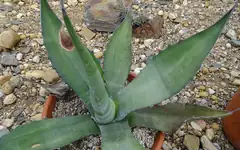
In July in the Central Valley, established sisal needs about 0.2 gallons a week for a plant 2 feet across. Sisal is a large agave grown for its stiff, sword-shaped leaves, harvested for fiber. It forms a wide rosette that stores water in thick leaves and tolerates long dry stretches once established. After many years a single tall flower stalk rises, and the rosette dies afterward, though offsets usually carry the planting on.
How often to water sisal, month by month
Type your city above and the days between waterings and the gallons appear here, worked out from your city's climate table. Or read the figures by climate zone further down.
How this is worked out: the plant’s WUCOLS rating times your city’s climate for the month, over the area the plant covers. Skip a watering after a good soaking rain.
How to tell it needs water
- Shriveled leaves call for a soil check before deciding whether this drought-tolerant plant needs water
- Dry soil alone is a reason to check the rosette and recent weather before adding water
- Persistent wetness around the rosette suggests overwatering or inadequate drainage
- Dark or soft tissue at the base warrants closer inspection, especially if the soil stays wet
- A tall flower stalk rising from the center signals the end of that rosette's life, not a watering issue
How to water it
- Water sisal deeply at the base, then let the soil dry out well before watering again
- Use a gritty mix or raised bed to provide the free drainage sisal needs
- Keep water away from the center of the rosette where new leaves emerge
- Apply water with drip or a slow soak rather than frequent light sprinkling
- Widen the watered area outward as offsets form around the base of a mature plant
Through the seasons
During its first year, check a newly planted sisal before watering and allow the root zone to drain between soakings. Mature plants are drought tolerant, so use soil moisture and the condition of the rosette to guide supplemental irrigation. Sisal remains evergreen; in cool weather, avoid leaving its roots continually wet. Coastal and valley rainfall may reduce irrigation when it moistens the soil. WUCOLS rates sisal very low water on the north-central coast, in the Central Valley, South Inland, the high desert and the low desert. It rates low water on the south coast.
In pots
Sisal grown in a container needs a wide, sturdy pot with open drainage holes, since a mature rosette grows heavy and broad. Use a fast-draining cactus or succulent mix and let it dry out fully between waterings. Water until it drains through the holes, then empty the saucer without delay. Keep the pot where rain cannot collect around the base in winter. Probe below the mix surface during California heat before deciding to water.
- A year
- 1.71 gal per sq ft
- Reference
- Sacramento climate table
- Counts
- Plant need, before sprinkler losses
Monthly water need by climate zone
Sisal: gallons per square foot per month, by WUCOLS climate zone
| Month | N. Coast | C. Valley | S. Coast | S. Inland | Hi Desert | Lo Desert |
|---|---|---|---|---|---|---|
| Jan | 0.04 | 0.04 | 0.31 | 0.08 | 0.07 | 0.08 |
| Feb | 0.05 | 0.07 | 0.32 | 0.09 | 0.09 | 0.09 |
| Mar | 0.09 | 0.11 | 0.46 | 0.13 | 0.15 | 0.15 |
| Apr | 0.12 | 0.15 | 0.56 | 0.16 | 0.19 | 0.2 |
| May | 0.15 | 0.21 | 0.64 | 0.2 | 0.24 | 0.24 |
| Jun | 0.16 | 0.25 | 0.69 | 0.23 | 0.29 | 0.28 |
| Jul | 0.16 | 0.27 | 0.79 | 0.25 | 0.3 | 0.29 |
| Aug | 0.15 | 0.24 | 0.74 | 0.23 | 0.28 | 0.26 |
| Sep | 0.12 | 0.18 | 0.6 | 0.19 | 0.21 | 0.21 |
| Oct | 0.09 | 0.12 | 0.46 | 0.13 | 0.15 | 0.15 |
| Nov | 0.05 | 0.06 | 0.33 | 0.09 | 0.09 | 0.1 |
| Dec | 0.03 | 0.03 | 0.26 | 0.07 | 0.07 | 0.07 |
| Year | 1.2 | 1.71 | 6.2 | 1.84 | 2.13 | 2.11 |
How this is worked out: the WUCOLS water rating for each zone times that zone’s climate for the month. A dash means WUCOLS does not rate the plant there. The figures are what the plant uses, before sprinkler losses.
Plants with the same water needs 13
Rated very low water in the Central Valley, like sisal. Plants that drink alike can share one valve and one schedule.
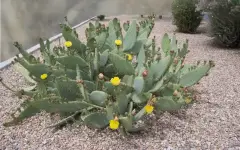 CactusOpuntia spp. & cvs. (CA natives and non-natives)very low water, Central Valley0.27 gal/sq ft in July
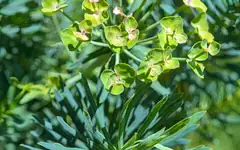 Cypress SpurgeEuphorbia cyparissiasvery low water, Central Valley0.27 gal/sq ft in July
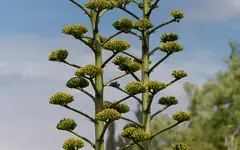 Variegated Century PlantAgave americana var. marginatavery low water, Central Valley0.27 gal/sq ft in July
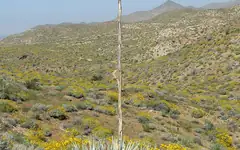 Desert AgaveAgave desertivery low water, Central Valley0.27 gal/sq ft in July
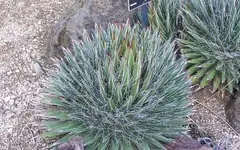 Thread Leaf AgaveAgave filiferavery low water, Central Valley0.27 gal/sq ft in July
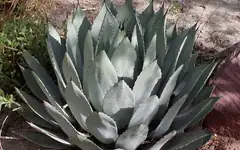 Palmer AgaveAgave palmerivery low water, Central Valley0.27 gal/sq ft in July
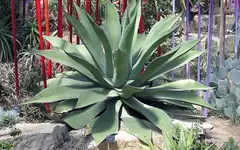 Butterfly AgaveAgave potatorumvery low water, Central Valley0.27 gal/sq ft in July
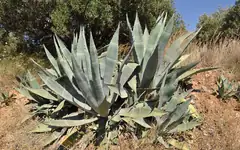 Century PlantAgave spp. & cvs.very low water, Central Valley0.27 gal/sq ft in July
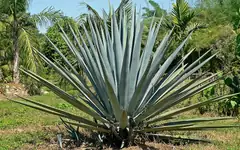 Blue AgaveAgave tequilana & ssp. & cvs.very low water, Central Valley0.27 gal/sq ft in July
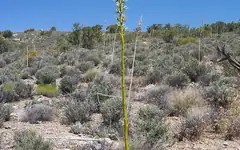 Utah AgaveAgave utahensisvery low water, Central Valley0.27 gal/sq ft in July
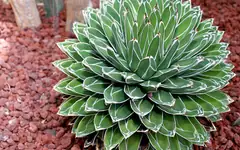 Queen Victoria AgaveAgave victoriae-reginaevery low water, Central Valley0.27 gal/sq ft in July
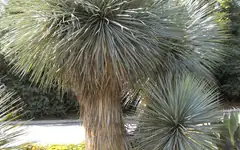 Beaked YuccaYucca rostrata ssp. & cvs.very low water, Central Valley0.27 gal/sq ft in July
 Parry's AgaveAgave parryivery low water, Central Valley0.27 gal/sq ft in July
Turn this into minutes on your water days
Every city page has a calculator that takes sisal, your sprinkler type and the month, and gives the minutes per water day for that supplier's schedule. Or put it in a zone of the personal watering plan and get all twelve months printed.
Questions people ask
How much should I water sisal in summer?
In July, established sisal needs about 0.2 gallons in the Central Valley, 0.6 gallons on the south coast and 0.2 gallons in the South Inland zone each week, for a plant 2 feet across. Water deeply and let the top of the soil dry before the next watering. Skip a watering after a soaking rain.
How much water does sisal need per day?
In July in the Central Valley, established sisal needs about 0.0 gallons a day for a plant 2 feet across and about 0.1 gallons a day for a plant 4 feet across. Give it in deep waterings spread days apart rather than a little every day, so the whole root zone gets wet.
Does watering for sisal change across California?
Yes. WUCOLS rates sisal separately for each of the six California climate zones: very low water in the North-Central Coastal zone, very low water in the Central Valley zone, low water in the South Coastal zone, very low water in the South Inland zone, very low water in the High and Intermediate Desert zone, very low water in the Low Desert zone. The monthly table above shows how the same rating translates into different gallon amounts as reference evapotranspiration changes.
Does sisal need regular watering once it is established?
An established sisal tolerates drought and stores moisture in its succulent foliage. Check conditions during extended dry weather before adding water. Its planting site should drain readily, because agaves perform poorly in persistently wet soil.
What happens after sisal flowers?
The rosette that sends up a flower stalk dies after the bloom finishes, since this plant flowers once in its life. Small plantlets called bulbils typically form along the stalk and can be used to start new plants. Offsets around the base usually continue the planting.
Can sisal survive without any irrigation in California?
Very low water ratings describe a small landscape water requirement, not a guarantee that every site needs no irrigation. Check moisture around new roots during the first year. Established sisal withstands drought, but rainfall and drainage vary across California.
Why is the base of my sisal turning soft and dark?
Soft, dark tissue needs closer examination; appearance alone does not establish a cause. Check whether the crown and surrounding soil remain wet, and correct any drainage problem. Avoid adding irrigation to saturated soil.
Does sisal need protection from winter rain?
Plant it where water drains away quickly rather than collecting around the base. A raised bed or slope helps keep the crown from sitting wet during winter storms. This matters more than any watering schedule during the growing season.
More plant watering guides
Sources
- WUCOLS IV plant water use classification for Agave sisalana, the University of California survey California agencies use for landscape plan reviewRead August 23, 2026 on wucols.ucdavis.edu
- Model Water Efficient Landscape Ordinance, adopted text and appendices, effective 2025-01-02 · monthly reference evapotranspiration per city, Appendix CRead August 23, 2026 on water.ca.gov/-/media/DWR-Website/Web-Pages/Programs/Water-Use-And-Efficiency/MWELO-Rulemaking/Final-MWELO-Text-and-Appendices_20250103.pdf
- UC Statewide IPM Program, irrigation scheduling using evapotranspirationRead September 30, 2026 on ipm.ucanr.edu/PMG/GARDEN/ENVIRON/evap.html
- Shaw and Pittenger, Landscape Irrigation System Evaluation and Management, UC Cooperative Extension, 2009Read September 30, 2026 on ucanr.edu/sites/default/files/2013-02/160836.pdf
- Pittenger, Water Management in Gardens and Landscapes, UC Riverside, 2017Read September 30, 2026 on ucanr.edu/sites/default/files/2017-03/258022.pdf